Air Freight vs Ocean Freight: When Speed Justifies the Cost
Air Freight vs Ocean Freight: When Speed Justifies the Cost
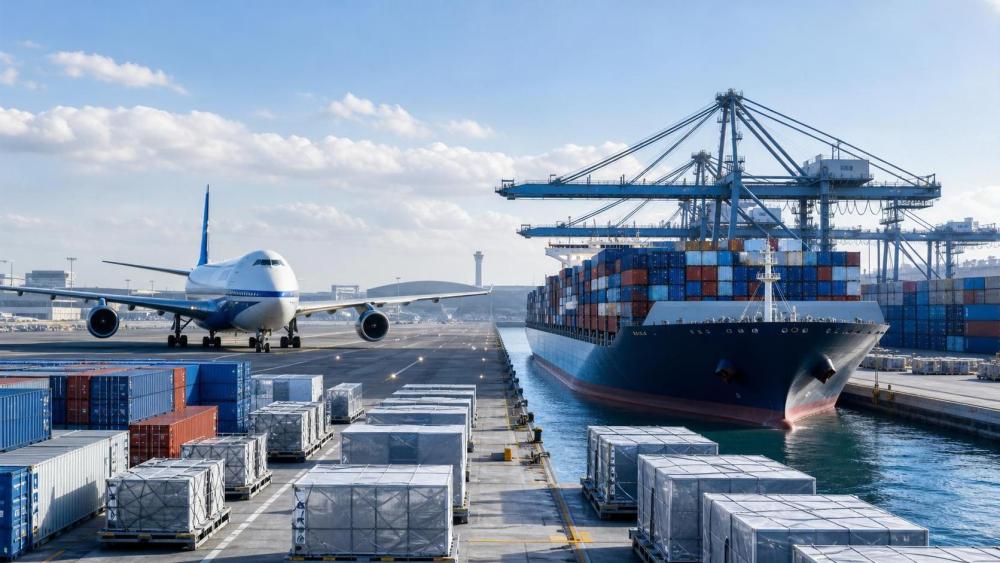
For many cross-border shipments, the real question is not simply price. It is total business impact.
Ocean freight usually wins on cost per unit. Air freight wins on time, flexibility, and disruption control.
That difference matters when missed delivery dates trigger stockouts, line stoppages, penalty clauses, or lost market share.
In practice, freight mode selection should support working capital, service levels, and supply chain resilience at the same time.
This is where the air freight versus ocean freight decision becomes strategic rather than operational.
A slower mode can look cheaper on paper. It can also become expensive once delays spread through procurement, production, and sales.
The better approach is to ask one simple question: when does air freight create more value than it costs?
Start With Total Landed Impact, Not Freight Rate Alone
Freight decisions often start with a rate comparison. That is useful, but it is rarely enough.
Ocean freight may offer a lower transportation bill. Yet transit time can stretch inventory exposure for weeks.
Air freight usually costs more per kilogram. Still, it can reduce buffer stock, shorten cash conversion cycles, and protect revenue.
From a procurement perspective, the key metric is not cheapest shipment. It is lowest total risk-adjusted cost.
That includes:
- Freight spend and surcharges
- Inventory holding cost
- Warehouse and handling expense
- Stockout risk and missed sales
- Production downtime exposure
- Quality, damage, and obsolescence risk
Once these costs are visible, air freight often looks less like a premium and more like an insurance tool.
When Air Freight Makes Sense
Air freight is not the default answer. It becomes attractive when speed changes the outcome of the business decision.
1. Urgent replenishment prevents stockouts
If a high-turn item is about to run out, waiting for ocean freight can be far more expensive than paying for faster delivery.
This is especially true in seasonal demand spikes, promotional launches, or spare parts supply.
2. Production continuity is at risk
A delayed component can shut down an entire line. In that case, air freight protects output, labor efficiency, and customer commitments.
The higher the value of hourly production, the easier it is to justify faster transport.
3. Cargo is high-value and time-sensitive
Electronics, precision parts, medical devices, and urgent industrial samples often fit this profile.
For these goods, a shorter transit window lowers theft exposure, handling risk, and inventory carrying cost.
4. Forecast uncertainty is high
When demand visibility is weak, long ocean lead times can force overbuying.
Air freight allows smaller, faster replenishment cycles. That reduces excess stock and markdown risk.
5. Supply chain disruption requires recovery
Port congestion, customs delays, labor action, or supplier slippage can break the original plan.
In these moments, air freight helps reset schedules and stabilize downstream operations.
When Ocean Freight Remains the Better Choice
Speed has value, but not every shipment needs it.
Ocean freight remains the stronger option when cargo is bulky, low-margin, stable in demand, and planned well in advance.
It is often the right fit for raw materials, heavy machinery, packaging inputs, and baseline inventory flows.
In these cases, the cost gap between air freight and ocean freight is simply too wide to ignore.
Ocean shipping also supports better freight economics when purchase volumes are predictable and warehouse space is available.
The point is not to replace ocean freight. It is to reserve air freight for shipments where time protects measurable value.
A Practical Comparison for Decision-Making
A side-by-side view helps clarify which mode supports the shipment objective.
This comparison is simple, but it helps keep mode selection tied to business outcomes.
How to Calculate Whether Air Freight Is Worth It
A useful decision model compares the extra cost of air freight with the cost of delay.
If the delay cost is higher, faster shipping is justified.
Consider these inputs before choosing air freight:
- Estimate lost margin from a stockout or delayed delivery.
- Calculate production downtime cost per hour or per day.
- Measure inventory carrying cost during the longer ocean transit.
- Assess whether the goods may become obsolete or miss a launch window.
- Compare those costs with the air freight premium, including fuel and handling surcharges.
This framework works especially well for industrial procurement, where line continuity and project deadlines are measurable.
It also creates better internal alignment between procurement, logistics, operations, and finance teams.
Use Hybrid Strategies Instead of All-or-Nothing Choices
In real supply chains, the best answer is often mixed-mode planning.
A common strategy is to move the bulk order by ocean freight and send critical SKUs by air freight.
This approach balances transport cost with service continuity.
Another option is to use air freight only during launch periods, disruption recovery, or supplier transition phases.
That keeps expedited logistics targeted rather than routine.
More procurement teams are also building mode-switch triggers into sourcing plans.
For example, if days of stock fall below a threshold, part of the order shifts to air freight automatically.
That kind of policy turns freight mode from a reactive choice into a disciplined control mechanism.
Common Mistakes in the Air Freight Decision
Some teams overuse air freight because planning is weak. Others avoid it even when the business case is clear.
Both mistakes raise total supply chain cost.
- Comparing rates without measuring delay cost
- Using air freight to cover chronic forecasting failures
- Ignoring volumetric weight and airport handling charges
- Missing customs readiness, which can erase speed advantages
- Applying one freight rule across all product categories
The smarter move is to evaluate each shipment by value density, urgency, supply risk, and customer impact.
Final Takeaway
Air freight is expensive, but not necessarily costly.
When time prevents stockouts, protects production, supports launch timing, or reduces uncertainty, the premium can be fully justified.
Ocean freight remains essential for stable, planned, and volume-heavy flows. It should continue to anchor baseline logistics strategy.
The most effective freight decisions do not ask which mode is cheaper. They ask which mode creates the better commercial outcome.
For teams reviewing freight mode today, the practical next step is simple: build a shipment-level decision model, define switch triggers, and use air freight where speed clearly protects value.
Weekly Insights
Stay ahead with our curated technology reports delivered every Monday.
Recommended News
 Global SourcingJun 24, 2026Fujia Expands Vietnam Capacity to Ease Delivery Pressure
 Supply ChainJun 24, 2026US Dollar Waiver Reshapes Iran Oil Trade
 Industry StandardsJun 24, 2026China Registration Rule Takes Effect for Imported Food Plants
 Market TrendsGlobal Industrial Outlook: 7 Supply Chain Shifts Manufacturers Should Track