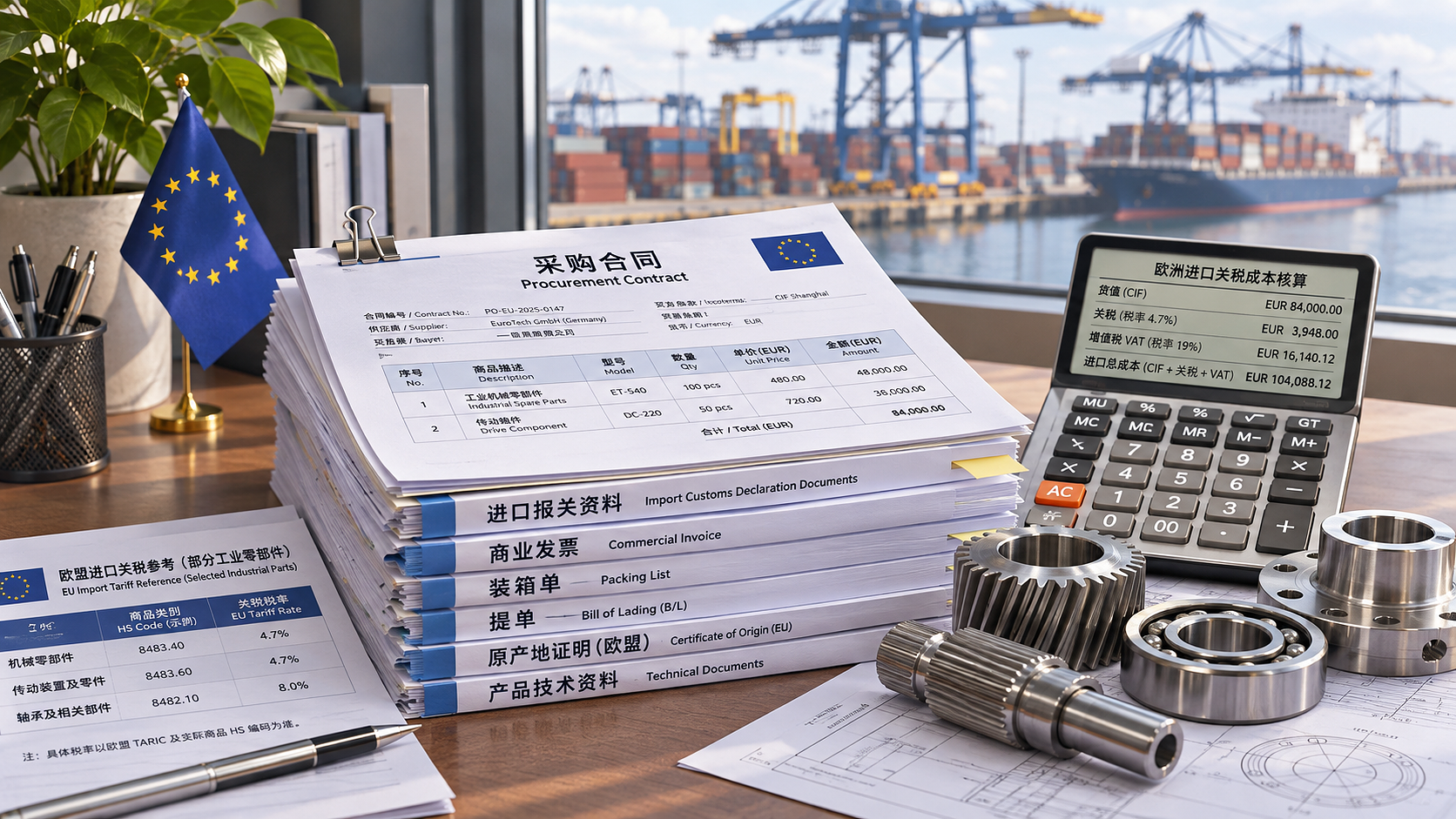
When is rail freight in Europe cheaper than road transport?
Rail freight in Europe can cost less than road transport when a shipment has a long enough rail leg, convenient terminal access and sufficient volume to secure a competitive service. The saving is most likely to survive when collection, delivery and terminal handling add little to the rail quote and the departure schedule fits the required delivery window.
The comparison must be made door to door. A low price for the train movement alone does not establish that rail is cheaper than a truck collecting from the same supplier and delivering to the same destination. Extra inventory, missed departures, equipment charges and occasional recovery by road can also change the result.
Where the cost advantage comes from
Road transport provides a largely direct service: a vehicle collects the goods and travels to the delivery point. Intermodal rail combines a train journey with road collection and delivery, usually moving the goods in a container, swap body or suitable trailer. At each end, the loading unit must pass through a terminal.
Rail can offset those additional steps when the main journey is long enough and the train service carries enough freight to spread its operating costs. A shorter road trip, by contrast, avoids the fixed handling and administrative costs of intermodal transport. There is no reliable Europe-wide distance at which rail automatically becomes cheaper: the result depends on the actual route, terminal locations, service frequency and prices available for the shipment.
A useful distinction is between rail distance and door-to-door distance. A shipment may travel a long way overall but have expensive road legs if the factory and customer are far from suitable terminals. Another shipment over a similar total distance may be competitive by rail because both locations sit close to a frequent intermodal service.
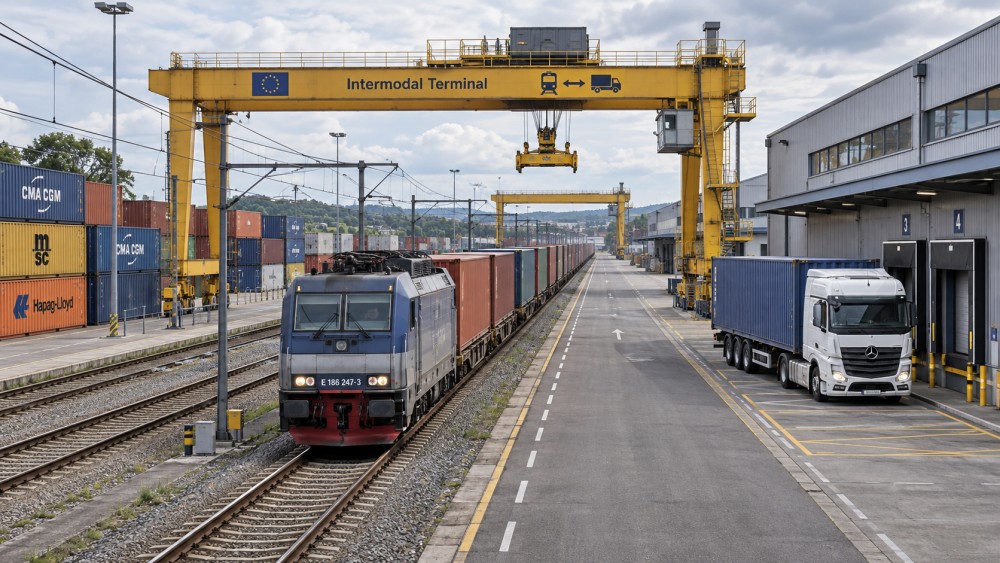
Direct rail is a different calculation. A factory or distribution site with a usable rail siding can reduce or avoid some terminal transfers and road haulage. However, wagon availability, train formation, rail access and minimum-volume commitments must still be priced. Access to tracks alone does not guarantee a lower delivered cost.
Compare the complete cost of the same shipment
The cleanest comparison starts with an identical shipment specification: origin, destination, weight, dimensions, loading unit, delivery date, frequency and any special handling requirements. Quotes should cover the same Incoterms responsibility and the same points of collection and delivery. Otherwise, an apparent saving may simply be a charge allocated to another party.
For an intermodal movement, the total transport bill can include:
- Collection by road from the supplier to the departure terminal.
- Terminal handling at origin and destination, including any applicable lift charges.
- The rail line-haul charge and applicable energy or other surcharges.
- Road delivery from the arrival terminal to the consignee.
- Equipment rental, positioning, deposits or empty-unit return where applicable.
- Storage, waiting time or other charges if the agreed free time is exceeded.
The road alternative should be built on the same basis, including fuel and toll adjustments, loading or unloading waiting time, equipment requirements and any border-related services relevant to the route. Customs and other border costs should be compared on their actual treatment, not automatically assigned to rail: either mode can incur them on a cross-border movement.
Pay attention to how surcharges are calculated. A rail rate fixed for the train leg but exposed to variable road collection costs is not directly equivalent to a fixed all-in trucking rate. Ask which components can change, the index or trigger used, the notice period and whether both quotes remain valid for the same period.
An illustrative door-to-door comparison
Assume a full intermodal unit and a full truck carry the same quantity of goods between the same two sites. The figures below are hypothetical and are not market rates.
On the transport invoice, rail saves €200 per shipment. If its schedule also requires €120 of additional inventory carrying cost and an estimated €100 per shipment in delay-related costs, the economic comparison reverses: rail costs €2,120 against €2,100 for road. Those amounts are assumptions for illustration, not standard allowances. They show why the lowest freight quote is not always the lowest landed logistics cost.
Volume matters, but only if it fits the service
Regular flows can improve the economics of rail because a carrier can plan capacity and equipment around them. Repeated movements between the same terminals may support a contract rate that is unavailable for a single shipment. A large flow can also justify exploring direct wagon or train solutions, although any minimum commitment must be weighed against demand variability.
Volume on paper is not the same as volume available at departure. A business shipping several truckloads a week may have a promising annual total, but the savings depend on whether freight is ready in the right quantities before the terminal cut-off. Splitting production across several days can require additional storage or make a scheduled train difficult to use.
Underused capacity weakens the comparison. If an intermodal unit holds less usable cargo than the road vehicle being replaced because of weight distribution, equipment dimensions or loading restrictions, the relevant measure is cost per delivered tonne, pallet or saleable unit—not cost per container. The same applies when a road quote is for a full truck but the rail quote is for a different loading unit.
Consolidating smaller shipments can spread fixed handling costs, but waiting for freight to accumulate has a cost. Include warehouse handling, the time goods spend awaiting departure and the possibility that different customers have incompatible delivery dates. A consolidation plan is only cheaper if those costs remain below the freight saving.
Why terminals and schedules can erase a low rail rate
Terminal access affects more than kilometres. Collection and delivery prices can reflect driver availability, congestion, appointment windows and whether the equipment can be collected and returned efficiently. A short road leg with long waiting times may cost more than its distance suggests.
Check the operational timetable rather than comparing advertised transit times alone. The relevant interval runs from when goods are available at the supplier to when they can be received at the destination. It includes the time needed to reach the departure terminal, the cut-off before the train leaves, the train journey, terminal release and the final delivery appointment.
A missed cut-off can be expensive if the next suitable departure is not soon enough. The resulting cost may be an extra day of stockholding, a storage charge, an expedited road movement or a missed customer delivery. Conversely, a slightly slower rail service can still be the cheaper choice if production and inventory schedules can absorb the difference without disrupting supply.
Service reliability should be assessed against the delivery requirement. Ask for the service timetable, booking lead time, cut-off rules, disruption notification process and any available performance information for the specific lane. Historical performance, where provided, should be interpreted alongside the measurement used: a train arriving at a terminal on time is not necessarily the same as a shipment reaching the consignee on time.
Turn transit time and disruption into comparable costs
Longer transit ties up inventory. An approximate way to test the effect is to multiply the value of goods in transit by the annual inventory carrying rate and the additional transit days, divided by 365. This is an estimate, not a substitute for the company’s own finance assumptions. Use the value and carrying rate consistently for both options, and include extra safety stock separately only if it is not already captured.
For example, goods valued at €100,000, an assumed annual carrying rate of 12% and three additional days in transit produce an estimated carrying cost of about €99 per shipment. If the freight saving is only €80, the inventory effect alone would exceed it. If the shipment value is lower or the delivery window allows stock already held elsewhere to be reduced, the result can differ.
Disruption cost is less certain, but it should not be ignored. A practical scenario can combine the estimated likelihood of an exception with its financial consequence, such as emergency trucking or a production interruption. Keep assumptions visible and test more than one scenario; a precise-looking number based on weak information is not a reliable forecast. Avoid counting the same consequence both as extra safety stock and as a separate delay cost.
Contract terms also affect the cost retained by the shipper. Review liability limits, exclusions, claims procedures and any additional cargo insurance alongside the freight rate. Rail and road quotes should be assessed for the protection they actually provide, rather than assuming that a cheaper service includes equivalent cover.
When road remains the cheaper decision
Road can win even on a substantial route when either endpoint is remote from a terminal, freight is irregular, or the customer requires a narrow delivery window. It can also be cheaper when the available rail service requires a special unit, extra handling or a return of empty equipment that is not included in the headline rate.
Cargo suitability matters. Goods with unusual dimensions, temperature-control needs, dangerous-goods requirements or sensitivity to handling require confirmation that the equipment, terminals and carriers can accept them throughout the journey. The necessary service may be available, but its cost must be quoted rather than assumed to match a standard intermodal rate.
Road can also provide value through operational flexibility. A truck can be dispatched when goods are ready, subject to carrier availability, rather than being tied to a train departure. That flexibility has a measurable price if it avoids warehouse space, late-delivery penalties or expedited recovery. It should not, however, be treated as a blanket reason to reject rail when the same shipment moves predictably and the schedule is compatible.
Set a break-even test before committing volume
The decision can be expressed as a maximum acceptable rail-related cost:
Maximum rail door-to-door transport cost = comparable road transport cost − additional inventory and other rail-related costs.
Using the illustrative road transport cost of €2,100, if extra inventory and expected disruption costs are €220, the rail transport quote must be below €1,880 to produce a net saving. A €1,900 rail quote would therefore fall short, despite being €200 below the road freight bill. If better scheduling reduces those additional costs, the break-even point changes.
Before awarding a lane, request a written breakdown for both options and test the quote against realistic shipment volumes, seasonal variation and delivery windows. Confirm capacity commitments, rate validity, equipment availability, terminal cut-offs, free storage time and the treatment of missed departures. If the rail price depends on a minimum volume, calculate the cost of unused capacity or shortfall charges as well as the saving when the commitment is met.
Rail is the stronger cost choice when its lower main-haul price remains an advantage after all those conditions are applied—not merely when the train leg is cheaper. The most useful comparison is therefore lane-specific, based on the same cargo and delivery obligation, and updated when volumes, terminal access or contract terms change.
Have questions about this sector analysis, or seeking best practices specific to your niche? Drop us a line below and let the senior consultants at GTIIN assist you.
“We respect your privacy. Your information is strictly confidential.”
Tags
Weekly Insights
Stay ahead with our curated technology reports delivered every Monday.
Recommended News
 Supply ChainNov 22, 2026Nvidia Server Partners Pause Southeast Asia Shipments Amid US Export Controls
 Global SourcingNov 22, 2026How to manage tariff risk when importing into Europe
 Supply ChainNov 21, 2026EU Ban on Plastic Waste Exports to Non-OECD Countries Takes Effect
 Industry StandardsNov 21, 2026How to use ESG standards for procurement supplier assessments