Middle East Customs Regulations: Key Changes to Watch
Trade conditions across the Gulf and wider MENA region are shifting faster than many channel strategies. For companies moving goods through multiple ports, customs regulations Middle East now shape lead times, landed cost, and even market entry viability. Documentation rules, product compliance checks, and digital clearance systems are no longer background issues. They are operational variables that directly affect how cross-border trade is planned.
Why customs change is becoming a strategic issue
The phrase customs regulations Middle East covers more than duty collection. It includes classification, origin rules, licensing, valuation, pre-arrival filings, conformity assessment, and post-clearance audit exposure.
That matters because regional trade is becoming more integrated, but not fully harmonized. GCC alignment has improved several procedures, yet each market still applies local controls, sector rules, and enforcement priorities.
A shipment can meet one country’s import expectations and still face delays in another. The practical risk is rarely a single ban. More often, it is a mismatch between paperwork, HS coding, valuation support, and local product registration.
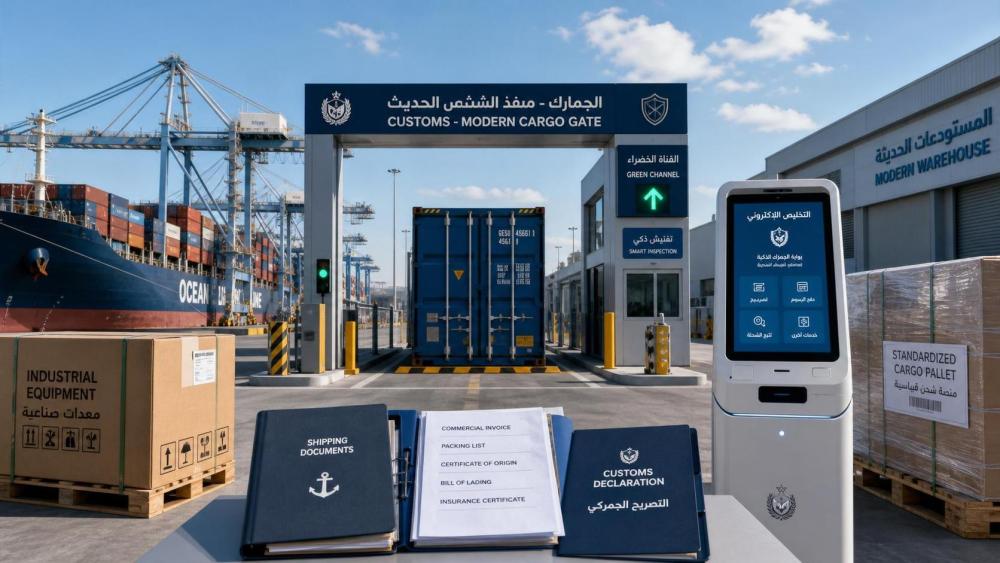
This is why customs policy has moved from a compliance department concern to a commercial planning issue.
What is changing across the region
The most visible shift is digitalization. Customs authorities are expanding electronic declarations, platform-based approvals, and integrated links between customs, standards bodies, and port operators.
This tends to speed up routine shipments. At the same time, it exposes weak internal data discipline. Incomplete invoices, inconsistent product descriptions, and missing supporting certificates are flagged earlier.
Another trend is tighter scrutiny on origin claims. Preferential tariffs, free trade arrangements, and anti-circumvention concerns make proof of origin more sensitive than before.
Valuation is also under closer review. Authorities increasingly compare declared values with reference benchmarks, freight patterns, and transaction histories, especially for bulk commodities, machinery, electronics, and regulated inputs.
Product-level compliance is expanding as well. Food, chemicals, electrical items, medical products, and industrial equipment often face layered checks involving customs, standards agencies, and sector regulators.
Common policy signals to watch
- Mandatory e-invoicing or structured invoice data.
- Expanded pre-shipment or pre-arrival declaration requirements.
- Updated HS classification guidance for mixed or technical goods.
- New conformity marks, registration portals, or testing references.
- Stronger record-retention rules for audit defense.
Where operational pressure shows up first
In practice, customs regulations Middle East usually create friction in four places: entry documentation, tariff treatment, restricted product handling, and clearance timing.
Documentation errors remain the simplest and most expensive problem. A generic product description may pass commercial review but fail customs scrutiny if the item needs technical specificity.
Tariff treatment becomes risky when HS codes are reused across markets without review. Regional similarities can create false confidence, especially for assemblies, spare parts, or dual-use components.
Restricted goods create another layer of complexity. Chemicals, batteries, telecom devices, health-related products, and some industrial inputs may need prior approvals outside the customs portal.
Timing is the fourth issue. A market may advertise rapid clearance, but real performance depends on inspection ratios, document quality, broker execution, and regulator coordination.
A practical comparison framework
Why this matters for regional trade planning
Many cross-border decisions are still made on headline duty rates alone. That is too narrow for the current environment.
A lower tariff market can still become a higher-cost market if customs holds are frequent, approval layers are opaque, or post-entry corrections are common.
This is especially relevant for multi-country inventory planning. Re-export hubs, bonded movements, and split shipments depend on reliable customs execution, not only on route geography.
GTIIN’s trade intelligence approach is useful here because customs change rarely sits in isolation. Port congestion, industrial policy, standards updates, and freight volatility often move together.
Seen through a supply chain lens, customs regulations Middle East become a mapping problem. The real question is how policy, transit speed, product risk, and documentation quality interact.
How to read country differences without oversimplifying
The region should not be treated as one customs environment. The UAE, Saudi Arabia, Oman, Qatar, Kuwait, Bahrain, Jordan, and Egypt all present different operating conditions.
Some markets are stronger in digital submission and port integration. Others may have more product-specific approval steps or different documentary expectations for the same category.
The best reading method is to separate three layers: customs procedure, technical compliance, and commercial contract structure.
When these layers are reviewed together, hidden issues appear earlier. For example, an Incoterm decision can affect valuation documents, while a labeling rule can affect release timing.
Questions worth asking before shipment
- Does the HS code match the exact product configuration in each target market?
- Will origin claims survive a document trace back to production inputs?
- Are local approvals needed before cargo arrival?
- Is the invoice language specific enough for customs review?
- What records are needed if valuation is challenged later?
Building a stronger compliance workflow
A workable response does not require a heavy legal structure. It requires better operational discipline around product data, document control, and local rule monitoring.
Start with a product master file. That should include technical descriptions, HS rationale, origin basis, supporting certificates, and market-specific restrictions.
Then align internal teams and external brokers around the same data set. Customs errors often begin when sales, logistics, and filing agents use different product descriptions.
It also helps to review customs performance by lane, not only by country. The same market may show very different outcomes by port, free zone, product family, or regulator involvement.
This is where broader trade intelligence adds value. GTIIN’s cross-sector perspective can support a more realistic view of risk by linking regulatory signals with sourcing patterns and logistics behavior.
What to watch next
The next phase of customs regulations Middle East will likely be shaped by deeper digital enforcement, stronger product traceability, and wider integration between customs and industrial policy goals.
Expect more attention on strategic sectors, including food security inputs, energy equipment, electronics, chemicals, and high-value industrial components.
There is also a growing connection between customs treatment and broader compliance themes such as ESG documentation, controlled materials, and sanctioned-party screening.
The practical takeaway is straightforward. Review market entry assumptions before regulations force a reset. Recheck classification logic, origin evidence, local registration steps, and clearance data quality.
That kind of review does more than reduce customs friction. It improves pricing accuracy, route selection, partner coordination, and long-term resilience across the region.
For any business tracking customs regulations Middle East, the next move is not to wait for disruption. It is to build a decision framework that connects regulatory change with sourcing, logistics, and commercial execution.
Weekly Insights
Stay ahead with our curated technology reports delivered every Monday.
Recommended News
 Supply ChainOct 15, 2026How to choose a supply chain strategy for unpredictable demand
 Supply ChainOct 14, 2026How to assess an industrial equipment supplier's spare parts support
 Supply ChainOct 14, 2026EU Updates CSDDD Guidance on Global Supply Chain Due Diligence
 Global SourcingOct 13, 2026How to assess industrial automation suppliers for legacy integration