Smart Manufacturing Solutions That Improve Output Consistency
Smart Manufacturing Solutions That Improve Output Consistency
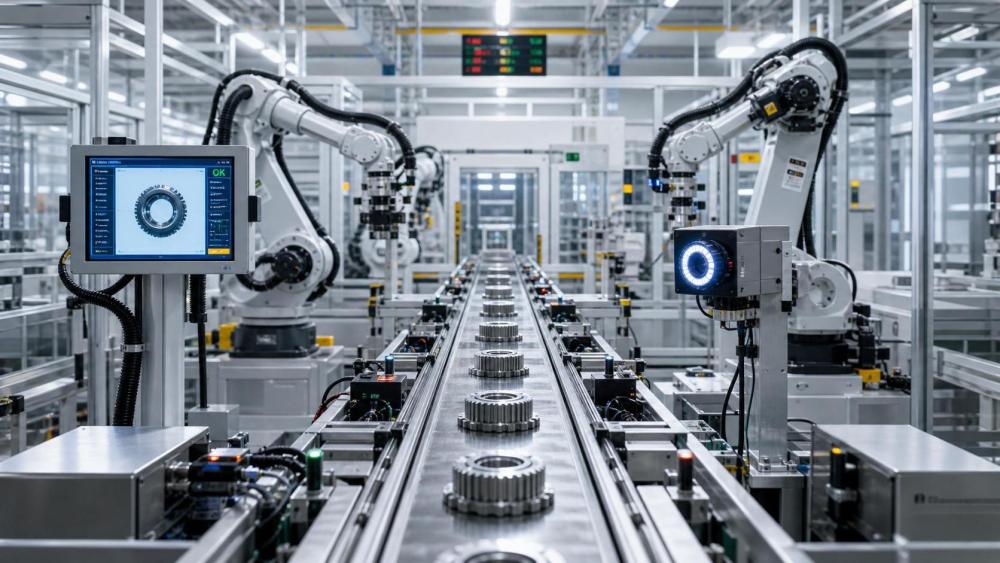
For technical evaluators, smart manufacturing is no longer just a digital upgrade. It is a practical way to reduce variation, stabilize quality, and improve supply chain confidence.
The strongest signal in today’s market is simple. Manufacturers are under pressure to produce more predictable results across plants, suppliers, and production runs.
That is where smart manufacturing creates real value. It connects machines, people, and process data into one operating system for faster decisions and tighter control.
For global operations, this matters even more. Consistent output supports better sourcing decisions, fewer quality disputes, and stronger resilience across cross-border production networks.
In practical terms, smart manufacturing combines industrial automation, sensors, MES platforms, analytics, and traceability tools. The goal is not more data alone. The goal is more repeatable performance.
When output consistency improves, scrap rates often fall. Changeovers become easier to control. Supplier qualification also becomes less subjective and more evidence-based.
This also means smart manufacturing should be evaluated as an application solution, not only as a technology trend. The best systems solve specific consistency problems at scale.
Why Output Consistency Has Become a Strategic Metric
Output consistency affects much more than product quality. It influences procurement timing, inventory accuracy, customer claims, compliance risk, and production scheduling.
In many factories, average performance looks acceptable. The real issue appears in variation between shifts, lines, raw material lots, or different supplier batches.
Traditional quality control often catches problems after output has already drifted. Smart manufacturing pushes detection earlier, closer to the process itself.
This is especially useful in sectors with strict tolerances, multi-step assembly, thermal processing, surface finishing, packaging validation, or regulated traceability requirements.
A more mature smart manufacturing framework helps teams move from reactive correction to controlled repeatability. That shift is usually where the biggest operational gains appear.
Core Smart Manufacturing Solutions That Reduce Process Variation
Not every digital tool improves consistency. The most effective smart manufacturing solutions usually target a clear source of variation and close the feedback loop quickly.
1. Real-Time Machine Monitoring
Connected sensors track temperature, torque, vibration, pressure, cycle time, and other process-critical variables. Small drifts become visible before they create large quality losses.
This helps plants standardize machine behavior across shifts and sites. It also supports root-cause analysis when output consistency starts to weaken.
2. MES and Digital Workflows
A well-implemented MES reduces manual interpretation. Operators receive the same instructions, sequence, tolerances, and checkpoints every time.
That matters because many consistency failures come from workflow variation, not machine failure alone. Smart manufacturing works best when procedures become repeatable as well.
3. In-Line Quality Inspection
Vision systems, laser measurement, and automated gauging move quality control closer to the production step. This shortens the delay between defect creation and corrective action.
For high-volume environments, this is one of the most direct smart manufacturing upgrades. It improves defect capture without slowing throughput too much.
4. Predictive Maintenance
Equipment wear often shows up as inconsistent output before complete failure. Predictive maintenance links condition data with maintenance timing to protect process stability.
Instead of reacting to breakdowns, plants can intervene when machine health starts affecting repeatability. That is a much stronger use case than uptime alone.
How to Evaluate Smart Manufacturing for Real Factory Conditions
A common mistake is evaluating smart manufacturing as a bundled software purchase. A better method starts with the process problem and the consistency target.
A practical review framework should cover:
- Which process variables drive quality drift most often
- How fast the system detects abnormal conditions
- Whether alerts lead to clear operator actions
- How easily data integrates with ERP, MES, and supplier records
- Whether traceability supports audits, claims, and sourcing decisions
- How scalable the architecture is across plants and regions
In actual business settings, cross-border operations add complexity. Different suppliers, utilities, labor profiles, and compliance rules can all affect performance variation.
That is why smart manufacturing should be assessed as part of a broader sourcing and supply chain model. The digital layer must support production reality, not ignore it.
Use Cases Where Smart Manufacturing Delivers Fast Consistency Gains
Some applications show value faster than others. The best candidates usually have repeatable workflows, measurable process variables, and visible quality loss from variation.
Discrete Manufacturing
In electronics, machinery, and components, smart manufacturing supports torque validation, assembly sequencing, vision checks, and lot-level traceability.
Process Industries
In chemicals, food, coatings, and material processing, consistency depends on tight control of temperature, mixing, pressure, and dwell time.
Here, smart manufacturing helps correlate recipe execution with output quality, making deviations easier to isolate and correct.
Multi-Site Production Networks
Global manufacturers often struggle with site-to-site variation. Smart manufacturing creates a common data language across equipment, operators, and suppliers.
That makes benchmarking easier and accelerates corrective action when one plant starts drifting from standard performance.
Key Risks to Watch Before Deployment
Smart manufacturing can fail when projects chase visibility without decision logic. Dashboards alone do not improve output consistency.
The most common risks include:
- Poor sensor placement that captures data without operational meaning
- Disconnected systems that create separate versions of process truth
- Operator workflows that remain manual despite digital monitoring
- Weak master data governance across suppliers, lines, and plants
- ROI models focused only on labor savings, not quality stability
From a sourcing perspective, inconsistent digital maturity among suppliers can also slow rollout. Integration standards should be reviewed early, not after procurement.
This is where structured market intelligence helps. Platforms like GTIIN add value by connecting factory modernization goals with supplier capability, trade conditions, and industry standards.
A Practical Decision Framework for Smarter Implementation
The most effective smart manufacturing programs usually start small, prove repeatability gains, and then expand across priority processes.
- Identify one high-variation process with measurable business impact.
- Define consistency KPIs such as scrap, rework, CpK, first-pass yield, or drift frequency.
- Map the process variables, operator actions, and material inputs that influence variation.
- Select smart manufacturing tools that close the specific control gap.
- Pilot the solution with clear response rules and traceable results.
- Scale only after data quality, workflow adoption, and ROI are validated.
This approach reduces risk and keeps investments tied to operational evidence. It also creates a stronger basis for cross-functional alignment between engineering, quality, procurement, and supply chain teams.
In a global environment, that alignment is critical. Output consistency is no longer only a plant metric. It is a supply chain trust metric.
Smart manufacturing delivers the most value when it turns production signals into reliable action. Better action leads to better consistency. Better consistency supports stronger sourcing and trade decisions.
For organizations reviewing their next modernization step, the priority is not adopting every digital layer at once. The priority is solving the variation that matters most.
That is the practical promise of smart manufacturing. It improves output consistency in ways that are measurable, scalable, and easier to defend across global industrial operations.
Weekly Insights
Stay ahead with our curated technology reports delivered every Monday.
Recommended News
 Supply ChainSep 23, 2026What drives cross-border logistics management pricing for importers?
 Supply ChainSep 22, 2026How heavy equipment lifecycle data can reduce unexpected downtime
 Supply ChainSep 21, 2026How export regulations affect logistics lead times and delivery risk
 Industry StandardsSep 20, 2026What evidence is needed to pass a carbon reporting audit?