Poultry Equipment for Ethiopia: Comparing Quotes and Installed Costs
A low equipment quotation can become an expensive poultry project once freight, building modifications, electrical work, installation and spare parts are added. For procurement teams in Ethiopia, the useful comparison is not simply the price of cages or feeding lines. It is the cost of a complete, operational system delivered to a defined site, with responsibilities and acceptance criteria agreed before payment.
Start by separating three figures: equipment price, installed capital cost and operating cost. They answer different questions. The first establishes what the supplier provides; the second shows what the business must fund before operation; the third tests whether the selected level of automation is practical over its working life.
Define the production system before requesting prices
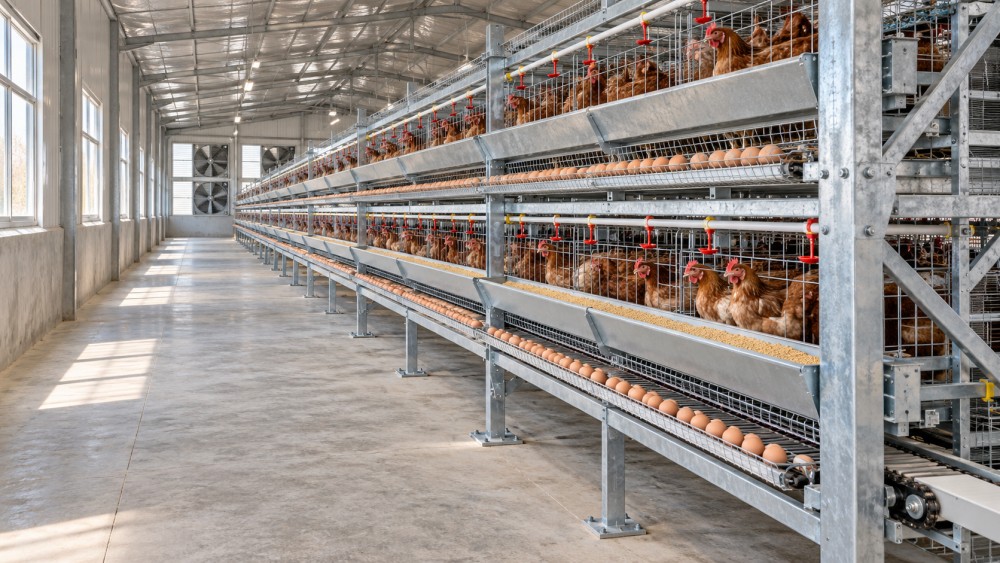
Quotes cannot be compared fairly when suppliers are pricing different farms. A layer cage installation, a floor-based broiler house and a pullet-rearing unit require different equipment packages. Even within layer production, differences in cage layout, egg collection and manure handling can change the building and utility requirements.
A planning brief for a poultry farm in ethiopia should therefore connect equipment selection with flock type, usable building dimensions, site conditions and the intended operating model. Cage prices alone cannot establish the investment required, particularly when the house, water supply or power arrangements remain undecided.
Issue the same design brief to every bidder. Include:
- Production scope: bird type, placement age, intended flock capacity and whether rearing and laying occur in separate facilities.
- Building information: internal dimensions, clear height, columns, access openings and available drawings.
- Site conditions: location, elevation, seasonal temperature and humidity information, road access and water source.
- Operating arrangements: staffing, maintenance capability, power supply and preferred automation level.
- Interfaces: feed delivery, egg storage, manure storage, drainage and future expansion.
Ask each supplier to identify assumptions rather than silently filling gaps. If one proposal assumes an enclosed, mechanically ventilated house and another assumes natural ventilation, their equipment totals are not alternatives on an equal basis.
Housing and management should be planned together rather than treated as separate purchases. This relationship is discussed in FAO’s Poultry Development Review (2013), particularly its material on poultry housing and management in developing countries.
Normalize quotations into one scope matrix
Build a comparison sheet organized by function, not by supplier terminology. “Complete feeding system” is insufficient unless the quotation defines where that system begins and ends. Does it include the feed silo, transfer auger, weighing arrangement, controls and wiring, or only equipment inside the house?
Require a bill of quantities and a list of exclusions alongside the layout. Where a bidder offers an alternative design, retain it as a separate option rather than allowing it to replace the common baseline. Otherwise, an apparent saving may simply reflect work transferred to the buyer.
Build the installed-cost estimate around the actual delivery route
The installed budget should follow the equipment from the supplier’s dispatch point to operational handover. For an Ethiopian destination, request a route-specific logistics quotation identifying the proposed port or terminal, inland transport arrangements and final delivery point. Do not assume that a freight allowance includes unloading at the farm.
A useful budget structure is:
Installed capital cost = equipment + export packing + freight and insurance + import-related charges + inland delivery + site works + utilities + installation and commissioning + initial spares + contingency.
Each amount needs an owner and an evidence basis. Use supplier quotations for equipment, freight-forwarder offers for transport, contractor estimates for site works and current advice from a qualified customs broker for import treatment. Avoid applying a single duty percentage to an entire project without confirming classification and applicable treatment.
Separate recoverable taxes, where applicable, from permanent project costs, while keeping both visible in the cash-flow plan. Any assumed exemption should remain provisional until eligibility and required documentation have been confirmed through the relevant Ethiopian authority or a qualified adviser.
State the Incoterms rule and named place precisely
“FOB price” or “delivered price” is not enough for a purchase order. Specify the agreed Incoterms rule, named port or place, and edition. Under the ICC’s Incoterms 2020, the rules allocate delivery obligations, costs and risks; they do not replace the wider sales contract or define equipment performance.
Pay particular attention to where risk transfers, who arranges insurance and who pays destination handling charges. A quotation that includes ocean freight may still leave substantial inland costs with the buyer. Record those costs separately rather than assuming they are covered by the supplier’s shipping line item.
Also show quotation currency, validity period, payment milestones and the exchange-rate assumption used in the budget. Where commitments and funding are in different currencies, test how an adverse exchange-rate movement would affect the unpaid balance. Keep that allowance separate from physical installation contingency.
Compare equipment against site conditions, not brochure capacity
Published capacity is only useful when its basis is clear. Ask suppliers to show the proposed bird allocation, cage dimensions or floor layout, service access and equipment clearances. Treat stocking assumptions as a design input requiring husbandry and applicable welfare review, not as a figure to maximize during price negotiation.
Ventilation proposals deserve particular scrutiny. Request the environmental design conditions, fan performance at the proposed operating pressure, inlet arrangement and control sequence. Nameplate airflow alone does not establish the performance of an installed house. The supplier should explain how the building envelope and equipment layout affect its design.
Do not let “suitable for Ethiopia” substitute for site information. Provide conditions for the actual location and ask the designer to identify limitations. FAO’s Poultry Development Review (2013) provides background on the relationship between housing, climate and management, but it is not a substitute for project-specific engineering.
For electrical equipment, obtain a load schedule that distinguishes normal running demand from motor-starting requirements. Ask a qualified electrical designer to assess supply compatibility, protection, earthing and backup needs. The purchasing question is not merely whether a generator is included, but which essential functions it must support and how they will restart after an interruption.
Water equipment should follow a similar process. Provide water-test results where available and require the supplier to state inlet pressure, flow and water-quality requirements. “Drinkers included” does not establish whether filtration, storage, pressure regulation or treatment has been adequately budgeted.
Choose automation by workflow and maintenance capability
Automation should address a defined operating constraint. Automatic egg collection may reduce manual handling, but its value depends on flock scale, collection workflow, maintenance support and the equipment’s connection to the egg room. A conveyor ending at an inconvenient discharge point can leave a substantial manual task unchanged.
Evaluate manure removal from the cage or house through to storage and eventual handling. A quotation covering belts inside the building may exclude the cross-conveyor, discharge structure or storage area. Ask how operators will manage a blockage or equipment failure, including whether a practical temporary procedure exists.
Compare manual, partly automated and highly automated options using the same operating assumptions. Include labor tasks, electricity, scheduled servicing, wear parts and repair access. Avoid assigning a precise financial benefit to lower mortality, better feed conversion or fewer damaged eggs unless the supplier provides evidence applicable to the proposed conditions.
Request an initial spare-parts schedule based on criticality. Useful questions include which failed component could stop feeding or drinking, what can be sourced locally, and what requires an imported proprietary replacement. Obtain part numbers, prices, lead times and storage recommendations before agreeing on the spare-parts budget.
Turn quality requirements into inspectable purchase terms
Descriptions such as “heavy-duty” or “high-quality galvanized steel” are not acceptance criteria. Ask suppliers to identify material specifications, relevant component dimensions, corrosion-protection requirements and how conformity will be demonstrated. The appropriate specification depends on the component and operating environment; a single material claim should not stand in for a detailed schedule.
For pre-dispatch inspection, agree which items will be checked and what evidence will be supplied. This might include quantities, dimensions, workmanship, drive identification, control-panel documentation and packing records. Photographs can support traceability, but should not be presented as proof of performance or conformity where measurement or testing is required.
Cleaning access also belongs in the procurement review. Ask how equipment can be cleaned, drained, inspected and maintained without creating inaccessible waste traps. The WOAH Terrestrial Animal Health Code, Chapter 6.5, “Biosecurity procedures in poultry production,” provides a reference framework for poultry biosecurity. It does not certify an individual equipment package or replace local veterinary advice.
Where a supplier cites a standard, request its exact designation, edition, scope and supporting documentation. A certificate for one electrical component should not be treated as certification of the complete installed farm.
Make commissioning and handover part of the commercial comparison
“Installation included” may mean a visiting supervisor rather than a complete installation crew. Establish who supplies labor, tools, lifting equipment, consumables and utilities. Confirm travel costs, working-day allowances and responsibility for delays caused by an unfinished building.
Before shipment, agree on the site-readiness checklist. Before final acceptance, use a written commissioning protocol covering mechanical operation, water delivery and leakage, controls, alarms, and any agreed power-failure response. Define the test method and pass criteria rather than relying on a general promise that the equipment will work.
Handover should include as-built layouts, electrical drawings, operating instructions, spare-parts lists, maintenance schedules and recorded operator training. Clarify when the warranty starts, what it excludes, and whether replacement freight and service labor are covered. These terms can materially change the value of otherwise similar offers.
The award decision should rest on a reconciled scope, a funded installed-cost estimate and an achievable handover plan. If the lowest bidder cannot explain exclusions, site interfaces or acceptance obligations, resolve those gaps before treating its price as the lowest-cost option.
Tags
Weekly Insights
Stay ahead with our curated technology reports delivered every Monday.
Recommended News
 Market TrendsOct 26, 2026How industrial import-export analysis reveals shifts in demand
 Global SourcingOct 25, 2026How to find active suppliers in a trade intelligence platform dashboard
 Supply ChainOct 25, 2026Trade Tariffs Cause Whiplash at Port Milwaukee, Disrupting Cargo Flows
 Supply ChainOct 24, 2026How to use traceability to verify supply chain sustainability claims