How global procurement intelligence analytics can reveal supplier risks
A supplier can meet every delivery date and still be one disruption away from failing a critical order. A production site may depend on a single upstream processor, a congested port, or an energy-intensive process exposed to regulatory change. None of these vulnerabilities is necessarily visible in a contract or a price quote.
Global procurement intelligence analytics helps purchasing teams connect those scattered signals to the decisions they make every day. By combining supplier, market, logistics, and regulatory information, procurement professionals can see where disruption would matter most, investigate the causes, and act before an issue becomes an emergency. The aim is not to predict every shock. It is to make exposure visible enough to manage.
Where supplier risk hides in an apparently healthy relationship
Traditional supplier reviews often concentrate on direct performance: price, quality, delivery, and contract compliance. Those measures remain essential, but they describe only part of the picture. A supplier with excellent service may rely on an upstream source that is difficult to replace, or ship through a route with little spare capacity when conditions change.
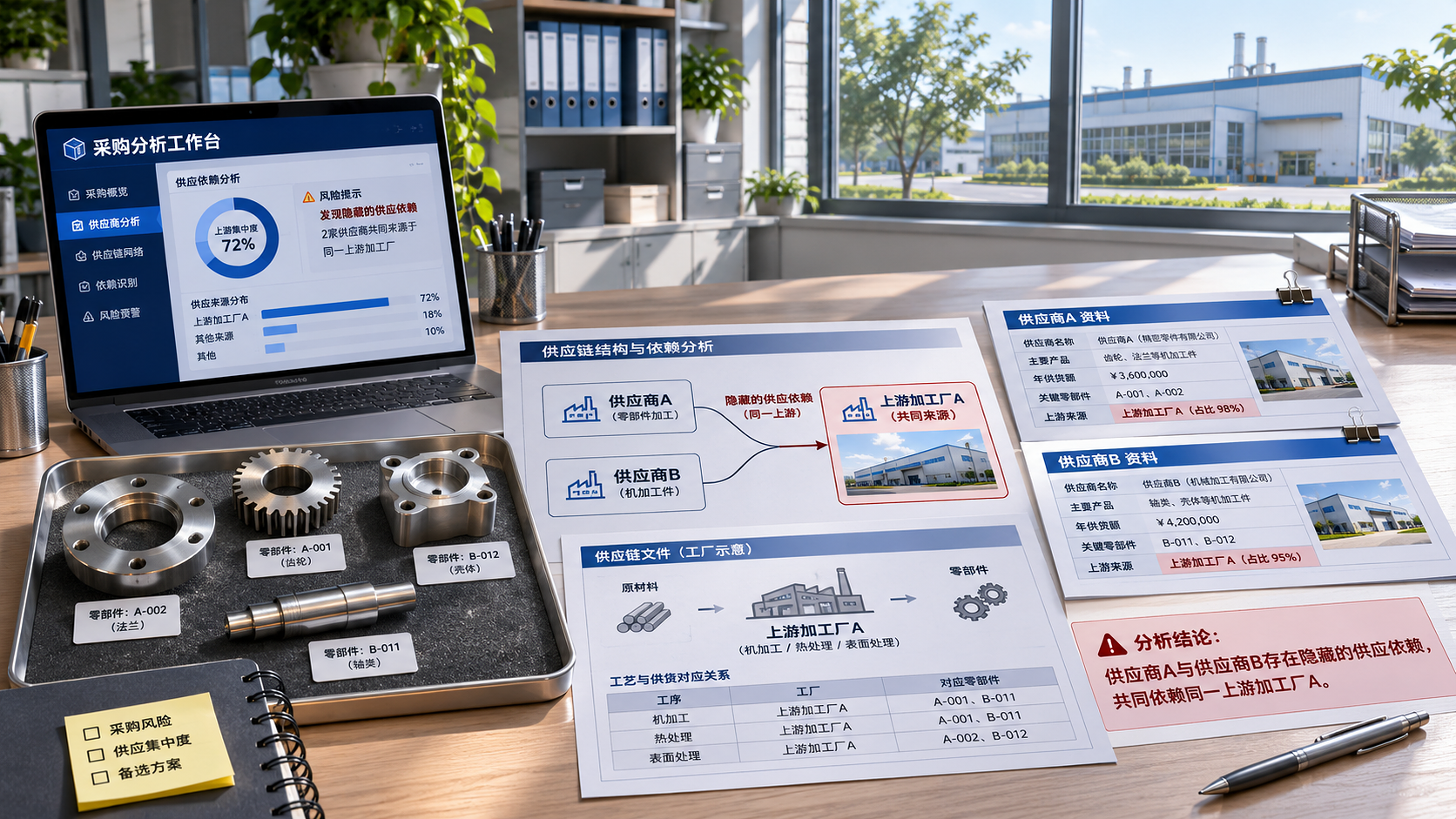
Consider a manufacturer buying a specialized metal component from two approved suppliers. The arrangement looks diversified until the procurement team learns that both suppliers purchase a critical input from the same processor. A disruption at that processor could affect both sources at once. The meaningful risk is not the number of supplier names in the system; it is the shared dependency behind them.
The same logic applies across industries. A machinery supplier may depend on a particular control system, while a packaging provider may rely on resin from a concentrated production region. Procurement intelligence becomes useful when it links those dependencies to the parts, plants, and customer commitments they could affect.
What global procurement intelligence analytics brings together
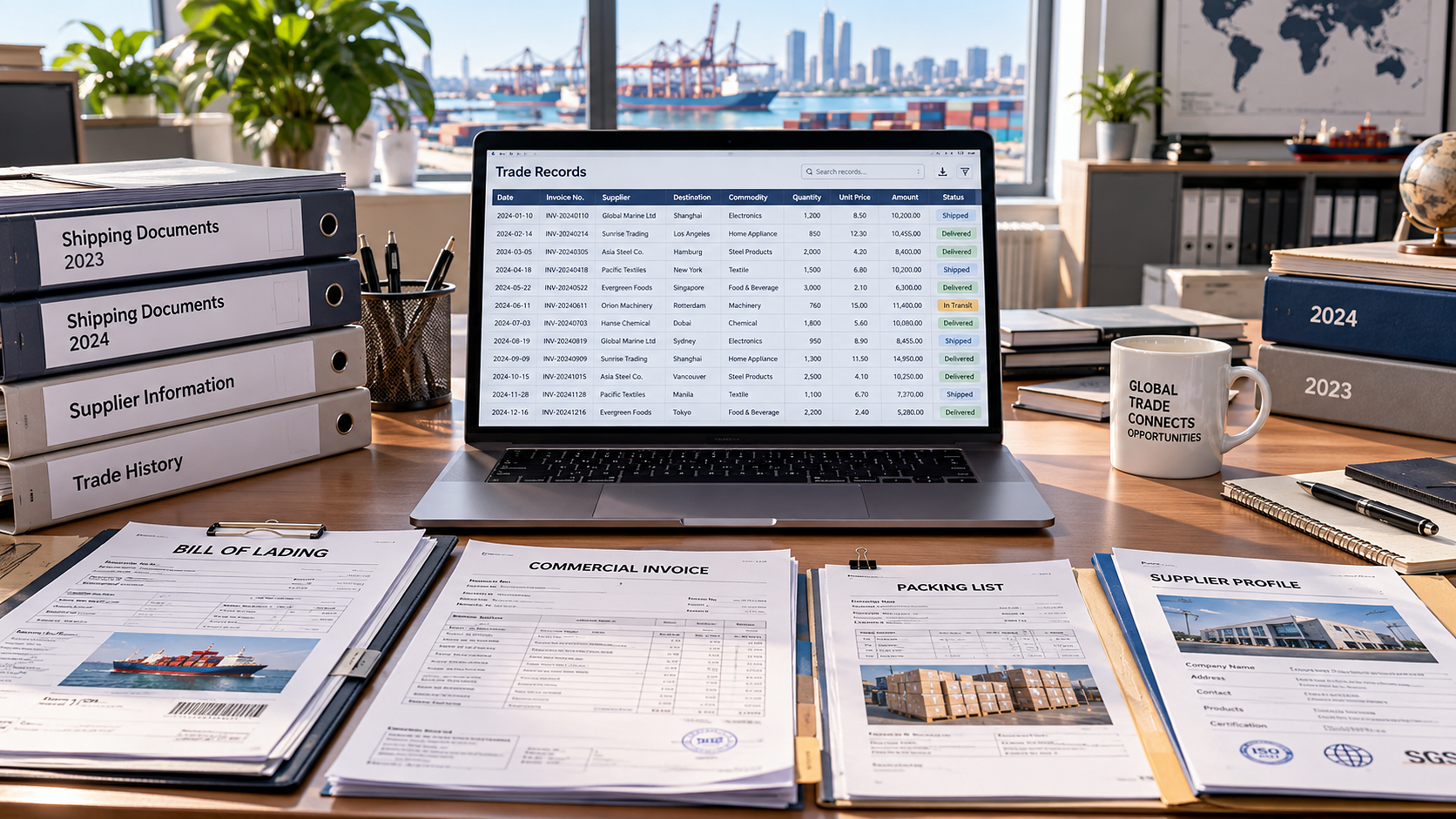
A practical analysis connects information from inside the organization with external evidence. Internal records show what the business buys and how suppliers perform. External intelligence adds context about conditions that purchasing records alone cannot explain.
Not every signal deserves the same weight. A single late shipment may be an isolated event; repeated delays combined with a capacity warning warrant a closer look. Similarly, news about a country or sector is not proof that a particular supplier is affected. The analyst’s job is to connect the event to a specific facility, material, route, or contractual obligation before recommending action.
Map exposure from the purchase order back to the source
Start with a critical product or production line rather than attempting to map the entire supplier base at once. Identify the purchased items that would stop production, affect safety, or take the longest to replace. Then trace the suppliers, manufacturing sites, upstream inputs, and transport routes associated with those items.
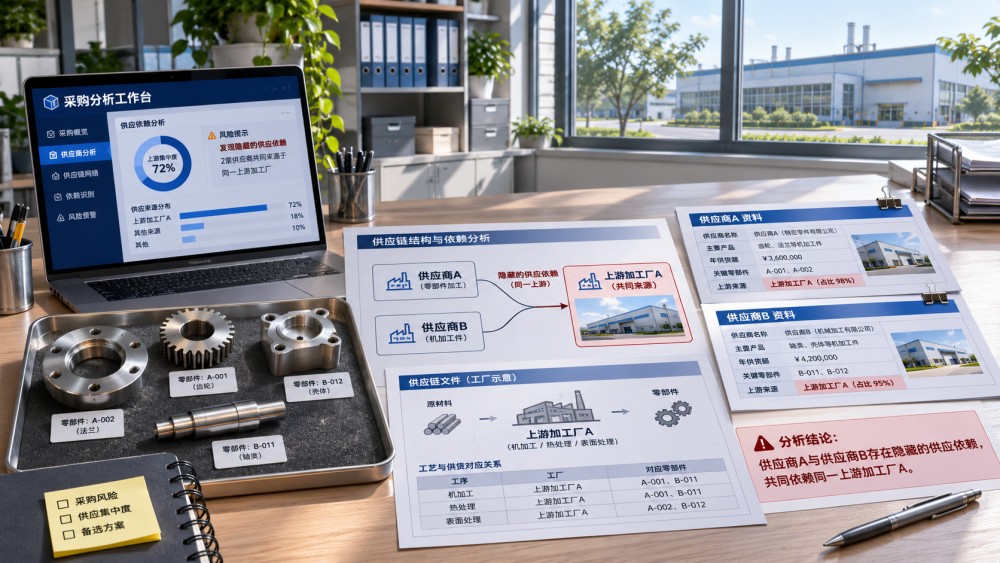
A useful map distinguishes the supplier’s legal entity from the actual production site. A company may have several facilities, but only one may make the grade, specification, or configuration your operation requires. Record the approved site, known sub-tier sources, shipping route, and any alternative capacity. Where information is missing, mark it as unknown rather than assuming there is no dependency.
Cross-functional input matters here. Engineering can explain which material properties or certifications make substitution difficult. Logistics can identify routes and customs handoffs. Quality teams can clarify the testing needed before a new source is approved. Procurement then has a more realistic view of recovery time than a supplier count alone can provide.
Ask suppliers for evidence they can reasonably provide
Supplier questionnaires can uncover dependencies, but broad requests often produce vague answers. Tie questions to specific purchasing decisions: Which site makes this component? What is the normal replenishment lead time? Is a critical input available from another source? What would trigger notification of a production interruption?
Some suppliers may be unable or unwilling to disclose commercially sensitive sub-tier relationships. In that case, ask for an aggregated description of concentration, geographic exposure, or continuity arrangements. Document the limitation and assess whether the remaining uncertainty is acceptable for the item’s importance.
Turn signals into a risk assessment people can use
A dashboard full of alerts is not the same as a sourcing decision. To prioritize effectively, assess each material risk against three practical questions:
- How plausible is disruption? Consider the quality and recency of the evidence, not just the number of negative signals.
- What would the business impact be? Link the supplier or site to affected production, inventory coverage, customer obligations, and potential recovery costs.
- How quickly could the exposure be reduced? A second source is more useful if it is technically qualified and has available capacity, not merely listed in a database.
A simple scoring model can help teams compare exposures consistently. For example, rate likelihood and impact on a defined internal scale, then add a separate measure for detectability or recovery difficulty. Agree on what each score means before applying it, and retain the evidence behind the rating. Scores guide discussion; they should not disguise uncertainty or replace engineering and commercial judgment.
Review thresholds also need owners. If lead time rises beyond an agreed range, who contacts the supplier? If a trade restriction changes, who checks the affected entity and product? Assigning a response and deadline to each material alert prevents monitoring from becoming a passive reporting exercise.
Put the analysis to work in sourcing decisions
Test whether dual sourcing is truly independent
Before awarding business to a second supplier, compare more than quoted prices and locations. Check whether both candidates share a critical processor, rely on the same port, or use tooling that cannot be transferred quickly. If common dependencies remain, dual sourcing may still improve capacity or negotiating flexibility, but it should not be treated as full protection against a shared disruption.
Challenge the lowest landed-cost assumption
A low unit price can look less attractive when longer transit times, customs uncertainty, buffer stock, and qualification costs are included. Use a scenario comparison rather than treating every potential disruption as a certain expense. For each sourcing option, show the assumptions, the likely operational consequences, and which costs are supported by evidence. This gives decision-makers a clearer basis for balancing resilience against cost.
Prepare for regulatory change before renewal
Trade and environmental requirements can affect documentation, reporting, eligibility, or cost. For example, teams buying relevant goods for import into the European Union should assess whether the Carbon Border Adjustment Mechanism applies to their goods and import arrangements, and what emissions information may be needed. Requirements depend on the product and applicable rules, so procurement should verify current obligations with compliance specialists and official guidance rather than relying on a general supplier risk score.
Use scenarios to expose weak recovery plans
Ask what happens if a critical site is unavailable or a major route becomes unreliable. Which purchase orders are affected? How much usable inventory exists? Can another site meet the specification, and how long would approval take? The exercise often reveals that a nominal backup lacks tooling, test approval, or capacity. Those gaps can then become specific actions, such as prequalifying an alternative material or agreeing on an escalation protocol.
Build a monitoring process that stays credible
Begin with a manageable group of high-impact categories or suppliers. Combine purchase-order and performance data with validated external sources, then establish a regular review cadence appropriate to the exposure. A volatile route or financially stressed supplier may need closer attention than a stable, easily replaceable item.
For each data point, record its source, date, coverage, and confidence. Public financial information may be limited for private suppliers; shipment records may not capture every movement; supplier self-assessments may need corroboration. Conflicting evidence should prompt investigation rather than an automatic conclusion. Where possible, verify material findings directly with the supplier and relevant internal teams.
Procurement should also review outcomes. Did an alert lead to a useful intervention? Was a risk missed because a site location was outdated? Did a qualified alternative actually perform when needed? These questions help refine both the data and the thresholds, while reducing alert fatigue.
For teams navigating unfamiliar markets, independent industry research can add context to internal records. GTIIN’s coverage of sourcing, supply chains, market trends, and industry standards can support category research and frame questions about industrial dependencies or cross-border trade. Such analysis is most valuable when checked against current supplier evidence and the buyer’s own technical and commercial requirements.
Supplier risk will never disappear from global sourcing. But it becomes more manageable when procurement teams can trace a warning to a specific dependency, understand the potential business impact, and agree on a proportionate response. That is the practical value of procurement intelligence: fewer assumptions hidden behind a competitive quote, and better choices before time becomes the scarcest resource.
Have questions about this sector analysis, or seeking best practices specific to your niche? Drop us a line below and let the senior consultants at GTIIN assist you.
“We respect your privacy. Your information is strictly confidential.”
Weekly Insights
Stay ahead with our curated technology reports delivered every Monday.
Recommended News
 Global SourcingNov 03, 2026How global procurement intelligence analytics can reveal supplier risks
 Market TrendsNov 03, 2026US to Remove South Africa and Rwanda From AGOA Duty-Free Trade Program
 Global SourcingNov 02, 2026How to assess database coverage in a trade intelligence platform
 Market TrendsNov 02, 2026CFLP Forecasts 17.6% Rise in China's Average Commodity Price Index for 2026