5th Yellow River Expo Links 800 Export Clusters
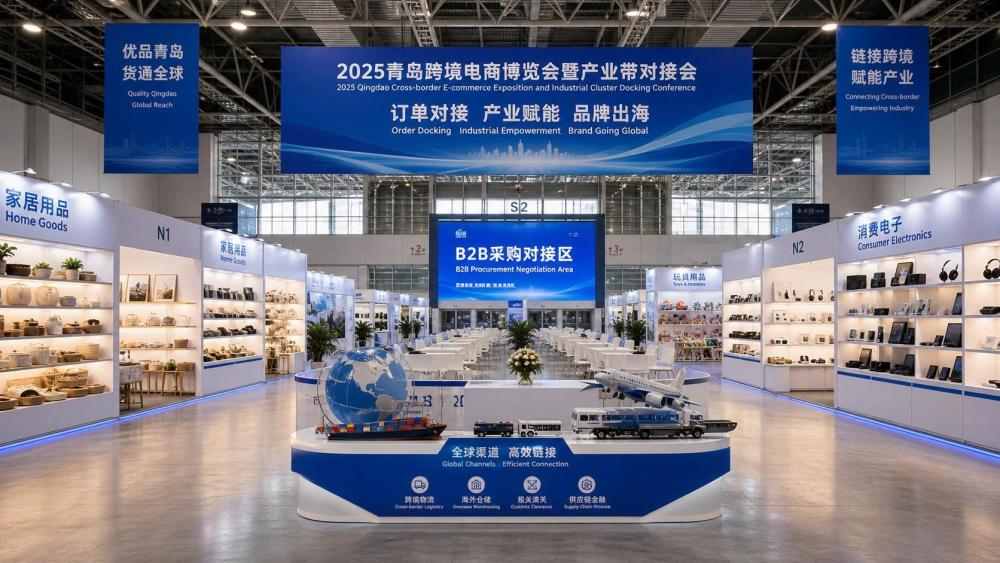
On June 25, 2026, the fifth Yellow River Basin Cross-Border E-Commerce Expo opened in Qingdao, bringing together 800 industrial clusters seeking overseas opportunities and creating a concentrated meeting point for exporters, overseas distributors, brand owners, platforms, and supply-chain participants. With more than 20 export-advantaged categories on display, including household goods and toys and electronics, the event deserves industry attention because it highlights how cross-border B2B matching is being organized around factory resources and global channel access rather than around a single product story.
What the expo confirmed on opening day
The event opened in Qingdao on June 25, 2026 as the fifth edition of the Yellow River Basin Cross-Border E-Commerce Expo. According to the provided event summary, the exhibition covers more than 20 export-oriented product categories, including household daily-use goods as well as toys and electronics. It attracted nearly 40 major international platforms and more than 50,000 professional visitors. A dedicated global procurement matchmaking zone was also set up to support precise B2B connections between overseas distributors, brand owners, and factories from China’s industrial clusters.
Why different market participants may be watching closely
Factories and export-oriented manufacturers
From an industry perspective, manufacturers are likely to view this type of event as a channel-access opportunity rather than only a branding showcase. The dedicated procurement matchmaking area suggests that the most immediate impact may fall on customer acquisition, quotation preparation, sample coordination, and discussions around production capability for factories in export-oriented clusters.
Overseas distributors and brand-side buyers
For overseas distributors and brand owners, the practical value lies in the ability to compare multiple industrial-belt suppliers across more than 20 categories in one setting. Analysis shows that this may affect supplier screening, category expansion decisions, and the pace of B2B sourcing conversations, especially where buyers want direct factory engagement instead of relying only on fragmented channel searches.
Platforms and cross-border channel operators
Nearly 40 mainstream international platforms appearing at the expo indicates that platform-side channel operators may be paying close attention to category supply, merchant quality, and the readiness of cluster-based manufacturers to connect with cross-border demand. What deserves closer attention is whether these interactions remain exhibition-level visibility or translate into more structured onboarding, compliance review, and longer-term merchant development.
Supply-chain and trade service providers
Service providers involved in fulfillment, documentation, communication support, and order coordination may also be affected because more precise B2B matching can shift demand toward faster response times and clearer transaction preparation. Observably, when factory-to-channel matching becomes more direct, the quality of delivery planning and documentation handling becomes more visible in early-stage negotiations.
What companies should focus on after the opening
Track whether matchmaking turns into actionable requirements
Companies should pay attention to whether buyer conversations move from exhibition introductions to concrete requirements such as product lists, sampling needs, documentation requests, and delivery expectations. The event format matters, but the follow-through on B2B precision matching matters more for actual business conversion.
Prepare category-specific materials, not only general brochures
Because the expo covers more than 20 export-advantaged categories, participating manufacturers and service teams should focus on materials that fit category-level procurement discussions. Analysis shows that buyer communication in household goods may differ from toys and electronics, so preparation should be aligned with the specific product line being presented rather than relying on broad corporate messaging.
Watch platform participation with a practical lens
The presence of nearly 40 major international platforms is notable, but companies should distinguish between platform visibility and immediate business results. What deserves closer attention is whether platform-side engagement leads to clearer merchant requirements, process expectations, or onboarding conditions that affect next-step execution.
Strengthen fulfillment and communication readiness
If the expo generates direct contact between overseas channel buyers and industrial-belt factories, then responsiveness, documentation completeness, production scheduling clarity, and delivery communication become operational priorities. This is especially relevant for companies hoping to convert exhibition exposure into repeat B2B discussions after the event.
How this development is better understood for now
Analysis shows that this news is more appropriately understood as a market signal than as proof of completed commercial outcomes. The confirmed facts point to strong participation, broad category coverage, and a structured procurement-matching setup. However, whether that translates into sustained order growth, deeper platform cooperation, or wider restructuring of cross-border sourcing behavior still requires observation beyond the opening stage.
Observably, the more meaningful point for the industry is that industrial-cluster export capacity and global channel demand are being connected in a more organized B2B setting. That makes the event relevant not only as an exhibition update, but also as a reference point for how suppliers, buyers, and platforms are trying to reduce friction in cross-border business matching.
A measured reading of the expo’s significance
At this stage, the opening of the fifth Yellow River Basin Cross-Border E-Commerce Expo indicates active interest in linking China’s industrial clusters with global distribution and brand-side demand through more targeted B2B matchmaking. It is more appropriate to understand this as a short-term operating signal with possible longer-term implications, rather than as a confirmed industry outcome. For companies across manufacturing, trade, channels, and services, the key issue now is not only who attended, but what practical follow-up emerges from the connections made there.
Basis of this article and what still needs checking
This article is based on the user-provided news title, event date, and event summary. For this type of industry update, commonly relevant source categories may include official event announcements, company statements, industry association releases, authoritative media coverage, and related trade documentation. A specific official source link was not provided in the input, so further verification is still needed. Follow-up attention should focus on any later official disclosures related to procurement outcomes, platform participation details, and the practical progress of B2B matching after the expo opening.
Tags
Weekly Insights
Stay ahead with our curated technology reports delivered every Monday.
Recommended News
 Global SourcingJun 25, 2026Procurement Strategy for Manufacturers: Cost Risks to Watch
 Industry StandardsJun 25, 2026Materials Engineering Standards in Europe: What to Check First
 Global SourcingJun 25, 2026When to Hire an Industrial Cost Benchmarking Consultant
 Supply ChainJun 25, 2026Port Congestion Report: What Delays Mean for Lead Times