How to identify supplier dependencies with a supply chain mapping dashboard
A supplier delay can appear to affect one purchase order while the same upstream plant supplies components for several products. Separate supplier names may conceal a shared factory, raw-material source, or transport route. To identify these dependencies, connect products and sites to the suppliers, facilities, and upstream sources they actually rely on, then examine where multiple paths converge.
A supply chain mapping dashboard makes those connections visible, but its conclusions depend on the underlying records. Start with a critical product or facility, trace its supply paths beyond direct suppliers, and distinguish verified links from assumptions. Then assess the operational impact of each concentration before deciding which dependency needs action.
Start with a question the map must answer
A dashboard is more useful when it is built around a decision than when it attempts to display the entire supply network at once. Choose a scope such as “Which production sites depend on the same component factory?” or “Which finished products rely on one upstream material source?” Define the product family, locations, and planning period before gathering data.
Use the scope to set a practical boundary. A manufacturer may begin with components that can stop a production line; a distribution operation may focus on products with limited replenishment options. Include direct suppliers first, then trace deeper where an interruption would be difficult to absorb or where multiple supply paths appear to converge.
Agree on the unit of analysis. A supplier company is not the same as a manufacturing site: one company may operate several independent facilities, while different commercial suppliers may buy from the same plant. Mapping only company names can hide a shared point of failure or make a diversified network look more concentrated than it is.
Build the relationships behind the dashboard
Combine purchasing and operational records into a consistent set of entities and links. The minimum useful map connects an item to a supplying site and the receiving site or product that uses it. Add upstream sites, materials, and logistics nodes as information becomes available.
- Entities: supplier legal entity, operating site, internal facility, material or component, and finished product. Assign stable identifiers and retain addresses where permitted.
- Supply links: which site makes or handles an item, which site receives it, and which products or processes depend on it.
- Operational attributes: sourcing status, estimated lead time, available inventory, qualification status, and the relevant share of demand, where reliable figures exist.
- Evidence: source of each relationship, date last confirmed, responsible owner, and whether the link is verified, reported, inferred, or unknown.
Purchase orders, supplier master records, bills of materials, approved-source lists, and logistics records can provide different pieces of the picture. Reconcile them before loading: a purchase order may name a distributor, while a specification or supplier response identifies the actual manufacturing site. Record both roles rather than replacing one with the other.
Normalize names and identifiers carefully. Similar names do not prove two records represent the same entity, and a shared postal address does not always prove the same production line is involved. Keep the original source values alongside the standardized record so an operator can review uncertain matches.
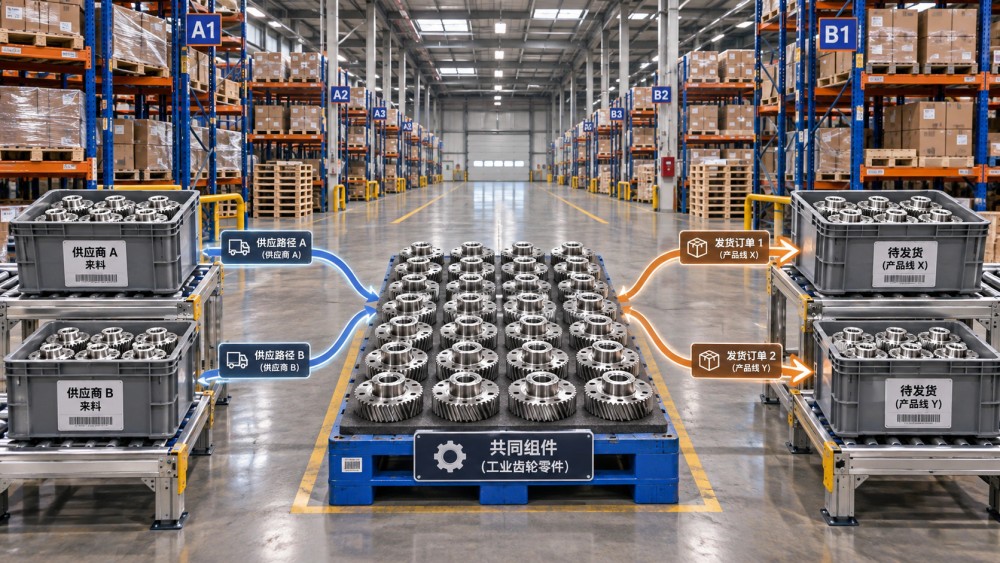
Trace the paths and look for convergence
In the dashboard, begin with a product, critical item, or receiving facility and follow its links upstream. Then reverse the view: select a supplier site or material source and show every downstream item, product, and facility connected to it. The first view explains where a product gets its inputs; the second reveals the potential reach of a disruption.
Separate direct concentration from hidden concentration
A direct concentration exists when one approved supplier or site provides an item with no currently usable alternative. A hidden concentration can exist even when several direct suppliers are approved: they may source a critical ingredient, subcomponent, tool, or manufacturing service from the same upstream site.
Filter the map by item and compare the upstream paths. If two paths converge on one facility, check whether both suppliers actually use that facility for the relevant item and period. A relationship at the company level alone is not enough to establish that every product follows the same route.
Also inspect dependencies outside the bill of materials. Different suppliers may depend on the same port, specialist testing service, or processing facility. These shared nodes matter when an interruption prevents material from reaching or meeting the requirements of the receiving operation. Avoid treating every shared route as a single point of failure until routing alternatives and practical constraints have been checked.
Test whether an alternative is usable
Two supplier records do not automatically equal two independent sources. Check whether the second source is approved for the specific item and receiving site, has suitable capacity, and can deliver within the required time. It may share tooling, material inputs, or logistics infrastructure with the primary source.
Mark an alternative as available only when the relevant conditions have been confirmed. Otherwise, distinguish “identified,” “qualification pending,” and “unverified.” That distinction prevents a dashboard from understating exposure simply because an alternate supplier appears in a master file.
Turn a map finding into an operational priority
A crowded node is a signal to investigate, not an automatic ranking. A shared site serving several low-impact items may warrant less urgent attention than a single source for a part that can stop a critical process. Assess each finding using information the team can explain and update.
Where inventory and demand data are available, estimate coverage in the same unit and for the same location. Exclude stock that is blocked, allocated elsewhere, or incompatible with the affected process. Compare that coverage with a documented replenishment or recovery estimate; neither figure should be treated as fixed when conditions are changing.
A simple priority scheme can combine operational impact, time to shortage, availability of alternatives, and confidence in the relationship. Keep the components visible rather than relying on a single unexplained risk score. A high-impact link with uncertain evidence may deserve immediate verification, while a verified dependency with adequate coverage may allow time for a planned sourcing review.
Work through a dependency alert
When a dashboard flags a shared upstream facility, open the underlying links before escalating. Confirm the affected material and manufacturing location, then inspect the downstream products and sites. Check whether the link applies to current supply or only to historical orders; an inactive relationship can create a misleading alert.
- Validate the connection. Compare the dashboard record with the latest supplier confirmation, item specification, or other available evidence. Ask the direct supplier which site performs the relevant operation if that detail is missing.
- Define the exposure. Identify affected orders and receiving locations, then check usable stock and expected arrivals. Avoid adding demand figures twice when one component feeds several products.
- Review response options. Check approved alternate sites, substitution constraints, available capacity, and transport routes. Record who must approve any change before it is treated as executable.
- Assign an action and review date. The next step may be obtaining site-level confirmation, qualifying a source, adjusting a replenishment plan, or preparing an allocation decision. Record the owner and the evidence needed to close the issue.
For example, if separate distributors supply the same component, the useful question is not merely whether both distributors have stock. Determine whether their stock originates from the same manufacturing site, whether either can replenish from another approved site, and how long current inventory can support the affected facilities. Until those details are confirmed, the shared-source exposure remains a hypothesis rather than a verified dependency.
Keep missing and stale information visible
Upstream visibility is rarely complete. A blank supplier tier should not be displayed as evidence that no dependency exists. Use a clear unknown status and show which critical items or supply paths lack site-level confirmation. Prioritize requests for the gaps that could change an operational decision, rather than asking every supplier for every possible relationship at once.
Set an update cadence that reflects the source and the decision. Purchase and inventory data may change frequently, while upstream manufacturing relationships may be confirmed less often. Recheck links after a supplier changes sites, an item is requalified, a major route changes, or a disruption exposes a discrepancy. Preserve confirmation dates so users can tell a current record from an old one.
Control access to sensitive supplier and pricing information, and agree on what can be shared with each participant. When detailed sub-tier identities cannot be disclosed, a supplier may still be able to confirm whether two supply paths share a site or whether an alternative is independent. Label that response according to its evidence level; do not fill the gap with an assumed relationship.
The dashboard is ready for routine use when an operator can select a critical item, trace its known upstream paths, see the affected downstream operations, and open the evidence behind each important link. Where any of those steps stops at an unknown, make the next verification task visible alongside the map.
Have questions about this sector analysis, or seeking best practices specific to your niche? Drop us a line below and let the senior consultants at GTIIN assist you.
“We respect your privacy. Your information is strictly confidential.”
Weekly Insights
Stay ahead with our curated technology reports delivered every Monday.
Recommended News
 Market TrendsNov 23, 2026Financial Times: Chinese Carmakers Are Winning the Global Auto War
 Global SourcingNov 23, 2026China Calls on Switzerland to Help Ease China-EU Trade Frictions
 Market TrendsNov 23, 2026U.S. Trade Representative Says Canada Trade Deal Is “Quite Close”
 Supply ChainNov 23, 2026How to identify supplier dependencies with a supply chain mapping dashboard