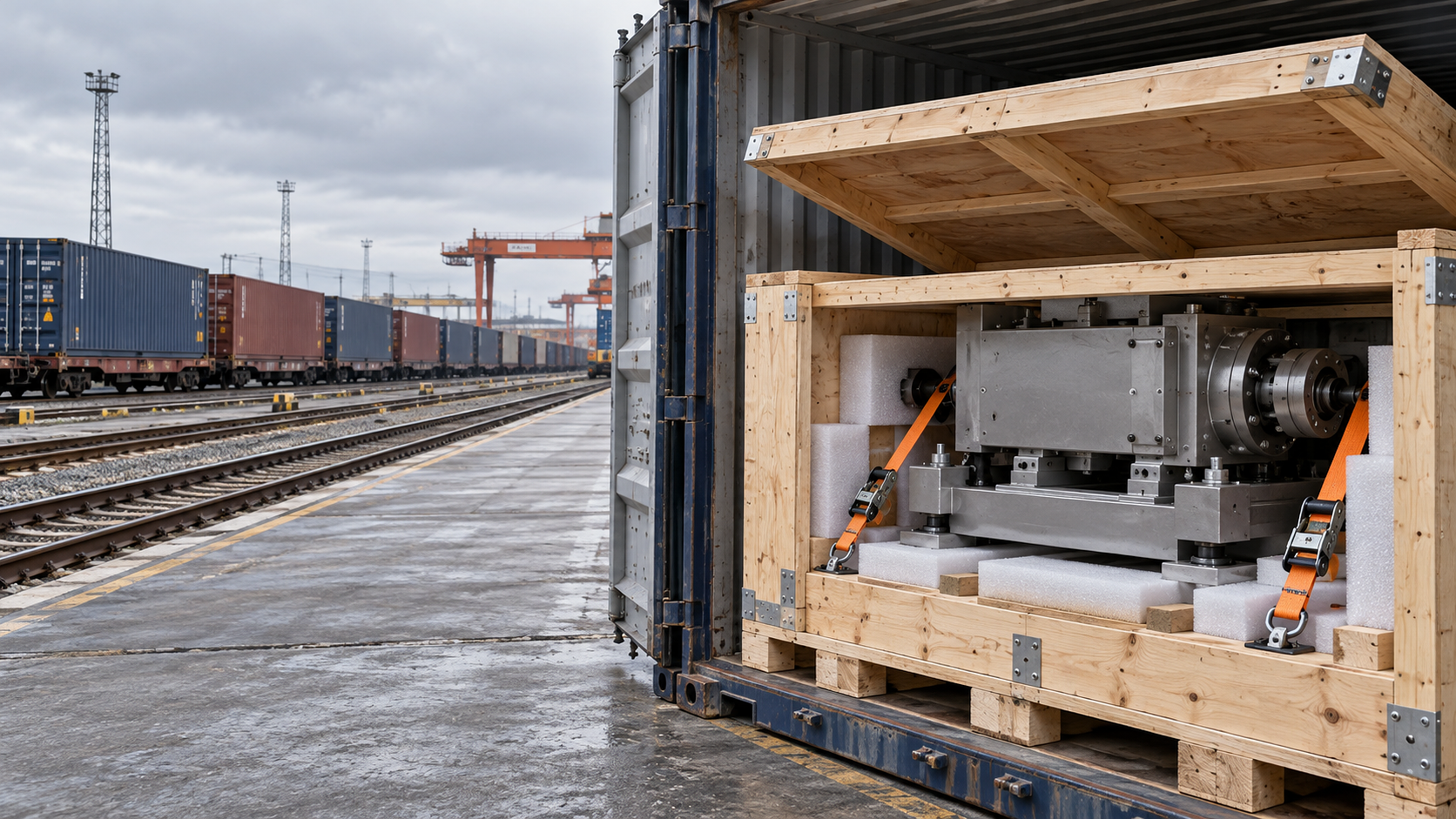
When does supplier diversification reduce tariff risk?
Supplier diversification reduces tariff risk when alternative sources create genuinely different customs exposure and can supply usable volume at an acceptable total cost. Adding supplier names is not enough: two vendors shipping goods with the same customs origin may remain exposed to the same tariff increase.
The strongest case for diversification exists when a business has concentrated exposure to an origin-specific duty, an alternative production location offers a defensible origin position, and switching costs are lower than the value of the protection. If the alternative shares the same upstream bottleneck, cannot scale, or requires expensive requalification, diversification may produce little more than a more complicated supplier portfolio.
The relevant difference is customs exposure, not supplier address
A supplier’s registered office, invoicing location, shipping port, and the customs origin of its goods are separate facts. Buying through a distributor in another country does not, by itself, change origin. Neither does routing a shipment through an intermediate warehouse.
Origin depends on the importing jurisdiction’s rules and the production performed on the goods. Depending on the applicable regime, the analysis may involve substantial transformation, specified manufacturing operations, changes in tariff classification, regional value content, or other product-specific requirements. Preferential origin under a trade agreement and non-preferential origin used for other customs purposes are not interchangeable.
This distinction determines whether diversification changes the tariff outcome. A second factory that performs substantive manufacturing may offer a different exposure. A second exporter that repackages the same finished goods may not. Even genuine production relocation needs a product-specific assessment rather than an assumption that any local assembly establishes a new origin.
Tariff classification also matters. The correct code must reflect the imported product’s characteristics; it is not a sourcing variable that can be selected to obtain a lower rate. Product redesign can change classification, but only where the resulting goods legally fall within a different provision.
Before treating an alternative as a tariff hedge, establish its manufacturing location, production process, applicable classification, origin evidence, and duty treatment in the destination market. Where the financial exposure is material or the origin analysis is uncertain, an available customs ruling or qualified specialist review can be more valuable than a supplier’s assurance.
Match the alternative to the tariff being managed
Different duties require different sourcing responses. Moving production between countries can reduce exposure to an origin-specific measure, but it does not necessarily address a tariff applied broadly to the same product across origins.
Trade-remedy duties deserve particular care. A different supplier in the same country can sometimes have a different applicable rate, while a supplier elsewhere may still raise scope or circumvention questions. These outcomes depend on the specific measure and jurisdiction, not on a general rule that another country is automatically safer.
Effective tariff risk management strategies therefore start with the duty’s legal trigger. “Reduce dependence on one country” is a portfolio objective; “reduce exposure to this measure on these imported products” is a decision that can be tested.
Independent factories can still share the same vulnerability
Two suppliers may have different final manufacturing locations but depend on the same upstream source for castings, electronic components, chemicals, or specialized tooling. That shared dependency creates two distinct issues.
The first is customs treatment. Imported inputs can affect whether finished goods meet the relevant origin requirements, particularly under preferential rules. However, an input’s origin does not automatically determine the finished product’s origin: the applicable rules and processing remain decisive.
The second is commercial exposure. Even if finished goods have different customs origins, both suppliers may raise prices when a common input becomes more expensive. A tariff imposed in an upstream market can enter the quotation indirectly, without appearing as a duty on the buyer’s own import declaration.
A useful supply-chain map therefore connects each finished product to its manufacturing site, critical inputs, input suppliers, and constrained processes. The aim is not to trace every low-value component equally. It is to identify the dependencies that could invalidate the origin position, transmit a tariff-related price shock, or prevent the alternative from expanding output.
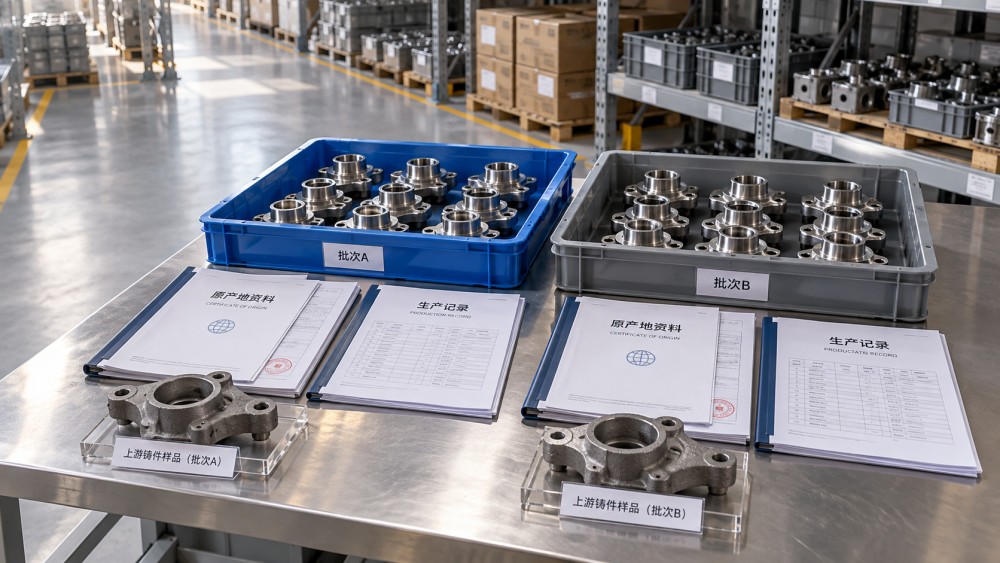
Supplier ownership also needs interpretation. Two plants owned by one group may offer genuine origin diversification, but allocation decisions remain centralized. Two unrelated vendors may compete for the same subcontractor’s capacity. Neither arrangement should be counted as independent protection without checking how production would respond under stress.
The alternative must work before the tariff shock
A quotation is not switching capacity. An alternative source reduces near-term exposure only to the extent that it can deliver approved goods within the required period.
For engineered components, qualification may involve tooling, dimensional approval, material testing, process validation, or customer authorization. In regulated applications, changing a manufacturing site or material source can require additional documentation or approvals. These requirements determine when the tariff hedge becomes usable.
Capacity claims need similar scrutiny. A factory’s nameplate capacity is not the volume available to a specific buyer. Relevant evidence includes qualified production lines, bottleneck equipment, labor availability, input commitments, and the supplier’s allocation obligations to other customers.
The practical question is: how much approved volume can move, by what date, at what contractual price? A source capable of replacing 10% of demand over six months provides different protection from one able to replace 40% within a normal replenishment cycle.
A modest recurring allocation can keep tooling active, maintain process familiarity, and expose delivery or quality problems before an emergency. Its cost should be treated as the price of maintaining an option. A dormant supplier record, without current approvals or reserved capacity, offers a weaker option and should be valued accordingly.
Compare the insurance cost with the tariff exposure avoided
The economic test is not whether the alternative has a lower tariff rate. It is whether the resulting savings or protection justify the change in total landed cost and implementation expense.
The comparison should include the purchase price, applicable duties, freight, brokerage, inventory financing, quality losses, tooling, qualification, and ongoing supplier-management costs. Duty calculations must use the applicable customs value and rules. Recoverable import taxes should be distinguished from permanent costs, although their financing impact may still matter.
Consider a simplified hypothetical comparison for the same accepted product:
- The incumbent has a customs value of $100 per unit and non-duty landed expenses of $8.
- The alternative has a customs value of $108 per unit and non-duty landed expenses of $10.
- Both face an assumed baseline duty of 5%, with no other duties or taxes included.
The incumbent’s baseline landed cost is $113; the alternative’s is $123.40. The alternative therefore carries a $10.40 per-unit premium before fixed qualification costs.
If an additional, additive 20-percentage-point duty applies only to the incumbent’s origin, its landed cost rises to $133 under these assumptions. The alternative then provides a $9.60 per-unit advantage. At an additional 10 percentage points, however, the incumbent costs $123 and remains slightly cheaper.
This illustration produces a break-even additional duty of 10.4 percentage points before fixed costs. It is not a forecast or a representation of any current tariff schedule. Actual measures may use different calculation methods, interact with other duties, or apply to different valuation bases.
Timing changes the result. An additional duty lasting a short period may not repay tooling and qualification costs. A recurring premium paid across all annual purchases can outweigh savings earned on a small switched volume. Conversely, an alternative with a modest cost premium may be valuable if it protects margins on a large, exposed product line.
Choose between full relocation and a maintained switching option
Full replacement is justified when the alternative is competitive under a credible range of tariff outcomes and can meet operational requirements. It is harder to justify when its advantage depends entirely on one policy remaining in force.
Dual sourcing can be more proportionate where the tariff outlook is uncertain. The incumbent retains volume while a qualified alternative receives enough business to remain operationally ready. The business pays a known premium in exchange for the ability to redirect a defined share of future orders.
That option should be evaluated through scenarios rather than a single tariff assumption:
- No policy change: Does the continuing premium fit within the approved resilience budget?
- Targeted increase: How much volume can move before higher-duty shipments arrive?
- Broader measures: Does the alternative retain an advantage if both origins become affected?
- Tariff removal: Can allocations change without stranded tooling, excess inventory, or contractual penalties?
Probabilities can support an expected-cost calculation where there is a defensible basis for them. Otherwise, comparing scenario costs and maximum tolerable losses is more transparent than assigning precise-looking probabilities to uncertain policy decisions.
Contract terms influence the value of the option. Minimum purchases, capacity-reservation fees, price-reset clauses, tooling ownership, and termination rights can make a nominally flexible arrangement expensive to use—or expensive not to use. Duty-paid pricing also requires clarity on who bears tariff changes; shifting the invoice obligation does not necessarily remove the economic exposure.
Approve diversification against a defined exposure
A defensible sourcing decision should identify the products covered, their current duty treatment, the alternative’s supported origin position, qualified transferable volume, switching lead time, and total cost under the relevant scenarios. It should also assign responsibility for monitoring changes in manufacturing processes, origin evidence, and applicable measures.
The approval threshold is strongest where the tariff difference is legally supportable, replacement capacity is operationally credible, and the protection remains worthwhile after premiums and fixed costs. Where only one of those conditions holds, the arrangement may still offer supply continuity or commercial leverage, but those benefits should not be mislabeled as tariff protection.
The useful measure is not the number of suppliers added. It is the amount of exposed purchasing that can move to a genuinely different customs position, within the required time, at a cost the business is prepared to carry.
Weekly Insights
Stay ahead with our curated technology reports delivered every Monday.
Recommended News
 Supply ChainOct 27, 2026How to account for chargeable weight in air freight cost analysis
 Supply ChainOct 27, 2026USTR Proposes Extending Pause on China Maritime Trade Measures to January 2027
 Market TrendsOct 26, 2026How industrial import-export analysis reveals shifts in demand
 Industry StandardsOct 27, 2026What Are the Main Risks of Rail Freight for High-Value Cargo?