
Xi’an-Europe Rail Debuts Green Express for Carbon-Tracked Energy Cargo
On June 27, 2026, a new development in China-Europe rail logistics drew attention from exporters of renewable energy equipment, European importers, and cross-border compliance teams: the Xi’an China-Europe freight service launched a “Green Express” that combines real-time carbon emissions monitoring with an ISO 14067-compliant transport carbon footprint report. For businesses moving products such as photovoltaic inverters and energy storage battery systems, the significance lies less in the train launch itself and more in the growing integration of logistics, carbon accounting, and supply chain due diligence into a single service workflow.
What Was Confirmed at the Xi’an Launch
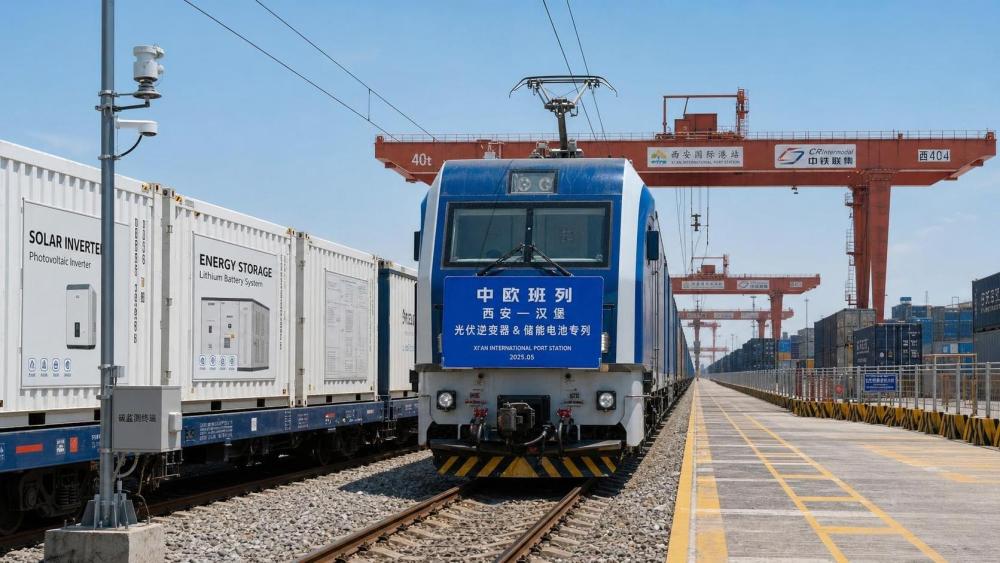
According to the provided event information, China State Railway Group, together with SGS and TÜV Rheinland, launched the first “Green Express” China-Europe freight train at Xi’an International Port Station on June 27, 2026. The inaugural train carried photovoltaic inverters and energy storage battery systems.
The train was equipped with real-time carbon emissions monitoring terminals, and a cross-border transport carbon footprint report compliant with ISO 14067 was generated at the same time. The service is open for subscription by European importers and is intended to support their compliance with EU CSDDD supply chain due diligence obligations while reducing the compliance cost of importing green products.
Why Different Supply Chain Participants May Pay Attention
For exporters of new energy equipment, logistics data is moving closer to product compliance
From an industry perspective, manufacturers and direct trading companies shipping photovoltaic and energy storage equipment may be affected because transport-stage carbon data is being formalized within the delivery process. The immediate point of attention is not only freight execution, but also whether shipment documentation can better support customer-side compliance review.
For European importers, due diligence work may become more operational
European buyers and procurement teams may see value in a service that links transport activity with an ISO 14067-aligned carbon footprint report. The likely impact falls on supplier onboarding, import documentation review, and customer audit preparation. What deserves closer attention is how such reports are used in actual procurement and compliance workflows, rather than assuming that the availability of a report alone resolves all due diligence requirements.
For logistics and certification service providers, service boundaries are shifting
Supply chain service providers may be affected because the event suggests a closer connection between rail transport operations, carbon monitoring, and third-party verification frameworks. The business impact is likely to appear in document handling, data coordination, and client-facing compliance support. Observably, service providers will need to watch whether customers begin to expect carbon-reporting capability as part of standard cross-border logistics arrangements for green products.
What Companies Should Watch Next
How the service is described in subsequent official communications
Companies should pay attention to how the “Green Express” is presented in later official statements, especially regarding service scope, eligible cargo categories, documentation format, and subscription conditions. This matters because the practical business value will depend on how consistently the model can be applied beyond the inaugural shipment.
Which cargo categories are most directly affected
The first train carried photovoltaic inverters and energy storage battery systems, so exporters and importers in these categories have the clearest reason to follow the development. Analysis shows that firms handling similar shipments should monitor whether customers begin requesting transport carbon footprint materials earlier in the sales or delivery cycle.
The difference between compliance support and full compliance completion
What deserves closer attention is the distinction between supporting EU CSDDD due diligence and fully satisfying every downstream compliance need. Companies should be careful in customer communication, internal review, and contract handling to avoid treating one transport carbon report as a complete substitute for broader supply chain documentation.
Readiness in documents, delivery planning, and customer coordination
In practical terms, exporters, procurement teams, and supply chain managers should prepare for more detailed requests around shipment records, supporting documents, and delivery-related emissions information. The immediate operational issue is whether teams can align freight, certification, and customer-facing documentation without delaying delivery commitments.
How This Development Is Best Understood Now
Analysis shows that this news is best read as a concrete operational signal rather than as a final industry endpoint. The confirmed facts indicate that carbon tracking and ISO 14067-aligned reporting are being embedded into a China-Europe rail service for renewable energy cargo, and that the offer is positioned to help European importers manage due diligence obligations.
At the same time, it is more appropriate to understand this as an early indicator of where cross-border green product logistics may be heading, not as proof that a single new standard has already been fully adopted across the market. The industry still needs to observe whether similar arrangements expand, how buyers use the resulting reports, and how consistently the service translates into day-to-day compliance practice.
What the News Means for the Market Right Now
The immediate importance of this development lies in the closer linkage between transport execution and compliance-ready carbon documentation for cross-border trade in renewable energy equipment. That linkage may matter most to exporters serving European customers, importers facing due diligence pressure, and logistics-related service providers supporting documentation-heavy transactions.
For now, a neutral reading is the most appropriate: this is a meaningful operational move with clear practical relevance, but its broader market impact still depends on follow-through, adoption, and how customers incorporate the service into real procurement and compliance processes.
Basis of This Article and What Still Needs Verification
This article is based on the user-provided news title, event date, and event summary. For this type of development, commonly relevant source categories may include official announcements, company statements, industry association updates, authoritative media reporting, and documents from standard-setting organizations.
No specific official source link was provided in the input, so further verification remains necessary. Observably, the next points to monitor are whether additional official disclosures clarify service rules, whether the scope expands beyond the first shipment categories, and how the reported carbon-footprint documentation is referenced in cross-border compliance practice.
Have questions about this sector analysis, or seeking best practices specific to your niche? Drop us a line below and let the senior consultants at GTIIN assist you.
“We respect your privacy. Your information is strictly confidential.”
Weekly Insights
Stay ahead with our curated technology reports delivered every Monday.
Recommended News
 Supply ChainNov 10, 2026China Extends Pause on 24% Additional Tariff on US Goods by Two Months
 Industry StandardsNov 10, 2026Which imports are subject to EU carbon border compliance?
 Global SourcingNov 09, 2026USTR Extends 178 China Section 301 Tariff Exclusions to January 2027
 Supply ChainNov 09, 2026How can a tariff risk management dashboard track cost exposure?



