Optimizing Agricultural Capex: Freight and Lead Time Management for High-Density Layer Cages
Transitioning a regional farming operation into a globally competitive, industrial-scale egg production enterprise requires far more than robust capital financing; it necessitates flawless logistical execution. When farm directors decide to upgrade their processing capabilities to house hundreds of thousands of birds, the immediate operational hurdle is physically acquiring and transporting the required heavy machinery from overseas manufacturers to the domestic construction site.
Unlike standard consumer goods or palletized agricultural feed, the galvanized steel tiers utilized in modern layer farming are massive, hyper-dense structures. Moving these heavy assets from an overseas manufacturing hub to a domestic concrete foundation represents one of the most perilous supply chain maneuvers in the agribusiness sector. This comprehensive supply chain analysis dissects the profound logistical complexities, timeline synchronization risks, and containerization strategies required to successfully transport heavy-duty avian containment equipment across the globe.
The Unique Logistics of Heavy-Duty Avian Infrastructure
To fully grasp the magnitude of this supply chain challenge, one must first understand the physical architecture of the cargo itself. An industrial layer containment system is not a single, easily maneuverable component. It consists of tens of thousands of individual galvanized wire mesh panels, massive cast-iron drive motors, continuous rolls of polypropylene (PP) manure belts, and miles of automated feeding chains.
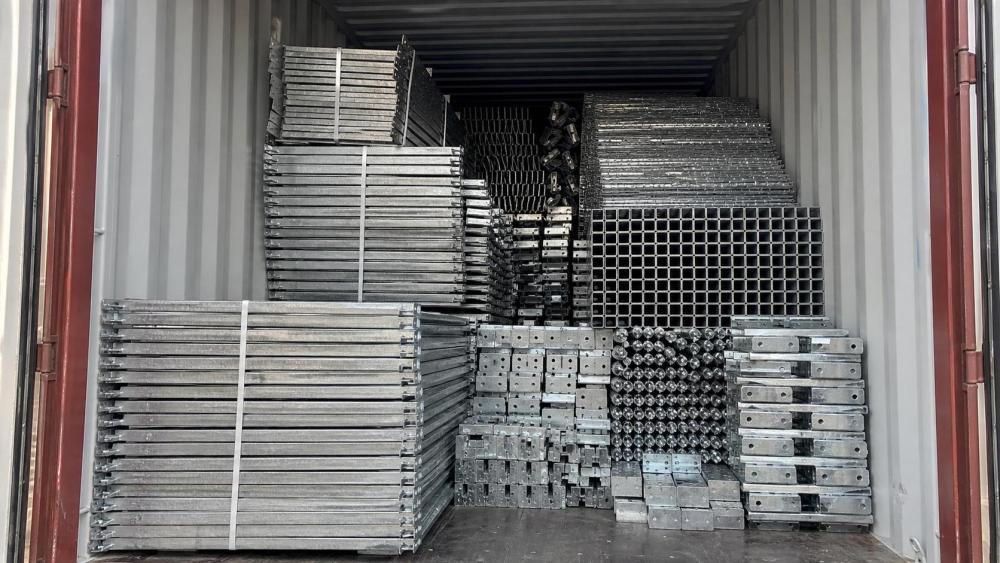
These components are exceptionally dense. The primary logistical challenge is not necessarily the volume of the cargo, but its sheer weight. A single 40-foot High Cube (HC) container can easily reach its maximum legal weight capacity (typically around 26 to 28 metric tons) long before its physical cubic volume is filled. Consequently, the equipment immediately triggers the highly specialized, volatile, and expensive logistics protocols associated with heavy industrial transport.
Logistics teams must optimize the container loading architecture to maximize spatial efficiency while strictly adhering to international axle-weight regulations. Manufacturers must provide detailed 3D CAD loading plans demonstrating how the flat-packed mesh panels and structural supports will be nested to distribute the center of gravity evenly across the container floor, preventing catastrophic container tipping during oceanic swells or inland transit.
Containerization and Out-of-Gauge (OOG) Freight Challenges
While the majority of the wire mesh and feeding components can be flat-packed into standard intermodal containers, certain specialized elements of the facility—such as pre-assembled central environmental control units or massive standalone silos—often exceed the structural limitations of standard containerization.
Such exceptionally large shipments are classified by global port authorities as Out-of-Gauge (OOG) cargo. Shipping OOG freight fundamentally alters the procurement landscape, requiring supply chain directors to abandon standardized shipping rates and negotiate highly customized freight forwarding contracts using Flat Rack containers or Open Top containers.
Shipping rates for Flat Racks are highly volatile and heavily dependent on global port congestion and the availability of specialized stevedoring equipment, such as heavy-lift shore cranes. A miscalculation in the exact physical dimensions or center of gravity of the machinery during the booking phase can result in massive "dead freight" penalties or the cargo being entirely rejected by the port authority at the origin terminal.
Manufacturing Lead Time and Project Synchronization
In the heavy agricultural sector, time is a severely penalizing financial metric. When a corporation secures millions of dollars in financing to construct a new high-density barn, every day the facility remains non-operational represents a massive opportunity cost and accumulating debt interest. Therefore, synchronizing the arrival of the overseas machinery with the domestic construction schedule is the ultimate test of a project manager's competence.
Heavy-duty agricultural containment systems are rarely kept in inventory; they are custom-fabricated to the buyer's exact barn dimensions and thermodynamic specifications. Procuring an industrial Layer cage array requires an average of 45 to 60 days for raw material sourcing, automated resistance welding, hot-dip galvanization, and final packing.
Supply chain directors must engage in highly precise reverse logistics planning. If the domestic facility's concrete foundations and high-voltage electrical arrays are scheduled to be completed by October 1st, the equipment must arrive at the facility by that exact date to begin installation. Factoring in a 35-to-45-day oceanic transit, 14 days for port customs clearance, and the 60-day manufacturing window, the irrevocable purchase order must be signed roughly four months prior to the target installation date. Any disruption in this timeline can derail the entire multimillion-dollar project launch.
Mitigating Port Congestion and Demurrage Risks
The supply chain peril does not end once the vessel safely crosses the ocean. Upon arrival at the destination port, heavy agricultural cargo faces severe bureaucratic and logistical bottlenecks. Global ports are frequently congested, prioritizing standard consumer goods over complex, heavy-weight unloads.
Furthermore, heavy machinery imported for agricultural use is subjected to intense scrutiny by customs authorities. Customs brokers must ensure the equipment is classified under the perfectly accurate Harmonized System (HS) codes and that all metallurgical certificates and commercial invoices are flawless.
If a customs agent flags a discrepancy in the paperwork, or if there is a delay in securing a specialized heavy chassis to move the overloaded container off the terminal, the cargo will be impounded on the dock. This triggers daily demurrage and detention fees. For heavy-weight cargo, port storage fees are astronomical, often exceeding hundreds of dollars per day. To mitigate this extreme financial risk, supply chain managers must pre-clear customs documentation while the ship is still at sea and secure guaranteed trucking appointments long before the vessel berths.
Inland Drayage and Final Farm Site Delivery
The final leg of the journey—transporting the massive steel cargo from the coastal port terminal to the inland agricultural facility—is known as inland drayage. For a container packed to the absolute maximum legal weight limit with galvanized steel, standard flatbed trucking is often illegal and structurally impossible without specialized equipment.
Logistics teams must contract specialized heavy-haul trucking firms equipped with tri-axle chassis. These specialized rigs are designed to evenly distribute the extreme weight across additional tires, preventing damage to municipal highway infrastructure and ensuring compliance with local Department of Transportation (DOT) weight limits.
Moreover, commercial poultry farms are frequently located in deep rural areas, accessible only by narrow county roads or unpaved dirt lanes. Logistics engineers must physically map the entire route from the port to the factory, calculating the maximum weight capacities of rural bridges and ensuring the heavy-haul trucks have adequate turning radii to safely enter the farm gates. Failing to account for these "last-mile" physical limitations can leave expensive machinery stranded mere miles from its final destination.
Conclusion
The successful global deployment of industrial agricultural infrastructure represents a pinnacle achievement in modern supply chain management. Transporting thousands of tons of galvanized steel across oceans and continents is a high-stakes logistical ballet that tolerates zero margin for error.
By thoroughly understanding the unique physical density of the cargo, intelligently synchronizing extended manufacturing lead times with domestic construction schedules, proactively clearing customs bureaucracy, and flawlessly executing heavy-haul inland drayage, project directors can safeguard their capital investments. In the rapidly expanding global agricultural economy, mastering these intricate supply chain logistics is just as critical to ultimate corporate profitability as the underlying farming technology itself.
Have questions about this sector analysis, or seeking best practices specific to your niche? Drop us a line below and let the senior consultants at GTIIN assist you.
“We respect your privacy. Your information is strictly confidential.”
Weekly Insights
Stay ahead with our curated technology reports delivered every Monday.
Recommended News
 Supply ChainNov 08, 2026He Lifeng Holds Trade Talks With Bessent and Greer
 Market TrendsNov 08, 2026How to use industrial commodity market analysis to forecast costs
 Supply ChainNov 07, 2026EU Opens Safeguard Investigation into PET Resin Imports
 Industry StandardsNov 07, 2026Which ISO quality management standard can a company be certified to?