
China Adds 12 Automation Components to Export License List
On July 18, 2026, a WTO-notified export control update drew immediate attention across industrial automation trade flows: China revised its dual-use export control list and brought 12 categories of core automation components under export license management. For exporters, overseas buyers, equipment integrators, and supply chain coordinators serving the EU, the United States, Southeast Asia, and the Middle East, the change matters because it shifts compliance from a background task to a delivery-critical prerequisite, with direct implications for shipment timing, procurement planning, and contract execution.
What the July 18 revision formally changes
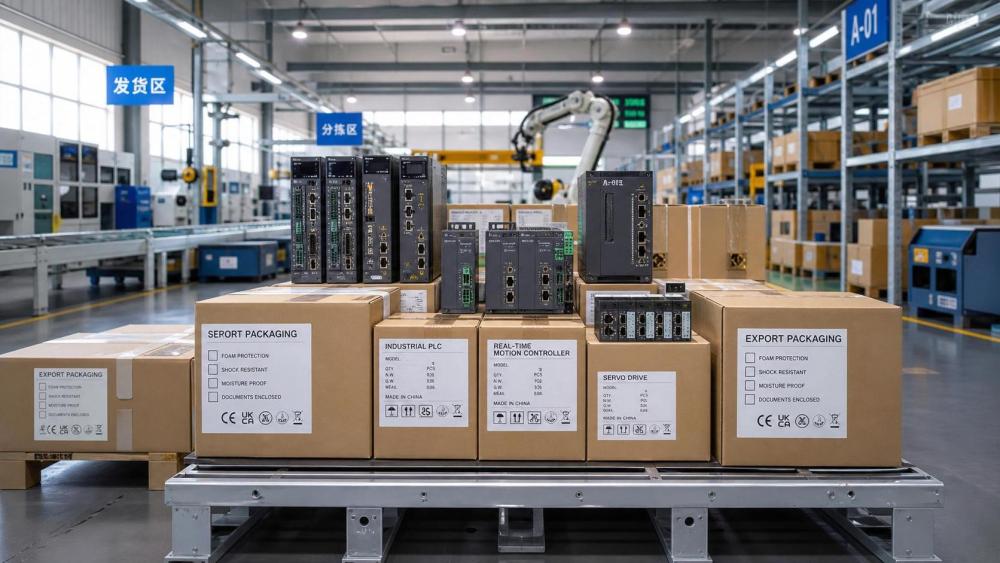
China’s Ministry of Commerce and the General Administration of Customs jointly released the Dual-Use Items Export Control List (2026 Revision) on July 18, 2026. According to the provided event summary, the revised list adds 12 categories of industrial automation components to export license administration, including high-precision servo drives, industrial PLC modules, and real-time motion controllers.
The same summary states that technology exporters shipping covered items to the EU, the United States, Southeast Asia, and the Middle East must apply for licenses in advance. It also states that the average approval cycle extends to 12 to 15 working days. The reported direct effect is reduced delivery certainty for overseas buyers relying on China-based industrial equipment integration supply chains, together with higher upfront compliance costs.
Where the pressure is likely to show up first
Export transactions now carry an earlier compliance checkpoint
From an industry perspective, exporters of covered automation components may face the most immediate operational change because licensing moves ahead of shipment rather than remaining a downstream documentation matter. The affected business stages are likely to include product classification, internal export review, order confirmation, shipping preparation, and customer communication on lead times. What deserves closer attention is whether current item descriptions, technical files, and export documents are sufficient to support license applications without creating avoidable delays.
Overseas procurement teams may need to adjust delivery assumptions
For overseas buyers and sourcing teams, the practical issue is not only price or component availability but delivery predictability. Analysis shows that when approval cycles lengthen to 12 to 15 working days on average, procurement schedules tied to machine assembly, system commissioning, or project milestones may need wider buffers. Buyers working with China-based integration supply chains should pay closer attention to whether suppliers have identified affected components, reflected licensing lead time in quotations, and clarified which delivery commitments remain realistic under the revised control list.
System integrators and manufacturers may face planning friction across projects
Manufacturers and integrators using these components in exported equipment may also feel the impact at the project coordination level. The issue is not limited to the components themselves; it extends to production sequencing, build completion, outbound scheduling, and handover timing for integrated systems. Observably, where core control components sit on the critical path, any licensing delay may affect broader equipment delivery arrangements, especially when procurement, assembly, and export documentation are tightly linked.
Supply chain service providers will need clearer document readiness
Logistics coordinators, trade service providers, and related compliance support teams may see more pressure on document accuracy and timing control. The relevant concern is whether product descriptions, technical specifications, and transaction records align with licensing requirements before cargo movement is arranged. It is more appropriate to understand this as a process-control issue: incomplete or inconsistent supporting materials could become a larger operational risk when export approval becomes a formal gate for shipment.
What companies should review now
Confirm whether product scope is affected
Analysis shows that the first practical step is to verify whether exported products, subassemblies, or integrated equipment include any of the newly controlled component categories identified in the event summary. This matters most for high-precision servo drives, industrial PLC modules, real-time motion controllers, and related automation configurations referenced in the revision summary.
Recheck bid files, technical documents, and shipment paperwork
What deserves closer attention is the consistency between technical descriptions and trade documentation. Where licensing is required in advance, companies may need to review specification sheets, technical declarations, order documentation, and export paperwork to reduce the risk of mismatches that could complicate approval timing. The provided information does not specify detailed filing standards, so this should be treated as a watchpoint rather than a confirmed procedural outcome.
Rebuild lead-time commitments around the approval window
For sales, procurement, and project delivery teams, the stated 12 to 15 working day approval cycle should be reflected in planning assumptions. Observably, this affects promise dates, purchasing windows, inventory coordination, and customer-facing delivery commitments. Companies involved in cross-border equipment supply may need to reassess whether current schedules leave enough room for licensing review before shipment or installation milestones.
Track execution language and market-side responses
It is more appropriate to understand this stage as one that requires close monitoring of implementation rather than assumptions of settled practice. Businesses should follow any later official wording, execution guidance, customer contract adjustments, and procurement-side requests linked to the revised control list. The event summary confirms the rule change and the approval-cycle implication, but it does not provide full detail on later enforcement interpretation, so continued verification remains necessary.
Why this reads as an execution signal, not just a policy headline
Analysis shows that this development is more than a general policy update because it attaches an immediate licensing requirement to identifiable industrial automation components and links that requirement to a measurable approval timeline. That makes it relevant to actual transaction execution. At the same time, it would be premature to treat all downstream effects as settled. Observably, the market still needs to see how procurement documents, supplier qualification checks, customer delivery terms, and practical filing standards adjust once implementation is tested in live export cases.
How the market is likely to interpret the change for now
The clearest takeaway is that this is an already effective rule change with direct compliance and scheduling consequences for industrial automation exports involving the listed component categories. From an industry perspective, it is best understood as both a landed control measure and an early execution signal: the licensing obligation is real now, while the full operational impact on bidding, sourcing, documentation, and delivery performance still needs continued observation through actual market practice.
Basis of this article and what still needs verification
This article is based on the user-provided news title, event date, and event summary. For developments of this kind, relevant source types typically include official notices, releases from regulatory authorities, customs or trade administration information, industry association updates, standard-setting documents, and reporting by authoritative media. A specific official source link was not provided in the input, so the exact official publication path still needs ongoing verification. Further observation should focus on later policy detail, implementation language, certification or compliance interpretation, tender document changes, industry feedback, and how companies carry out the new requirements in practice.
Have questions about this sector analysis, or seeking best practices specific to your niche? Drop us a line below and let the senior consultants at GTIIN assist you.
“We respect your privacy. Your information is strictly confidential.”
Weekly Insights
Stay ahead with our curated technology reports delivered every Monday.
Recommended News
 Supply ChainNov 08, 2026He Lifeng Holds Trade Talks With Bessent and Greer
 Market TrendsNov 08, 2026How to use industrial commodity market analysis to forecast costs
 Supply ChainNov 07, 2026EU Opens Safeguard Investigation into PET Resin Imports
 Industry StandardsNov 07, 2026Which ISO quality management standard can a company be certified to?



