Yandex Market Summit Signals Faster Brand Exports
On June 25, 2026, Yandex Market held its first official seller summit in Qingdao, Shandong, giving cross-border businesses a clearer view of the platform rules now shaping entry into the Russian-speaking market. The practical significance is not the event itself, but the platform’s emphasis on FBP fulfillment, ESG compliance requirements, priority product categories, and brand-oriented operating support, all of which may affect exporters, manufacturers, supply chain providers, and after-sales planning in categories such as home appliances, auto parts, outdoor products, and beauty.
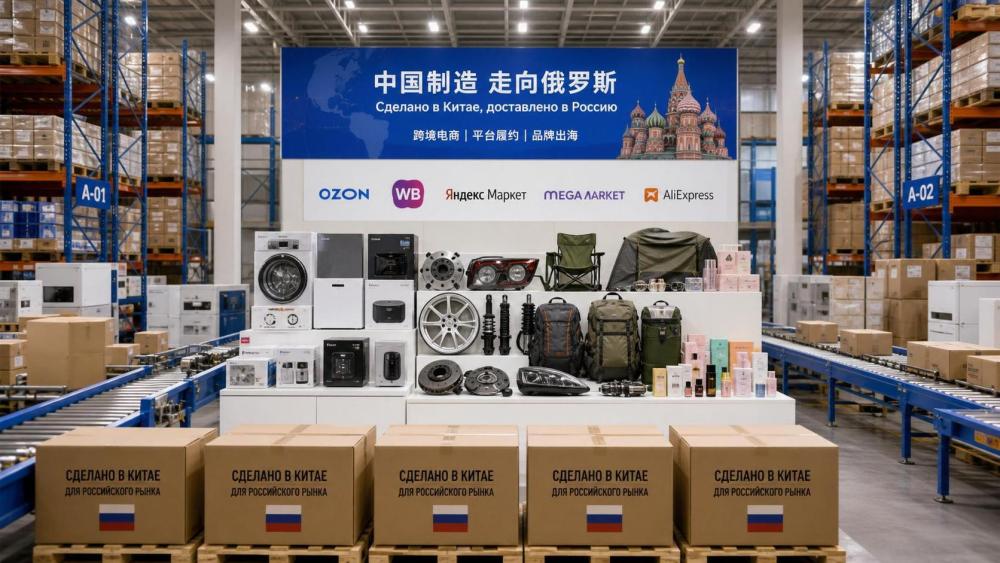
What the Qingdao Summit Confirmed
According to the information provided, Yandex Market, described as Russia’s largest e-commerce platform, held its first official seller summit in Qingdao on June 25. The event explained its FBP fulfillment system, ESG compliance requirements, popular product categories, and support policies tied to brand-oriented operations for cross-border sellers.
The same information indicates that the platform is becoming a core growth channel for Chinese companies entering Russian-speaking markets, with particular relevance for exporters in home appliances, auto parts, outdoor products, and beauty.
Why the Rule Focus Matters Across the Trade Chain
For exporters, platform access is becoming more process-driven
Analysis shows that the summit matters because it frames market entry less as a simple listing opportunity and more as a process shaped by fulfillment rules, compliance expectations, and brand operation requirements. Export-oriented companies may need to pay closer attention to how platform participation connects with product documentation, delivery arrangements, and ongoing store operations.
For manufacturers, compliance may move closer to product preparation
From an industry perspective, manufacturers serving cross-border sellers may feel the impact earlier in the supply chain. If ESG requirements and branded operation standards receive greater emphasis on the platform side, product files, traceability materials, packaging consistency, and quality-related records may become more important during pre-export preparation, even where detailed execution rules are still not fully disclosed in the input information.
For logistics and fulfillment partners, FBP becomes a practical coordination issue
Observably, the mention of the FBP fulfillment system signals that delivery organization is not a secondary issue. Supply chain service providers and sellers using external warehousing or fulfillment support may need to review whether their delivery timelines, inventory coordination, and handover processes can match platform expectations. The direct impact is likely to be strongest in categories where after-sales handling, product integrity, or replenishment stability matter.
For downstream service teams, branded selling raises follow-through requirements
For after-sales providers and channel operators, the summit’s focus on brand-oriented support suggests that operating in the market may require more consistent product presentation and service continuity. This does not confirm any new mandatory rule beyond the provided information, but it does indicate that compliance, delivery, and brand operation may increasingly be assessed together rather than separately.
What Companies Should Watch Next
Track how ESG requirements are translated into seller practice
What deserves closer attention is not only the mention of ESG compliance requirements, but how those requirements are later expressed in seller onboarding, product review, or supporting documentation. Companies should watch for any follow-up clarification affecting declarations, supplier records, product materials, or traceability files.
Review whether FBP changes delivery planning
Businesses preparing to use the platform should assess whether the FBP framework affects lead times, inventory allocation, return handling, and fulfillment coordination. For exporters in home appliances, auto parts, outdoor products, and beauty, this may influence procurement planning and shipment scheduling even before any wider sales expansion.
Align category strategy with compliance readiness
The reference to popular product categories is commercially relevant, but it should not be read only as a demand signal. Analysis shows that category selection may also determine the level of documentation, product consistency, and service support a seller needs to maintain. Companies should therefore compare category opportunities with their actual readiness in compliance and delivery execution.
Prepare brand materials and technical files with more discipline
Because the summit highlighted brand-oriented operating support, companies may need to strengthen internal coordination between sales teams, product teams, and supply chain teams. In practice, this means paying closer attention to product descriptions, technical materials, quality records, and any documents that may be requested during platform review or ongoing operations.
How This Signal Should Be Read
Observably, this development is better understood as an execution signal than as a fully defined regulatory settlement. The event shows that platform-side rules around fulfillment, ESG, and brand operations are becoming more central to cross-border market access in the Russian-speaking region. At the same time, the input information does not provide detailed implementation standards, transition periods, or enforcement criteria, so the market still needs to watch how these themes are applied in practice.
From an industry perspective, the most important takeaway is that platform rules are now more closely tied to trade execution. Sellers are not only evaluating sales potential; they are also being pushed to consider whether internal compliance, fulfillment coordination, and service systems can support stable operations under evolving platform expectations.
A Practical Reading of the Event
This summit is not just a promotional milestone. It points to a more structured operating environment for companies seeking growth through Yandex Market, especially in the product groups identified in the event summary. The clearest current interpretation is that businesses should treat the development as a meaningful market-entry and execution signal, while remaining cautious about assuming final rule details before further clarification appears.
Basis of This Article
This article is generated from the user-provided news title, event date, and event summary. The specific official source link was not provided in the input, so later verification is still necessary.
For events of this type, commonly relevant source categories may include official platform announcements, regulator releases, customs or trade authority information, industry association updates, standards documentation, and reporting by authoritative media. Further observation is still needed on detailed rule interpretation, compliance implementation standards, documentation requirements, market feedback, and how companies actually execute against the platform expectations described in the event summary.
Have questions about this sector analysis, or seeking best practices specific to your niche? Drop us a line below and let the senior consultants at GTIIN assist you.
“We respect your privacy. Your information is strictly confidential.”
Weekly Insights
Stay ahead with our curated technology reports delivered every Monday.
Recommended News
 Market TrendsNov 13, 2026IEA Sees Oil Surplus in Late 2026 as Gulf Exports Recover
 Supply ChainNov 13, 2026How to test a supply chain disruption management plan
 Market TrendsNov 12, 2026China and US in Close Contact on Reciprocal Tariff Reduction Framework
 Global SourcingNov 12, 2026How to check industrial automation controls for machine compatibility