
What is affecting Shanghai Port today for time-sensitive import cargo?
For time-sensitive import cargo, the most useful answer to what is affecting Shanghai Port today is rarely a single headline about congestion. A vessel can arrive near schedule while a container still loses days through discharge sequencing, terminal release, customs intervention, empty return constraints, or a shortage of booked trucking capacity. Conversely, a port may look busy without creating a material delay for cargo that has clean documents, confirmed delivery appointments, and a carrier with stable equipment and terminal access.
Procurement teams should treat Shanghai Port as a chain of linked handoffs rather than one operating point. The immediate question is not simply whether the port is “delayed.” It is whether the specific shipment has enough time and operational flexibility at each handoff to meet its required delivery date.
For cargo tied to a production shutdown risk, a launch date, a repair window, or a contractual delivery commitment, the right response is to track the exceptions that can change the cargo’s usable availability date. That date may be materially later than the vessel’s arrival date.
Arrival is only the first timing milestone
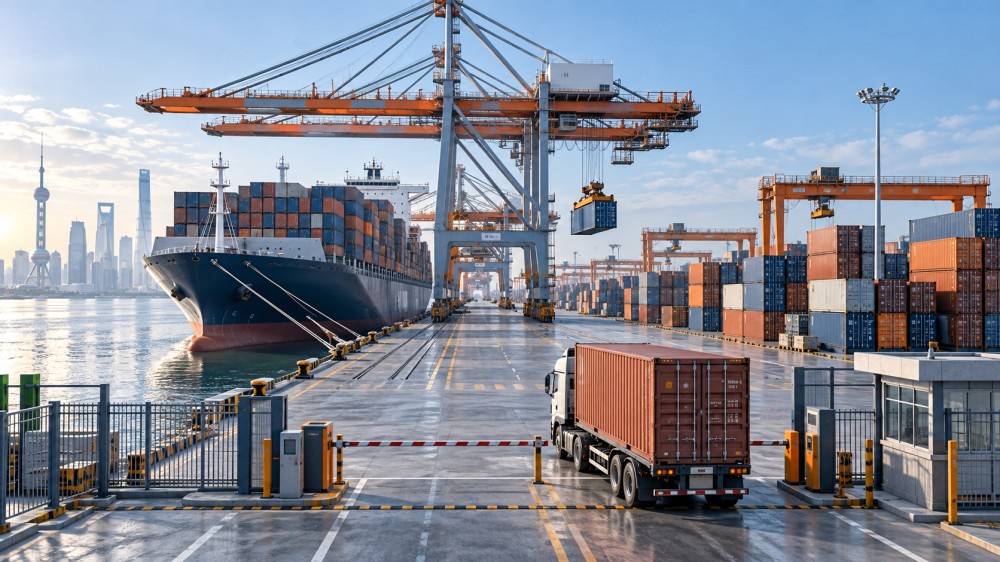
Shanghai’s scale and connectivity can support high cargo throughput, but that does not make every shipment equally predictable. Importers often focus on estimated time of arrival because it is the most visible carrier milestone. For urgent freight, ETA is only a planning estimate. The more commercially relevant sequence starts after the vessel is alongside: container discharge, terminal availability, regulatory clearance, carrier release, pickup appointment, gate-out, and inland delivery.
Each stage has its own failure mode. A late berth can push the entire sequence back. A vessel that berths on time may still see containers discharged in a sequence that does not match the buyer’s urgency. A container shown as discharged may not be immediately ready for collection if documentation, customs status, payment release, or terminal procedures remain incomplete. A container that is ready to leave the terminal can still wait for a truck slot, driver availability, or a delivery appointment at the receiving facility.
This distinction matters especially for buyers who quote a delivery date to internal production teams. “Vessel arriving today” should not be translated into “material available today” or even “cargo available tomorrow” without checking the operational status of the individual container.
What can create a same-week disruption
For a procurement decision, the relevant operating risks are those that can change within hours or days. Weather is one of the most visible. Strong winds, heavy rain, fog, and adverse sea conditions can affect pilotage, berthing, crane operations, yard safety rules, and road transport. The impact is not limited to the hours during which operations slow. A weather interruption can create a recovery queue that persists after conditions improve, particularly when vessel calls, gate appointments, and truck rotations need to be reset.
Vessel schedule instability is another common trigger. Ocean carriers frequently adjust rotations to recover delays elsewhere in a network. A skipped port call, altered terminal assignment, change in arrival window, or rolled container may appear to be a carrier event rather than a port event, but the resulting effect for an importer is the same: the planned inbound date is no longer usable. Buyers should distinguish between a port-wide constraint and a vessel-specific schedule change before altering production or inventory decisions.
Terminal yard conditions can also matter, especially when import volumes, export cutoffs, empty-container movements, and inland collection demand become concentrated in the same period. High yard density may affect container retrieval efficiency, appointment availability, or the timing of equipment release. It does not automatically mean that every box is delayed. The practical question is whether the relevant terminal has confirmed the container’s availability and whether the nominated drayage provider can secure a collection window.
Regulatory processing is often underestimated because it is less visible than a vessel queue. For time-sensitive imports, customs declarations, commercial invoices, packing lists, bills of lading, certificates, product labels, and commodity-specific permits should be viewed as a single operational package. A small mismatch in quantity, consignee details, classification, declared value, or supporting certificates may lead to clarification or inspection steps that outlast a short marine delay.
This is particularly relevant for industrial components, chemicals, machinery, controlled goods, food-related items, and cargo requiring product-specific approvals. Procurement teams should avoid treating clearance as an administrative task that begins after arrival. The work should be substantially complete before the vessel is close to berth, with responsibility clearly assigned for any last-minute questions from the broker, carrier, terminal, or authorities.
The inland handoff is often the real constraint
For a buyer located outside the immediate port area, the final port-to-facility move can be more fragile than ocean transit. A container may be cleared and available, yet delivery still depends on a trucker accepting the job, obtaining a terminal appointment, collecting the correct container, returning or managing empty equipment, and meeting the receiver’s booking rules. Warehouses and factories with limited unloading hours can unintentionally turn a manageable port release into a multi-day delay.
Many urgent shipments fail at this point because planning assumes transport capacity can be purchased on demand. That assumption becomes weak during holiday periods, severe weather, localized traffic restrictions, peak export cycles, or periods when equipment turns are slow. A confirmed drayage booking is more valuable than a general indication that trucking capacity is available.
Receiving-site readiness should be checked with the same discipline as port status. The consignee needs unloading labor, suitable equipment, an available dock or yard area, and a contact able to authorize acceptance. For oversized equipment, dangerous goods, refrigerated cargo, or shipments requiring special handling, the receiving plan must also align with the carrier and trucker’s operating requirements. A container that reaches the facility gate but cannot be accepted does not protect the supply plan.
Do not let generic congestion language drive an urgent-cargo decision
A broad statement that Shanghai Port is congested may be useful as an early-warning signal, but it is not enough to determine whether a particular import will be late. Port conditions are terminal-specific, vessel-specific, and container-specific. A procurement team that responds to every market alert by expediting replacement stock may create avoidable cost. A team that dismisses the alert because its vessel remains on schedule may miss a later bottleneck at discharge, release, or inland delivery.
The more disciplined approach is to ask a short set of shipment-level questions:
- Has the carrier confirmed the vessel’s latest expected berth time and terminal?
- Is the container loaded in a position likely to delay discharge relative to other boxes on the vessel?
- Are all bills, declarations, permits, and payment-related releases ready before arrival?
- Has the customs broker identified any classification, inspection, or documentation exposure?
- Is a truck, terminal appointment, and receiving slot reserved for the expected collection period?
- What is the latest arrival date at the facility that still protects production or customer delivery?
These questions turn a vague port-status discussion into a decision process. They also reveal where an escalation is justified. If the vessel is late but the facility has several days of buffer stock, monitoring may be enough. If the vessel is on time but customs documentation remains unresolved for a line-stopping component, the procurement team has a more urgent problem.
Build a usable buffer around the cargo, not around the published ETA
Time-sensitive cargo should be planned against an operational delivery window rather than a single date. The buffer needs to absorb uncertainty across ocean arrival, terminal handling, clearance, and inland delivery. The appropriate amount depends on the cost of delay, cargo value, substitutability, supplier lead time, and the possibility of partial shipments. A low-value consumable with qualified alternatives calls for a different response from a specialized spare part that can halt a production line.
Buyers should separate cargo into at least three operating categories. The first is cargo that can tolerate normal schedule variation because inventory coverage or substitution exists. The second is cargo that requires active monitoring because a delay would narrow the buffer but not immediately stop operations. The third is critical cargo for which a short delay creates a disproportionate commercial consequence. The third category deserves named owners, daily milestone checks, and a pre-agreed escalation path.
For critical consignments, the escalation path should be decided before a disruption appears. Options may include prioritizing documentation review, securing an earlier pickup appointment, arranging alternative local delivery capacity, splitting available cargo where feasible, reallocating inventory between facilities, or using air freight for a limited replacement quantity. None of these measures is universally economical. Their value depends on the gap between the expected delivery date and the actual point at which the business impact begins.
There is also a cost-control reason to act early. Terminal storage, demurrage, detention, rebooking, emergency trucking, and premium freight often accumulate when teams wait until the container is already delayed. Early visibility does not eliminate disruption, but it gives procurement more room to compare alternatives before the choices narrow to expensive emergency actions.
What to watch over the next few days
For shipments already moving toward Shanghai, the most informative updates are not general market commentary but changes to specific milestones. Watch for carrier notices affecting terminal calls or arrival windows; container-level discharge and availability messages; customs broker queries; terminal pickup restrictions; trucking appointment confirmations; and changes to the receiver’s ability to accept delivery.
For future purchase orders, repeated instability at the same handoff should shape sourcing and logistics terms. If the recurring problem is late document readiness, adjust the supplier document schedule and approval process. If the weak point is truck availability, reserve drayage earlier or diversify qualified local providers. If arrival variability regularly consumes the inventory buffer, reconsider order timing, shipment frequency, port routing, or the amount of safety stock held for critical parts.
Shanghai Port remains an important gateway, but its scale does not remove the need for shipment-level control. For time-sensitive import cargo, the practical measure of conditions today is simple: can this container clear every remaining handoff in time to meet the business need? Procurement teams that track that question from berth to receiving dock will make better decisions than those relying on a single congestion label or a published vessel ETA.
Have questions about this sector analysis, or seeking best practices specific to your niche? Drop us a line below and let the senior consultants at GTIIN assist you.
“We respect your privacy. Your information is strictly confidential.”
Tags
Weekly Insights
Stay ahead with our curated technology reports delivered every Monday.
Recommended News
 Supply ChainNov 08, 2026He Lifeng Holds Trade Talks With Bessent and Greer
 Market TrendsNov 08, 2026How to use industrial commodity market analysis to forecast costs
 Supply ChainNov 07, 2026EU Opens Safeguard Investigation into PET Resin Imports
 Industry StandardsNov 07, 2026Which ISO quality management standard can a company be certified to?



