
The Business Plan of Protein: Global Market Trends and Demand for Commercial Chicken Cages
The global agricultural sector is currently navigating a period of profound structural transformation. While the traditional image of farming evokes centuries-old estates and manual labor, the modern reality is a highly competitive, capital-intensive global market. Driven by shifting consumer demographics, the expansion of middle-class populations in emerging markets, and the undeniable impact of global food security mandates, poultry farms are forced to adapt rapidly to survive. At the center of this industrial evolution is the surging demand for advanced, scalable rearing and containment infrastructure.
As commercial operations attempt to balance the need for increased production volume with uncompromising quality control and animal welfare standards, the reliance on advanced agricultural equipment has reached unprecedented levels. This comprehensive market analysis explores the macroeconomic drivers and global investment trends that are currently reshaping the livestock landscape, leading to a massive spike in global procurement for heavy-duty, commercial poultry containment systems in 2026.
The Expansion of Dietary Protein Demand in Emerging Markets
Historically, the mass industrialization of protein production was concentrated in North America and Western Europe. However, the last decade has seen a meteoric rise in demand across "emerging" production zones. Regions such as Sub-Saharan Africa, Southeast Asia, and Latin America are experiencing rapid urbanization and significant GDP growth, leading to a dramatic dietary shift toward high-quality animal protein.
This geographical expansion is not characterized by the establishment of small, decentralized village flocks, but rather by the construction of massive, industrialized egg and meat manufacturing facilities. These regional producers are inherently focused on leapfrogging outdated methodologies. Consequently, they operate with a highly commercial mindset, focusing on maximum yield per square meter, absolute production consistency, and rapid operational scalability.
To achieve this industrial scale, agribusinesses require massive capital investments in infrastructure. The demand is no longer for rudimentary bamboo coops or simple wire fencing, but for towering, fully automated multi-tier containment vessels. This aggressive expansion in the Global South is the primary catalyst driving the international export market for advanced agricultural processing machinery, creating a robust and sustained demand curve for global steel fabricators.
Urbanization and the Necessity of High-Density Farming
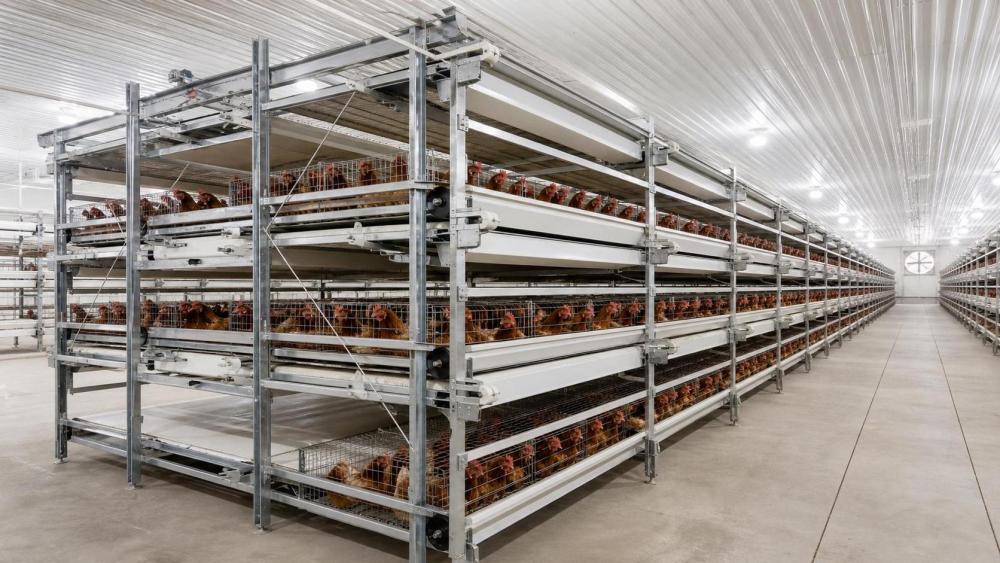
Perhaps the most disruptive macro-trend impacting global agriculture is the rapid depletion of available, affordable arable land near major urban consumption centers. As cities expand outward, the land historically utilized for extensive, free-range farming operations is increasingly repurposed for residential and commercial real estate development.
This spatial constraint forces poultry producers to maximize the biological output of every single square foot of remaining agricultural land. In a traditional floor-raising setup, a facility is strictly limited to a two-dimensional horizontal plane. However, by implementing a multi-tier vertical infrastructure, a farm director can fundamentally rewrite the facility's production geometry, safely housing three to four times the number of birds within the exact same building footprint.
Consequently, the procurement focus has shifted entirely away from horizontal systems toward highly engineered vertical structures. The market trend is clear: agricultural models that cannot guarantee absolute, maximized spatial efficiency are now considered economically unviable. This land-driven necessity has created a massive modernization cycle, forcing established regional farms to overhaul their aging infrastructure to remain competitive.
Biosecurity Mandates and the Premiumization of Infrastructure
While overall global egg and poultry meat consumption volume continues to grow, the regulatory and biosecurity landscape of the market has become infinitely more complex. This shift is driven by the devastating economic impact of recent global outbreaks of Highly Pathogenic Avian Influenza (HPAI) and increasingly stringent international food safety standards.
This heightened risk environment drastically raises the stakes for commercial producers. A single outbreak can mandate the immediate culling of millions of birds, completely destroying a farm's annual revenue and crippling local food supply chains. There is zero tolerance for infrastructure that allows for cross-contamination or inefficient waste management.
To guarantee this level of biosecurity, procurement standards for manufacturing equipment have become exceptionally stringent. In a robust commercial Chicken cage business plan, investors are demanding systems constructed with integrated, automated polypropylene (PP) manure belts that immediately evacuate waste, drastically reducing the ambient pathogen load. The demand for flawless sanitary design is no longer a niche requirement for ultra-premium brands; it has become the baseline entry requirement for any facility aiming to secure financing and compete in the modern global market.
Global Supply Chain Volatility and Strategic Procurement
The surging demand for heavy-duty agricultural equipment is colliding with ongoing volatility in the global macroeconomic supply chain. The primary raw materials required for these systems—high-tensile carbon steel and refined zinc for galvanization—are subject to significant geopolitical pricing pressures and tariff fluctuations.
Furthermore, the highly specialized manufacturing process (requiring advanced automated welding robotics and massive hot-dip galvanization pools) is concentrated in specific global manufacturing hubs, predominantly in Asia. This geographical concentration forces agricultural producers in Africa and Latin America to rely on complex, long-distance maritime shipping logistics.
As ocean freight rates fluctuate and port congestions remain a persistent threat, procurement directors are forced to adopt highly strategic purchasing models. The trend has shifted away from reactive, "just-in-time" purchasing toward long-term, multi-year capacity planning. Agribusinesses must now accurately forecast their infrastructure needs 6 to 12 months in advance, locking in steel prices and securing manufacturing slots to ensure their equipment arrives before biological placement deadlines.
The Evolving Landscape of Capital Expenditure (CAPEX)
As commercial farming becomes increasingly capital-intensive, the way financial institutions and agricultural CFOs evaluate equipment purchases is evolving. The focus has decisively shifted from evaluating the initial Free On Board (FOB) purchase price to calculating the Total Cost of Ownership (TCO) over a projected 15-to-20-year lifespan.
Financial models now heavily penalize cheap, sub-standard equipment. A cage system that requires excessive manual labor to clear jammed manure belts, consumes more energy due to inefficient ventilation aerodynamics, or rapidly rusts due to poor cold-galvanization represents an unacceptable financial liability.
When conducting long-term CAPEX planning, evaluating the verified lifespan, automated reliability, and metallurgical integrity of the infrastructure is the paramount financial metric. Institutional investors and stakeholders demand assurance that the massive capital deployed into the commercial barn will yield reliable, predictable, and uninterrupted production for decades. This sophisticated financial approach strongly favors premium manufacturers who can provide certified metallurgical documentation and demonstrable engineering superiority.
Conclusion
The global commercial poultry industry is undergoing a relentless modernization process, driven by shifting demographics, extreme land scarcity, and the absolute necessity of rigorous biosecurity. In this highly competitive landscape, the rearing and containment infrastructure is the critical engine of profitability.
As agricultural operations globally scramble to upgrade their facilities to meet these new realities, the market for highly engineered, thermodynamically efficient, and biosecure multi-tier systems will continue to surge. For industry stakeholders, understanding these macroeconomic trends is essential. The future of commercial agriculture belongs to those who view their containment infrastructure not merely as cages, but as the ultimate strategic asset in guaranteeing production yield, protecting flock health, and ensuring long-term corporate scalability.
Have questions about this sector analysis, or seeking best practices specific to your niche? Drop us a line below and let the senior consultants at GTIIN assist you.
“We respect your privacy. Your information is strictly confidential.”
Tags
Weekly Insights
Stay ahead with our curated technology reports delivered every Monday.
Recommended News
 Supply ChainNov 08, 2026He Lifeng Holds Trade Talks With Bessent and Greer
 Market TrendsNov 08, 2026How to use industrial commodity market analysis to forecast costs
 Supply ChainNov 07, 2026EU Opens Safeguard Investigation into PET Resin Imports
 Industry StandardsNov 07, 2026Which ISO quality management standard can a company be certified to?



