
Industrial Trade Analysis Europe: Key Shifts Reshaping Sourcing in 2026
Industrial trade analysis Europe is moving from a specialist exercise to a core sourcing discipline for 2026. Cost volatility, tighter regulation, regional production shifts, and changing logistics patterns are all affecting how industrial buyers compare suppliers, contracts, and long-term market exposure.
That matters across metals, machinery, chemicals, components, packaging, energy-intensive materials, and industrial equipment. A sound reading of European trade conditions now requires more than price tracking. It also depends on compliance depth, route resilience, customs friction, and the credibility of regional supply alternatives.
For many cross-border decisions, industrial trade analysis Europe has become the framework that connects market signals with practical sourcing judgment. It helps clarify where risk is increasing, where supply is stabilizing, and which procurement assumptions may no longer hold.
Why Europe is entering a more selective sourcing cycle
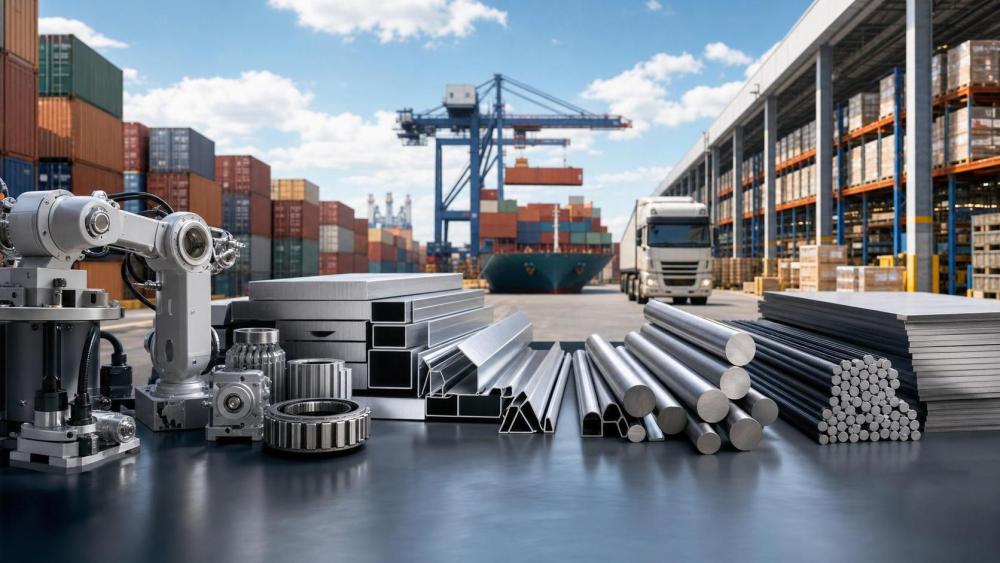
European industry is not moving in one direction. Some sectors are rebuilding local capacity, while others continue to rely on imported inputs, semi-finished goods, and specialist components from Asia, the Middle East, and neighboring regions.
The result is a more selective market. Buyers are not simply asking whether Europe is expensive or attractive. They are asking which categories remain competitive, which countries offer reliable throughput, and where policy costs may alter landed value.
In this context, industrial trade analysis Europe is less about a headline trade balance and more about operational detail. The useful view sits inside energy pricing, labor availability, environmental obligations, export controls, and freight corridor performance.
What industrial trade analysis Europe actually covers
At a practical level, the term covers the evaluation of industrial sourcing conditions across European markets and connected supply chains. It combines trade data, cost structure analysis, supplier capability review, and policy interpretation.
It also extends beyond import and export volumes. The stronger approach reviews physical fulfillment, technical standards, customs timing, product traceability, and substitution options when one source becomes less stable.
This is where GTIIN’s research model is relevant. Its cross-sector tracking, supply chain mapping, and validation discipline reflect the kind of multi-layered analysis now required in Europe, especially where industrial procurement decisions involve compliance-sensitive or engineering-grade materials.
A credible assessment usually connects four questions:
- How stable is supply in the target category?
- What hidden costs sit behind the quoted price?
- How exposed is the source to regulation or transport disruption?
- Can the supplier meet technical and documentation standards consistently?
The 2026 shifts that are reshaping sourcing decisions
Carbon and compliance costs are becoming commercial variables
The EU Carbon Border Adjustment Mechanism is changing how industrial imports are evaluated. Carbon intensity is no longer a peripheral reporting issue for sectors like steel, aluminum, cement, fertilizers, and other emissions-heavy materials.
This affects sourcing strategy in two ways. First, it changes comparative cost calculations. Second, it raises the importance of supplier data quality, because weak emissions documentation can create commercial risk even before formal penalties appear.
Regional diversification is replacing single-country dependence
Many sourcing teams are no longer looking for one lowest-cost origin. They are building layered portfolios across Western Europe, Central and Eastern Europe, Turkey, North Africa, and selected Asian partners.
This does not always mean reshoring. In many cases, it means nearshoring some assemblies, dual-sourcing critical inputs, and keeping offshore supply where technical scale or cost remains hard to replace.
Logistics reliability now carries strategic weight
Port congestion, rail constraints, Red Sea disruption, inland trucking shortages, and customs delays can erase the apparent savings of a low quoted unit cost. For industrial categories with tight production windows, timing risk often matters as much as tariff exposure.
That is why industrial trade analysis Europe increasingly includes route mapping, transit variability, and regional warehouse logic, not just supplier comparison.
Technical standards are separating viable suppliers from visible suppliers
A supplier may be easy to find and still be difficult to qualify. Documentation integrity, material consistency, corrosion standards, packaging discipline, batch traceability, and audit responsiveness are shaping real sourcing viability.
This is especially true in machinery parts, industrial automation, specialty materials, food-grade infrastructure, and high-spec fabrication chains.
Where these changes show up in day-to-day evaluation
The impact of industrial trade analysis Europe differs by sourcing scenario. The same market signal can mean different things for bulk commodities, engineered components, and customized equipment.
These distinctions matter because not every disruption deserves the same response. Sometimes the right answer is supplier substitution. Sometimes it is contract redesign, a route change, or stricter intake verification.
How to read the market without overreacting
A common mistake is treating every policy announcement or freight spike as a structural shift. Another is assuming stability because a supplier has delivered well in the past. Neither approach is strong enough for 2026 conditions.
More reliable industrial trade analysis Europe separates short-term noise from durable change. That means checking whether the signal affects cost, compliance, continuity, or only sentiment.
Useful judgment points include:
- Track landed cost, not ex-works price alone.
- Verify whether compliance data is auditable and current.
- Test lead times against real customs and transit performance.
- Review upstream dependency on energy, scrap, chemicals, or strategic minerals.
- Check whether an alternative source is genuinely qualified or only commercially available.
This is also where independent intelligence becomes useful. GTIIN’s emphasis on validated industrial data, export trends, and supply chain resilience is aligned with the market need for fewer assumptions and better decision-grade evidence.
What deserves closer attention over the next planning cycle
Several themes are likely to stay central in industrial trade analysis Europe through 2026. Energy-sensitive production will remain uneven. Regulatory disclosure will keep expanding. Supplier transparency will become more valuable than broad catalog visibility.
There is also a stronger case for category-specific mapping. A sourcing view that works for fabricated steel may not work for semiconductors, industrial polymers, or specialized agricultural equipment. The relevant risks sit at different points in the chain.
The next step is not to chase every market headline. It is to build a working comparison framework for the categories that matter most, using current trade signals, supplier evidence, route performance, and compliance readiness as linked variables.
That is the practical value of industrial trade analysis Europe in 2026: it turns a noisy regional market into a structured basis for sourcing judgment, capital planning, and supply continuity decisions.
Have questions about this sector analysis, or seeking best practices specific to your niche? Drop us a line below and let the senior consultants at GTIIN assist you.
“We respect your privacy. Your information is strictly confidential.”
Tags
- industrial sourcing
- supply chain resilience
- industrial procurement
- port congestion
- industrial automation
- bulk commodities
- supply chain mapping
- carbon border adjustment mechanism
- export controls
- technical standards
- industrial trade analysis
- tariff exposure
- industrial equipment
- industrial trade analysis Europe
Weekly Insights
Stay ahead with our curated technology reports delivered every Monday.
Recommended News
 Supply ChainNov 08, 2026He Lifeng Holds Trade Talks With Bessent and Greer
 Market TrendsNov 08, 2026How to use industrial commodity market analysis to forecast costs
 Supply ChainNov 07, 2026EU Opens Safeguard Investigation into PET Resin Imports
 Industry StandardsNov 07, 2026Which ISO quality management standard can a company be certified to?



