
Industrial Machinery Price Trends: What Is Driving Cost Changes in 2026?
Industrial Machinery Price Trends: What Is Driving Cost Changes in 2026?
The phrase industrial machinery price trends sounds straightforward until a sourcing team tries to explain why two quotes for what appears to be the same machine are 12% apart, or why a project budget approved six months ago no longer covers the line item. In 2026, machinery pricing is not moving because of one simple inflation story. It is being reshaped by a stack of cost layers: steel and copper inputs, power prices at the factory level, electronics availability, freight volatility, financing conditions, compliance upgrades, and the ongoing shift from standard equipment to higher-automation configurations.
That matters because machinery is rarely bought as a pure commodity. A CNC system, compressor skid, packaging line, injection molding machine, or material handling unit may sit in the same procurement category, but the way its price is formed is very different from the way bulk raw materials are priced. Buyers who treat 2026 machinery costs as a single market number will miss where the real movement is happening: not just in base unit price, but in controls, drives, installation scope, lead-time risk, and after-sales commitments.
One of the most common misunderstandings is to assume that machinery inflation follows general industrial inflation with a short lag. Sometimes it does. Often it does not. Equipment prices respond to a more uneven mix of factors, and several of those factors move on different clocks. Plate steel may soften while servo motors remain tight. Ocean freight may normalize on one trade lane while inland trucking and port handling remain expensive. A machine builder may hold catalog pricing steady but quietly change warranty terms, commissioning fees, or delivery assumptions. For procurement, that still counts as a price increase even if the headline quotation looks familiar.
Why the 2026 picture is more fragmented than buyers expect
The machinery market entering 2026 is being shaped by uneven normalization rather than clean stabilization. During earlier periods of disruption, many manufacturers added buffers into pricing to protect themselves against sudden increases in materials, shipping, and component shortages. Some of those emergency premiums have come off. Others have been replaced by more durable structural costs.
Energy is a good example. For heavy equipment and industrial fabrication, electricity and gas costs affect much more than utility bills. They influence foundry output, heat treatment, welding economics, casting prices, and the cost base of upstream metal processing. If a machine relies heavily on cast housings, precision-machined frames, or thermally intensive treatment processes, energy pricing can still flow through into the final quote even when freight conditions look calm.
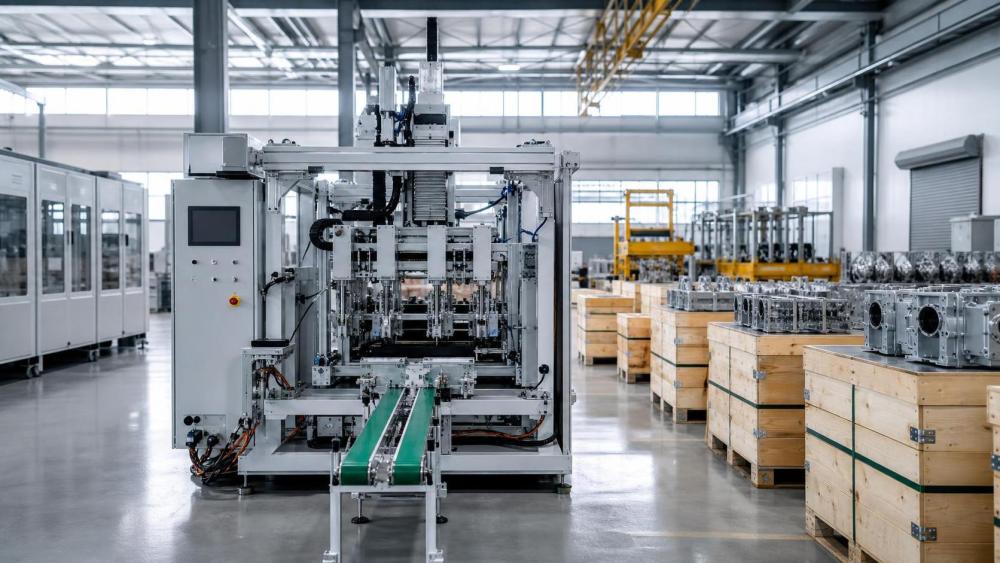
Electronics are another source of divergence. Buyers often focus on the metal body of a machine because it is visible and easy to compare. Yet in many systems, the cost-sensitive part is the invisible layer: PLCs, HMIs, sensors, inverters, servo packs, safety modules, and software-enabled controls. Machines with high automation density are more exposed to fluctuations in industrial electronics supply than mechanically simpler models. That is one reason two machines with similar throughput can move in price very differently.
Trade policy is also making the market less uniform. Tariff adjustments, export controls on certain technologies, localization requirements, and changes in customs enforcement do not affect every machine class equally. A basic pump package sourced regionally may see only a modest landed-cost change. A more advanced machine with imported controls, specialized bearings, or restricted-origin components can become harder to price with confidence. The issue is not only duty exposure. It is the administrative friction around origin documentation, technical file readiness, and compliance evidence.
What is actually inside a machinery price in 2026
When buyers discuss cost changes with suppliers, it helps to separate a quotation into at least five layers.
This layered view is useful because suppliers themselves are managing cost risk in different ways. Some reprice monthly for metals but hold controls pricing for a quarter. Others quote a machine ex works at an attractive level while shifting more cost uncertainty into logistics and commissioning. In 2026, the meaningful question is no longer just, “Has the machine price gone up?” It is, “Which part of the machine package is unstable, and who is carrying that risk?”
The automation premium is no longer optional in many categories
A second misconception is that automation automatically becomes cheaper over time in a way that offsets broader machinery inflation. That can be true for mature components, but the procurement reality is more complicated. Many buyers in 2026 are no longer evaluating a manual or semi-automatic baseline against a premium automated option. They are buying into an operating environment where labor scarcity, traceability requirements, uptime expectations, and safety compliance make the higher-spec version the practical minimum.
That shifts pricing behavior. Instead of asking whether suppliers are raising prices on the same machine, buyers should check whether the market standard itself has moved. A packaging line that now includes more vision inspection, remote diagnostics, and integrated data logging may be quoted as the “standard” build even though it would have been considered upgraded equipment a few years ago. The nominal price increase is real, but part of it is a specification reset rather than pure cost inflation.
This is especially relevant in sectors where machinery must interface with MES, ERP, plant monitoring platforms, or documented quality systems. Once connectivity, data capture, and safety interlocks become expected, the cost floor changes. Buyers who benchmark only on mechanical capacity can end up comparing incomplete offers.
Freight is quieter, but landed cost is still not simple
It is tempting to assume that if container rates are no longer at emergency highs, freight has stopped being a pricing issue. That is too narrow a reading. Industrial machinery often moves as breakbulk, flat-rack, out-of-gauge cargo, or specialized inland transport, not just standard container shipments. Crating standards, lifting requirements, route restrictions, port congestion, and destination handling can materially alter the delivered cost.
For larger systems, the commercial term matters almost as much as the quoted amount. A lower ex works number can conceal substantial exposure for inland pickup, export packing, marine insurance, destination unloading, or site positioning. Procurement teams that track industrial machinery price trends only through supplier quotations may underestimate what is happening to total acquisition cost. In practice, many 2026 budget overruns will come from the edges of the contract rather than the machine body itself.
Regional divergence is becoming more visible
A global buyer now sees sharper regional differences in machinery pricing than a generic index can show. Labor cost trends, industrial power pricing, local supplier depth, environmental compliance burdens, and currency movements all shape the quote. So does industrial policy. In some markets, localized production has become more attractive because it reduces customs friction and service delays, even if the ex-factory price is not the lowest. In others, imported machinery remains competitive because local builders still depend on imported automation packages and therefore do not escape global component costs anyway.
That is why “source from the cheapest region” has become a weak procurement rule. A lower list price from one geography can be offset by longer lead times, lower spare-parts availability, more complex technical support, or certification gaps for the destination market. For some categories, especially where uptime is expensive, regional service capability now influences buying decisions nearly as much as base price.
How procurement teams should read supplier quotes in 2026
The useful discipline is to stop treating quotes as single numbers and start reading them as risk maps. That means checking whether the supplier has specified component brands, price validity periods, Incoterms, testing scope, software licenses, commissioning assumptions, and exclusions around civil work, utilities, or integration. Many apparent price swings are really scope differences that become visible only after technical review.
A practical comparison framework usually includes these questions:
- Is the quoted machine built around named control and motion components, or are “equivalent” substitutions allowed?
- Does the price include factory acceptance testing, and if so, what is being tested?
- Are packaging, export documentation, and destination compliance clearly included?
- What assumptions are being made about installation time, operator training, and remote support?
- How long is the price valid, and what triggers repricing if components move?
Those questions do more than protect against hidden cost. They also show whether a supplier has control over its own bill of materials and delivery process. In a market where machinery cost drivers are fragmented, supplier discipline is part of price quality.
What buyers should watch next
Going deeper into 2026, the most important signals are unlikely to be broad inflation headlines alone. Buyers should watch industrial electricity and gas trends in production hubs, lead-time changes for automation components, trade-policy shifts affecting controls and advanced manufacturing equipment, and any renewed stress in specialized freight. Currency exposure also deserves more attention where long validity periods are unavailable.
The bigger point is that industrial machinery price trends are now a composite of engineering content, supply-chain structure, and commercial risk allocation. A machine is not becoming “more expensive” for one reason. Sometimes the material base has risen. Sometimes the automation layer has thickened. Sometimes the compliance burden has grown. Sometimes the supplier is pricing uncertainty because too many variables remain outside its control.
For procurement teams, the right response is not simply harder negotiation. It is clearer decomposition of cost, tighter quote normalization, and a sharper distinction between low purchase price and credible delivered value. In 2026, that distinction is where better machinery buying decisions are made.
Have questions about this sector analysis, or seeking best practices specific to your niche? Drop us a line below and let the senior consultants at GTIIN assist you.
“We respect your privacy. Your information is strictly confidential.”
Weekly Insights
Stay ahead with our curated technology reports delivered every Monday.
Recommended News
 Supply ChainNov 10, 2026China Extends Pause on 24% Additional Tariff on US Goods by Two Months
 Industry StandardsNov 10, 2026Which imports are subject to EU carbon border compliance?
 Global SourcingNov 09, 2026USTR Extends 178 China Section 301 Tariff Exclusions to January 2027
 Supply ChainNov 09, 2026How can a tariff risk management dashboard track cost exposure?



