
Industrial Investment Trends in Mining: 2026 Risks and Growth Signals
Industrial investment trends mining strategies for 2026 are no longer driven by commodity prices alone. Capital allocation now sits at the intersection of policy risk, power availability, logistics reliability, and downstream demand visibility.
That shift matters across the broader industrial economy. Mining remains upstream, but its investment cycle influences metals processing, equipment orders, freight patterns, energy procurement, and cross-border sourcing decisions throughout global supply chains.
For organizations tracking long-horizon returns, the core challenge is clear. Growth opportunities still exist, yet they are increasingly tied to execution quality, jurisdictional resilience, and the ability to secure materials into a changing industrial landscape.
Why 2026 Looks Different
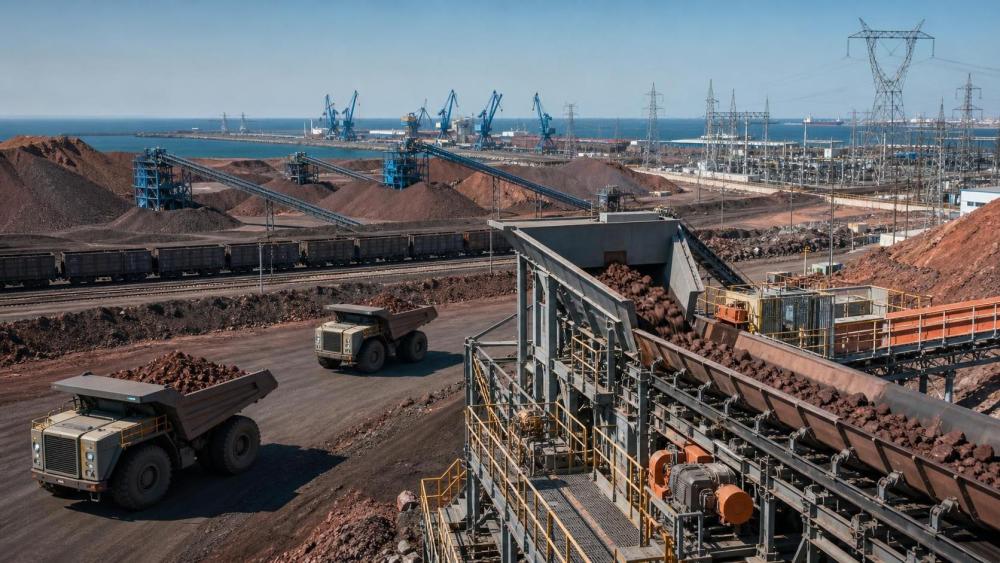
The current mining cycle is being shaped by two opposing forces. One is pressure for disciplined spending after years of cost overruns and volatile returns. The other is urgency around critical minerals, grid expansion, and industrial decarbonization.
This creates a more selective investment environment. Not every new project receives funding, and not every producing asset is valued equally. Investors are rewarding assets that combine resource quality with permitting clarity, infrastructure access, and lower operating risk.
In practical terms, industrial investment trends mining analysts follow now include more than reserve size. They also include water security, transmission access, local processing capacity, freight optionality, and exposure to sanctions or trade restrictions.
What Industrial Investment Trends Mining Really Measure
At a basic level, these trends describe where capital is moving, why it is moving, and what conditions make investment durable. They capture both headline expansion plans and quieter signals inside supplier contracts, plant upgrades, and infrastructure tie-ins.
That broader reading is essential because mining investment does not operate in isolation. A new copper project depends on engineering services, explosives, rail slots, port efficiency, mobile equipment, power agreements, and environmental compliance pathways.
This is where GTIIN’s trade intelligence perspective becomes useful. Looking across global sourcing, export flows, industry standards, and supply chain resilience helps reveal whether an announced mining project is commercially robust or merely attractive on paper.
From that angle, industrial investment trends mining should be read as a cross-sector signal set. They indicate where industrial demand is consolidating, where procurement risks are rising, and where future bottlenecks may emerge.
The Growth Signals Worth Tracking
Several growth indicators stand out going into 2026. They are not equally strong across all commodities, but together they help explain why capital is concentrating in specific corridors and project types.
Critical minerals with downstream pull
Copper, lithium, nickel, graphite, and selected rare earths remain closely tied to electrification, grid reinforcement, storage systems, and industrial automation. Demand forecasts may fluctuate, but long-term strategic interest remains intact.
The most credible projects are those linked to processing ecosystems. Mines connected to refining, precursor materials, or manufacturing clusters generally attract stronger financing interest than isolated upstream plays.
Brownfield expansion over frontier speculation
Brownfield sites often offer faster returns because roads, labor pools, power lines, and regulatory histories already exist. In a higher-cost capital environment, that advantage is significant.
This does not eliminate greenfield potential. It simply raises the threshold. New districts need clearer evidence of logistics viability and policy continuity before capital commits at scale.
Automation and energy integration
Investment is also moving into efficiency upgrades rather than only tonnage growth. Fleet electrification, autonomous haulage, predictive maintenance, ore sorting, and hybrid power systems can improve margins without full new-mine risk.
These projects matter because they connect mining directly to wider industrial capex. Equipment makers, software integrators, power developers, and specialist component suppliers all benefit when operational modernization accelerates.
Where Risk Is Becoming Harder to Ignore
The opportunity set is real, but so is the risk load. Some of the biggest threats in 2026 are less visible than traditional commodity downturns, yet they can impair returns just as quickly.
A key point is that many of these risks interact. A mine in a favorable ore body can still underperform if transmission capacity lags, freight costs spike, or environmental approvals move slower than financing expectations.
That is why industrial investment trends mining reviews increasingly rely on integrated assessment rather than commodity optimism. The stronger projects are those that withstand multiple stress tests at once.
How the Trend Plays Out Across Business Scenarios
Mining investment decisions affect more than mine owners. The trend changes planning assumptions across the industrial chain, especially where long lead times and physical delivery risks are material.
Equipment and technology supply
Suppliers should watch which projects are moving from studies into procurement packages. Early movement in crushing systems, pumps, electrification kits, tire contracts, and control systems often reveals genuine project momentum.
Metals and materials sourcing
Downstream buyers need to distinguish between future supply that is probable and supply that is only promotional. That difference affects contract strategy, hedging windows, and regional sourcing diversification.
Infrastructure and logistics planning
Rail operators, port planners, and freight stakeholders benefit from reading industrial investment trends mining data early. New concentrate flows or bulk export corridors can change vessel demand, storage needs, and route economics years in advance.
A Practical Framework for Reading 2026 Mining Capex
The most useful approach is to combine market signal reading with execution filters. A project can look attractive by commodity narrative and still fail under operational review.
- Test whether demand support comes from real industrial build-out, not only short-term price momentum.
- Check if the asset has realistic access to power, water, labor, and transport capacity.
- Assess whether permitting timelines align with announced construction and shipping schedules.
- Review exposure to export restrictions, tariff changes, and local processing mandates.
- Look for evidence of disciplined procurement rather than overly optimistic capex assumptions.
- Compare project economics under weaker prices and slower ramp-up conditions.
This is where GTIIN’s broader cross-border lens matters. Mining investment quality is easier to judge when project data is read alongside freight benchmarks, trade policy changes, sourcing patterns, and industrial standards across connected sectors.
What to Monitor Next
The next phase of industrial investment trends mining analysis will depend on signal quality more than headline volume. Announced spending matters, but conversion into contracts, permits, and physical construction matters more.
The strongest indicators for 2026 will likely include brownfield approvals, grid-linked mine power projects, strategic processing investments, and procurement activity tied to critical mineral corridors.
A disciplined next step is to map mining exposure by commodity, jurisdiction, infrastructure dependency, and downstream customer relevance. That creates a clearer basis for screening opportunities, tightening risk assumptions, and setting monitoring priorities before capital is fully committed.
Have questions about this sector analysis, or seeking best practices specific to your niche? Drop us a line below and let the senior consultants at GTIIN assist you.
“We respect your privacy. Your information is strictly confidential.”
Weekly Insights
Stay ahead with our curated technology reports delivered every Monday.
Recommended News
 Supply ChainNov 10, 2026China Extends Pause on 24% Additional Tariff on US Goods by Two Months
 Industry StandardsNov 10, 2026Which imports are subject to EU carbon border compliance?
 Global SourcingNov 09, 2026USTR Extends 178 China Section 301 Tariff Exclusions to January 2027
 Supply ChainNov 09, 2026How can a tariff risk management dashboard track cost exposure?



