
Materials Testing Methods: Choosing the Right Test for Product Failure Risk
Materials Testing Methods: Choosing the Right Test for Product Failure Risk
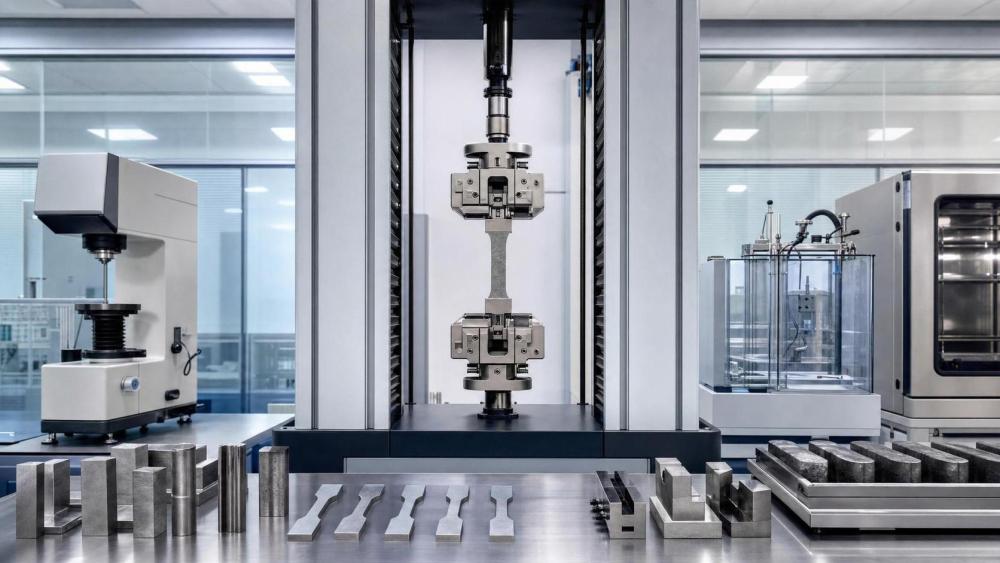
In product development and industrial sourcing, materials testing is the fastest way to expose failure risk before launch.
It turns assumptions into evidence and helps teams compare suppliers, specifications, and process stability with confidence.
For global procurement and engineering reviews, the right test method also reduces disputes, delays, and hidden lifecycle cost.
That matters even more when sourcing spans multiple regions, standards systems, and manufacturing cultures.
The real challenge is not whether to test.
It is deciding which materials testing method best matches the product’s failure mode, service environment, and quality target.
A tensile test may look sufficient on paper, yet field failure may actually come from fatigue, corrosion, or impact loading.
Why materials testing should start with failure risk
Good materials testing starts with one question: how is this product most likely to fail in real use?
That framing keeps testing practical.
It prevents overtesting on low-risk properties and under-testing on the properties that actually drive warranty exposure.
In industrial components, common failure routes include overload, repeated stress, wear, chemical attack, thermal cycling, and sudden shock.
Each route points to different materials testing priorities.
- Overload risk usually calls for tensile, compression, or bend testing.
- Surface damage risk often needs hardness, abrasion, or coating adhesion testing.
- Cyclic stress risk points to fatigue testing and crack growth analysis.
- Aggressive environments require corrosion testing, chemical resistance, or salt spray evaluation.
- Cold-chain, transport, or drop events may demand impact testing.
In practice, teams that map tests to failure mechanisms make faster and more defensible sourcing decisions.
Core materials testing methods and what they really tell you
Not all data carries the same decision value.
Some materials testing methods describe bulk strength.
Others reveal long-term durability or process variation that basic certificates may miss.
Mechanical strength tests
Tensile testing remains a core materials testing method because it measures yield strength, ultimate strength, and elongation.
It works well for metals, polymers, composites, and many converted materials.
Compression and flexural tests matter when parts see crushing loads or bending during service.
These tests are useful, but they do not fully predict field life under repeated loading.
Hardness and wear tests
Hardness testing is quick and often serves as a production control tool.
Rockwell, Brinell, and Vickers methods help verify heat treatment consistency and resistance to indentation.
When sliding contact matters, abrasion or wear testing gives a clearer picture than hardness alone.
This is especially relevant for tooling, liners, seals, and moving assemblies.
Fatigue and fracture tests
Fatigue testing is one of the most overlooked materials testing methods in sourcing reviews.
Yet many failures happen well below ultimate strength after repeated stress cycles.
Fracture toughness testing becomes critical when crack initiation or brittle failure could create safety or downtime risks.
For welded structures and rotating parts, this data can be far more predictive than static strength values.
Corrosion and environmental tests
Corrosion testing matters whenever materials face moisture, salt, chemicals, or temperature swings.
Salt spray testing is common, but it should not be treated as a full substitute for real-use exposure.
Environmental aging tests can also reveal coating breakdown, embrittlement, swelling, or seal degradation over time.
This is where materials testing supports both compliance and lifecycle forecasting.
How to choose the right materials testing method
Choosing the right materials testing plan is less about collecting more data and more about collecting the right data.
A practical approach usually follows five filters.
- Define the failure mode first, not the test method first.
- Match the test to the service environment, including heat, moisture, chemicals, vibration, and transport shock.
- Check the applicable standard, such as ASTM, ISO, EN, or customer-specific protocols.
- Confirm sample condition, orientation, thickness, and preparation method.
- Decide whether you need qualification data, incoming inspection data, or ongoing process control data.
This structure keeps materials testing aligned with procurement timing and engineering intent.
It also helps prevent a common mistake: selecting tests because they are familiar, cheap, or easy to schedule.
In high-risk applications, the cheapest test program often becomes the most expensive field lesson.
Using standards without losing real-world relevance
Standards give materials testing consistency, traceability, and comparability across suppliers.
That is essential in global sourcing.
Still, passing a standard test does not always mean the material will survive the exact use case.
A coating may pass salt spray exposure but fail under combined abrasion and humidity.
A polymer may meet tensile requirements but creep under long-term load and heat.
That is why advanced materials testing often combines standard methods with application-specific simulation.
The stronger signal comes from linking standard compliance to actual operating stress, not treating them as separate worlds.
Common mistakes in materials testing decisions
Even experienced teams can weaken a testing program through small decision errors.
- Using certificate values without checking lot variation or sample traceability.
- Relying on one materials testing method to represent all service conditions.
- Ignoring surface finish, weld quality, or processing history.
- Comparing results from different standards as if they were directly equivalent.
- Skipping retesting after supplier, tooling, resin grade, or heat treatment changes.
From a supply chain perspective, these mistakes create false confidence.
The result may be delayed qualification, inconsistent incoming quality, or costly field replacement after deployment.
A practical framework for better testing decisions
A strong materials testing strategy does not need to be complicated.
It needs to be disciplined.
For most industrial decisions, a workable framework includes three layers.
Layer one: qualification
Use broader materials testing during initial supplier or material approval.
This is where tensile, hardness, corrosion, fatigue, and microstructure checks may all have value.
Layer two: incoming control
Use faster materials testing methods for routine verification.
Hardness, dimensions, coating thickness, and selected chemical checks often work well here.
Layer three: change management
Reopen the materials testing plan whenever a meaningful variable changes.
That includes new sub-suppliers, revised formulations, process relocation, and altered service conditions.
This layered model keeps testing costs controlled while protecting against silent risk accumulation.
Final takeaway
The best materials testing method is not the most advanced one.
It is the one that best reveals the failure risk that matters most.
When testing aligns with real operating stress, recognized standards, and supplier variability, decisions become sharper and faster.
That also means fewer surprises across qualification, sourcing, and field performance.
In actual business settings, better materials testing is not just a lab issue.
It is a decision tool for product reliability, supplier confidence, and supply chain resilience.
Start with failure mode, validate with the right standards, and build a materials testing plan that reflects how the product truly lives in the field.
Have questions about this sector analysis, or seeking best practices specific to your niche? Drop us a line below and let the senior consultants at GTIIN assist you.
“We respect your privacy. Your information is strictly confidential.”
Weekly Insights
Stay ahead with our curated technology reports delivered every Monday.
Recommended News
 Supply ChainNov 10, 2026China Extends Pause on 24% Additional Tariff on US Goods by Two Months
 Industry StandardsNov 10, 2026Which imports are subject to EU carbon border compliance?
 Global SourcingNov 09, 2026USTR Extends 178 China Section 301 Tariff Exclusions to January 2027
 Supply ChainNov 09, 2026How can a tariff risk management dashboard track cost exposure?



