
Import Regulations Standards Checklist for Faster Market Entry
Why do import regulations standards decide market-entry speed?
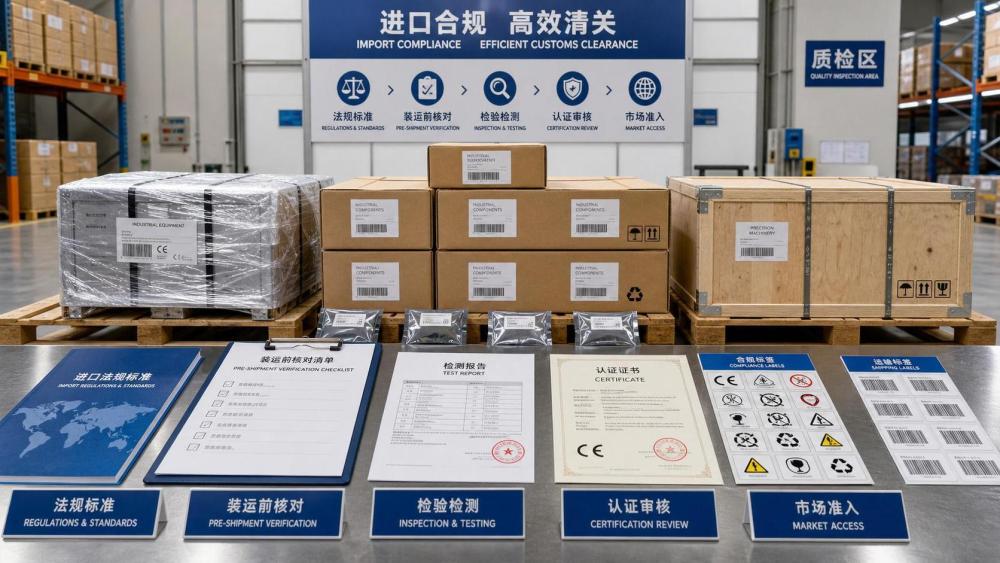
Import regulations standards are rarely just a customs issue. They shape whether a shipment can clear, be sold, or be recalled after arrival.
For industrial goods, the delay usually starts earlier. A missing test report, weak labeling, or unclear product classification often creates the real bottleneck.
That is why faster market entry depends on a working checklist, not on last-minute document collection.
In practice, import regulations standards connect technical files, safety evidence, packaging controls, and importer-of-record responsibilities into one approval path.
A useful way to read them is by risk. What can injure users, contaminate supply chains, misstate origin, or trigger environmental restrictions will be checked first.
GTIIN follows this same logic across global sourcing and industry standards coverage. The point is not only to read rules, but to see how they affect movement, acceptance, and supplier accountability.
What should be on the checklist before a shipment is booked?
The strongest checklist begins before production finishes. Waiting for the freight booking stage usually means expensive corrections.
A practical pre-shipment review should confirm five areas.
- Product identity: model, material, intended use, hazard profile, and HS code logic.
- Mandatory documents: commercial invoice, packing list, certificate of origin, declarations, and importer-facing compliance files.
- Technical evidence: test reports, conformity assessment records, calibration data, and material disclosures.
- Label review: country of origin, safety marks, language needs, warning content, and traceability fields.
- Packaging and transport controls: pallet treatment, dangerous goods status, moisture protection, and seal integrity.
Many teams focus on certificates and forget intended use. Yet intended use often determines which import regulations standards apply and whether the product falls into a higher-risk category.
A valve for food contact, for example, faces different scrutiny than a similar valve for general water handling.
The more reliable approach is to build the checklist around product function, destination market, and regulatory trigger points.
A quick review table for first-pass decisions
This table helps separate routine filings from issues that usually slow clearance or product release.
Which documents and test records matter most?
Not every file carries the same weight. Some documents support customs entry, while others support product legality after customs release.
That distinction matters. A shipment may clear the border and still fail distribution checks.
Core documents usually include the invoice, packing list, origin proof, transport paperwork, and importer declarations.
But the more decisive files sit in the technical folder. These may include safety test reports, EMC results, chemical screening, food-contact migration data, pressure ratings, or fire performance records.
The right question is not, “Do we have a certificate?” It is, “Does this evidence match the exact product version and destination requirement?”
Small product revisions often break compliance continuity. A new coating, alternative adhesive, or firmware change can affect import regulations standards in ways suppliers underestimate.
More experienced teams therefore lock three references together:
- the exact bill of materials,
- the tested sample identification,
- the final label and market claim.
Where GTIIN’s research is especially helpful is in comparing how different markets interpret similar evidence. The same test file may be acceptable in one region and insufficient in another.
When do labeling and packaging become the real compliance risk?
Usually when the technical file looks fine. Labeling and packaging are often treated as final artwork tasks, but regulators read them as compliance statements.
A label can trigger risk if it overstates performance, omits warnings, or fails to identify origin and traceability details.
Packaging creates a second layer of exposure. Industrial products may need shock control, corrosion barriers, contamination prevention, or phytosanitary conformity.
This is especially relevant for mixed-industry trade. Components, chemicals, machinery parts, electronics, and agricultural infrastructure all carry different labeling expectations under import regulations standards.
The safer review method is to compare three versions side by side:
- supplier artwork,
- regulatory wording required in the destination market,
- actual markings visible on the packed unit and outer carton.
It is common to approve the PDF and forget the warehouse reality. Cartons are reprinted, labels are resized, and pallet marks disappear during rush packing.
That gap explains many avoidable border inspections.
How do you judge whether a supplier truly understands import regulations standards?
The clearest signal is consistency. A capable supplier can explain why a document exists, which product version it covers, and when it expires.
A weaker supplier forwards certificates without linking them to process control. That usually means compliance is reactive.
Useful questions during qualification include:
- How are regulation updates tracked by destination market?
- Which product changes trigger retesting or relabeling?
- Can batch records connect shipped goods to tested materials?
- Who approves compliance artwork before export packing?
- What is the response plan if customs questions origin or standards claims?
These questions reveal whether import regulations standards are built into production control or handled only by sales staff.
Across cross-border supply chains, that difference affects claim rates, release timing, and the cost of corrective action.
What mistakes slow approvals even when the product itself is acceptable?
The first mistake is assuming customs clearance equals full compliance. It does not.
The second is using old test records after a design or sourcing change. Even minor substitutions can invalidate prior evidence.
Another common issue is treating all markets as if they interpret standards the same way. Many do not.
A related problem is fragmented ownership. Engineering holds specifications, logistics holds shipping files, and compliance checks happen too late.
A tighter process usually includes one release gate before booking cargo:
- classification confirmed,
- test evidence matched to shipped configuration,
- label artwork approved against market rules,
- packaging inspected against transport and quarantine requirements,
- final document pack reviewed for internal consistency.
That single gate often saves more time than any expedited freight option.
What is the smartest next step if faster entry is the goal?
Start by ranking products by regulatory exposure. Goods with safety claims, chemical content, electrical function, or special packaging needs should be reviewed first.
Then build one live checklist for each destination market, tied to actual product variants rather than generic categories.
In actual operations, the fastest teams also track external signals. Policy updates, customs latency, new sustainability rules, and sector-specific alerts can change import regulations standards with little notice.
That is where a research-driven source matters. GTIIN’s cross-border trade analysis helps connect regulation changes with sourcing, freight timing, and supplier readiness, instead of treating compliance as a standalone task.
A workable plan is simple: verify classification, validate evidence, inspect labels, test packaging assumptions, and document ownership before cargo release.
When import regulations standards are managed this way, approvals move faster because fewer issues are left for the border to discover.
The next review should focus on the products most likely to face reclassification, retesting, or labeling correction. That is usually where market-entry time is won or lost.
Have questions about this sector analysis, or seeking best practices specific to your niche? Drop us a line below and let the senior consultants at GTIIN assist you.
“We respect your privacy. Your information is strictly confidential.”
Weekly Insights
Stay ahead with our curated technology reports delivered every Monday.
Recommended News
 Supply ChainNov 08, 2026He Lifeng Holds Trade Talks With Bessent and Greer
 Market TrendsNov 08, 2026How to use industrial commodity market analysis to forecast costs
 Supply ChainNov 07, 2026EU Opens Safeguard Investigation into PET Resin Imports
 Industry StandardsNov 07, 2026Which ISO quality management standard can a company be certified to?



