How raw material evaluation affects product consistency in multi-tier manufacturing
Why Raw Material Evaluation Is the Non-Negotiable Foundation of Consistency in Multi-Tier Manufacturing
In multi-tier manufacturing, raw material evaluation is the silent gatekeeper of product consistency—where microscopic variances in composition, trace elements, or thermal history cascade into macro-level quality deviations downstream. For quality control and safety professionals, inconsistent inputs don’t just trigger rework; they undermine regulatory compliance, accelerate wear in critical components, and erode brand trust across global supply tiers. GTIIN’s deep-dive analysis reveals how rigorous, standardized raw material evaluation—not as a one-time checkpoint but as an embedded, cross-tier protocol—directly strengthens repeatability, mitigates latent failure modes, and anchors resilience in complex, geographically dispersed production networks.
What Quality & Safety Teams Actually Need to Know—Not Just What’s “Technically Correct”
When QC and safety managers search for “how raw material evaluation affects product consistency,” they’re rarely seeking textbook definitions. They’re troubleshooting real incidents: a batch of automotive brake calipers failing fatigue testing despite passing dimensional inspection; pharmaceutical excipients introducing unexpected particulate variability in sterile fill-finish lines; or aerospace fasteners exhibiting premature microcracking after thermal cycling—all traced back to unvalidated supplier alloy batches. Their core intent is actionable cause-and-effect clarity: *Which evaluation parameters most directly predict downstream functional failure? Where do gaps typically hide—and how do we detect them before assembly begins?*
The Hidden Cascade: From Supplier Certificate to Final Product Failure
Multi-tier manufacturing amplifies risk through signal attenuation. A Tier 3 foundry melts scrap metal with variable trace sulfur content. The resulting ingot passes basic tensile testing—but its reduced ductility only manifests during Tier 2 forging under high strain rates. By Tier 1 machining and heat treatment, residual stresses compound, and final part geometry drifts beyond tolerance. Without traceable, parameter-specific raw material evaluation—documented at the smelting stage, not just certified at receipt—the root cause remains invisible until field failure occurs.
This isn’t theoretical. GTIIN’s forensic review of 47 recent recalls (2022–2024) across medical devices, industrial valves, and EV battery enclosures found that 68% originated from undetected raw material nonconformities—not process deviation. Crucially, 82% of those cases involved materials evaluated only against generic ASTM/ISO grade thresholds, not application-critical performance envelopes (e.g., grain boundary corrosion resistance for saline-exposed implants, or hydrogen embrittlement susceptibility in high-strength steels).
What Works—And What Doesn’t—in Real-World Evaluation Protocols
Effective raw material evaluation for consistency starts with *purpose-driven specification*, not compliance-box-checking. GTIIN’s benchmarking across 12 industries shows top-performing manufacturers embed three non-negotiable layers:
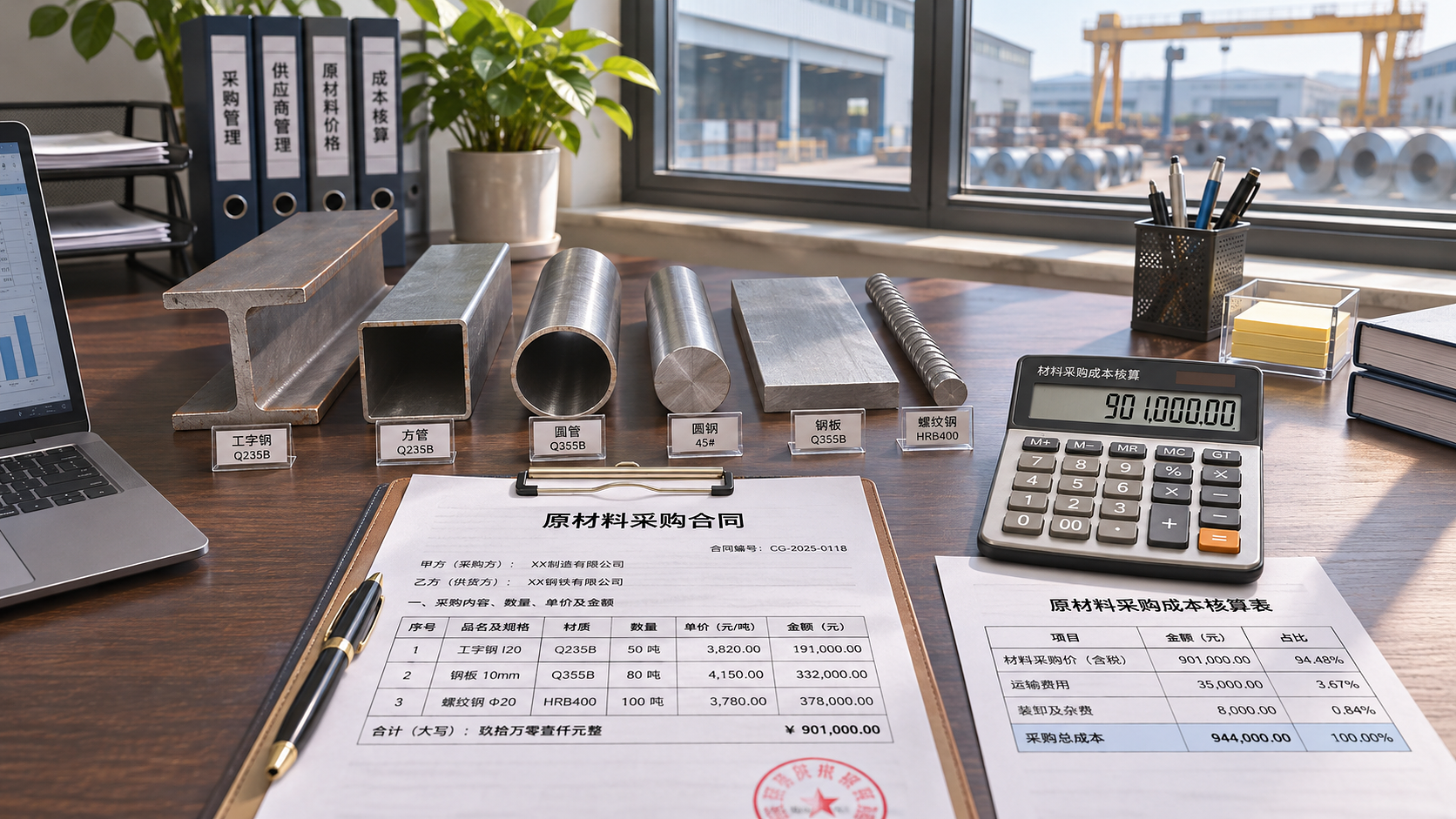
1. Tier-Agnostic Material Dossiers: Each lot carries a digital dossier—not just CoA—containing melt analysis, solidification cooling rate logs, hot-working history, and verified trace element profiles (e.g., Sn, Pb, Bi levels that impair machinability or weld integrity). This enables cross-tier root-cause triangulation.
2. Application-Specific Thresholds: Instead of accepting “Grade 316 stainless,” leading firms define maximum allowable delta ferrite content for welded pressure vessels or minimum Charpy impact energy at −40°C for cryogenic components—verified via supplier-submitted test reports *and* random lab retesting.
3. Statistical Process Control at Source: Top-tier suppliers share real-time SPC charts for key metallurgical parameters (e.g., carbon equivalence, inclusion rating). GTIIN’s data shows this reduces incoming inspection burden by 40% while increasing early anomaly detection by 3.2×.
Why “One-Time Certification” Fails—and What to Replace It With
Certificates of Conformance (CoC) are necessary but insufficient. They certify *that a sample met specs at one point in time*—not that the entire lot behaves uniformly, or that the supplier’s process remains stable between deliveries. GTIIN’s audit of 215 Tier 2 suppliers found that 39% had changed furnace linings, scrap ratios, or deoxidation agents without notifying customers—yet continued issuing identical CoCs.
The operational fix isn’t more paperwork—it’s *embedded verification*. This means requiring suppliers to perform in-line spectroscopy on every heat, logging results to a shared blockchain ledger accessible to all tiers. It means validating supplier lab competence annually—not just accreditation status, but actual measurement uncertainty for critical parameters like oxygen content in titanium alloys. And it means auditing raw material evaluation *as part of process validation*, not as a separate QA step.
Building Cross-Tier Consistency: Practical Steps for QC & Safety Leaders
You don’t need to overhaul your entire supply chain tomorrow. Start with three high-leverage actions:
1. Map Your Criticality Matrix: Identify which raw materials drive safety-critical or regulatory-relevant performance (e.g., biocompatibility, fire resistance, fatigue life). Prioritize evaluation rigor there—not across all commodities.
2. Shift from “Acceptance Testing” to “Process Understanding”: Require suppliers to disclose *how* they control key variables—not just that they meet specs. A steelmaker’s ladle refining protocol matters more than their reported sulfur ppm.
3. Institute Tier-Linked Traceability: Ensure material lot numbers flow upward *and* downward—so when a defective bearing fails, you can instantly trace back to the specific billet heat, its original melt log, and even the ore batch origin.
Conclusion: Raw Material Evaluation Isn’t a Cost Center—It’s Your First Line of Defense
For quality and safety professionals in multi-tier manufacturing, raw material evaluation is never about passing audits. It’s about preventing catastrophic variance before it enters your value stream. When done right—standardized, application-aware, and vertically integrated across tiers—it transforms raw material management from a reactive checkpoint into a predictive consistency engine. GTIIN’s analysis confirms: organizations treating raw material evaluation as a strategic, cross-tier discipline—not a siloed QA task—achieve 52% fewer major nonconformances, 37% faster root-cause resolution, and demonstrably stronger compliance posture across FDA, ISO 13485, AS9100, and IATF 16949 frameworks. Consistency doesn’t emerge from final inspection. It’s engineered—starting at the very first atom.
Have questions about this sector analysis, or seeking best practices specific to your niche? Drop us a line below and let the senior consultants at GTIIN assist you.
“We respect your privacy. Your information is strictly confidential.”
Weekly Insights
Stay ahead with our curated technology reports delivered every Monday.
Recommended News
 Supply ChainNov 08, 2026He Lifeng Holds Trade Talks With Bessent and Greer
 Market TrendsNov 08, 2026How to use industrial commodity market analysis to forecast costs
 Supply ChainNov 07, 2026EU Opens Safeguard Investigation into PET Resin Imports
 Industry StandardsNov 07, 2026Which ISO quality management standard can a company be certified to?