
US Shipping Rates Top $6,200/FEU on Tariffs and CPSC Rule
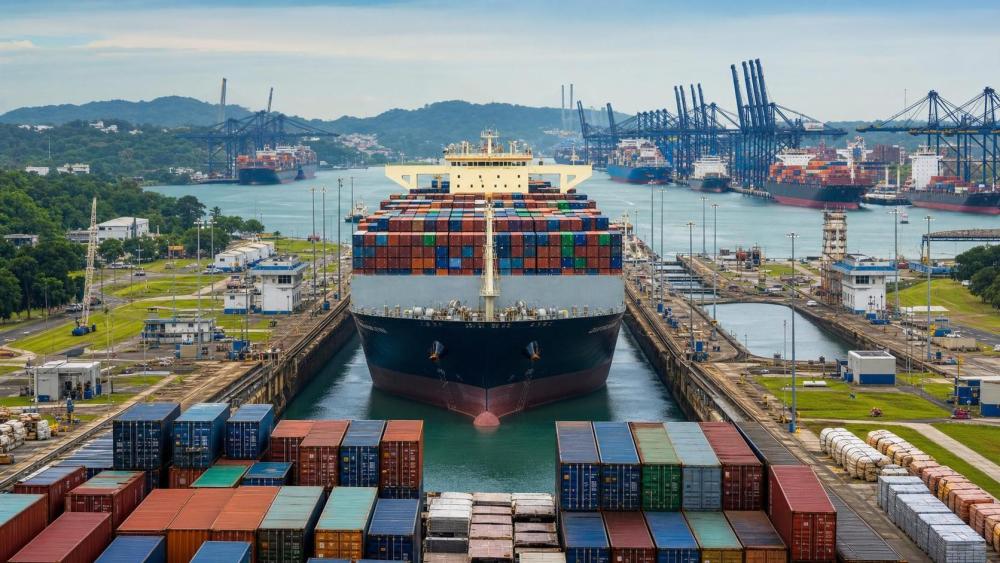
On June 25, 2026, a CSC Financial research note indicated that a new round of US tariff increases, the implementation of new CPSC rules for children’s products, and congestion linked to low water levels at the Panama Canal have combined to push exporters into concentrated early shipments on US routes. Mainstream spot freight quotes reached $5,000–$5,500 per FEU, while premium space exceeded $6,200 per FEU, with capacity for late June and early July largely sold out. For exporters, importers, manufacturers, and logistics providers tied to US-bound cargo, this is worth close attention because it points not only to higher transport costs, but also to mounting pressure on booking windows, delivery planning, and route selection.
What the June 25 update confirms
The confirmed information is relatively clear. According to the June 25 research note, the latest rate surge on US container shipping routes is associated with three simultaneous factors: new US tariff increases, the rollout of new CPSC requirements for children’s products, and congestion related to dry-season conditions at the Panama Canal.
Under these conditions, exporters moved cargo forward in a concentrated wave of rush shipments. The note states that prevailing spot rates on US routes reached $5,000–$5,500 per FEU, while higher-end space was quoted above $6,200 per FEU. It also states that space for late June through early July was basically sold out, and that the shortage cycle on the US East Coast was notably longer than on the US West Coast.
Where the pressure is likely to be felt first
Exporters face tighter shipping windows
From an industry perspective, exporters shipping to the United States are among the first to feel the impact because the immediate issue is not only freight inflation but also access to space. When bookings are effectively filled for late June and early July, the operational pressure shifts to shipment timing, customer commitments, and delivery sequencing.
Manufacturers may see fulfillment schedules compressed
For processing and manufacturing companies tied to US orders, the effect may show up in production coordination rather than in freight cost alone. Analysis shows that when customers or exporters accelerate shipments ahead of policy or compliance pressure, factory output, packing, handover timing, and documentation readiness can all become more time-sensitive.
Supply chain service providers face execution risk
Freight forwarders, consolidators, and other supply chain service providers are likely to face pressure in booking management, route coordination, and customer communication. What deserves closer attention is the uneven nature of the shortage cycle, with the US East Coast described as staying tight for longer than the US West Coast, which can affect routing discussions and lead-time expectations.
Buyers and channel operators may need to reassess timing
Import-side buyers and distribution businesses connected to US-bound goods may also need to watch shipment timing more closely. Observably, when space is sold out and premium rates rise, the practical issue becomes whether planned arrivals, replenishment cycles, or promotional schedules can still be supported under current transit and booking conditions.
What businesses should watch now
Separate regulatory triggers from logistics effects
What deserves closer attention is the difference between the policy trigger and the logistics result. The reported surge is linked both to tariff changes and to new CPSC rules for children’s products, but the immediate business effect described here is a rush to ship and a tightening of vessel space. Companies should therefore distinguish compliance requirements from freight execution risks in their internal planning.
Review exposure by product and route
Businesses with US-bound cargo should pay particular attention to whether their shipments are tied to children’s products, whether they depend on specific sailing windows, and whether they are exposed to East Coast routings. The note’s point that East Coast tightness is lasting longer than West Coast tightness makes route-level exposure an important operational question.
Check document readiness and handover timing
Analysis shows that in a rush-shipment environment, documentation, cargo handover, and supplier coordination become more critical. Even when pricing is known, the actual challenge may lie in whether cargo can be prepared and transferred in time to match limited available space.
Prepare customer communication around lead times
For exporters and service providers, client communication becomes a practical priority when space is largely sold out over a defined period. It is more appropriate to understand this as a delivery-management issue as much as a freight-cost issue, especially where booking uncertainty may affect promised shipping dates.
How this development should be read
Analysis shows that this update is best understood as a near-term stress signal in the US-bound shipping market rather than a fully settled long-term trend. The reported price spike and space shortage clearly reflect concentrated booking behavior under policy and logistics pressure, but the available information does not by itself confirm how long these conditions will persist beyond the noted late-June to early-July window.
At the same time, Observably, the combination of tariffs, product-rule implementation, and canal-related congestion matters because it shows how policy changes and physical logistics constraints can reinforce each other. That interaction is why the development deserves continued monitoring rather than being treated as a single isolated rate move.
Why the market should stay measured
The industry significance of this update lies in the overlap of compliance pressure, trade policy adjustment, and transport bottlenecks within the same shipment cycle. For businesses connected to US routes, the immediate issue is not simply that rates have risen above $6,200 per FEU for premium space, but that booking certainty and delivery timing have also become less predictable.
It is more appropriate to understand this as a short-term market tightening with broader signaling value. In other words, the current information points to a live operational squeeze and a meaningful warning sign for planning, while the longer-term direction still requires further observation.
Basis of this article
This article is generated based on the user-provided news title, event date, and event summary. The confirmed inputs include the June 25, 2026 timing, the reported impact of new US tariff increases and new CPSC rules for children’s products, the Panama Canal low-water congestion factor, the quoted spot rate range of $5,000–$5,500 per FEU, premium space above $6,200 per FEU, the late-June to early-July sellout situation, and the longer shortage cycle on the US East Coast.
For this type of development, relevant source categories typically include official announcements, company disclosures, industry association updates, authoritative media coverage, research notes, and standards or regulatory documents. No specific official source link was provided in the input, so further verification remains necessary. If follow-up monitoring continues, the main points to watch are any updated official wording on tariffs or product rules, as well as whether freight availability and the East Coast-West Coast gap change in subsequent market updates.
Have questions about this sector analysis, or seeking best practices specific to your niche? Drop us a line below and let the senior consultants at GTIIN assist you.
“We respect your privacy. Your information is strictly confidential.”
Tags
Weekly Insights
Stay ahead with our curated technology reports delivered every Monday.
Recommended News
 Supply ChainNov 08, 2026He Lifeng Holds Trade Talks With Bessent and Greer
 Market TrendsNov 08, 2026How to use industrial commodity market analysis to forecast costs
 Supply ChainNov 07, 2026EU Opens Safeguard Investigation into PET Resin Imports
 Industry StandardsNov 07, 2026Which ISO quality management standard can a company be certified to?



