Supplier Audits for Importers: Key Risks to Check Before You Place an Order
Supplier Audits for Importers: Key Risks to Check Before You Place an Order
Before committing capital to a new overseas supplier, importers need more than quotes and samples. They need proof that the factory behind the quotation can actually deliver at the quality level, lead time, and compliance standard the order requires. That is where supplier audits for importers stop being a box-ticking exercise and start becoming a cost-control tool.
A surprising number of sourcing problems begin after the commercial terms look settled. The sample was fine, the price was competitive, the sales manager was responsive, and then the production run exposed hidden subcontracting, weak process control, missing records, or a factory already overloaded with other orders. By the time those issues show up, the buyer is paying in rework, air freight, delays, or claims.
If you are auditing a new supplier before placing an order, these are the checks worth doing. Not every item matters equally in every category, but ignoring the wrong one can turn a low quote into an expensive purchase.
Start with the basic question: is this the real manufacturer?
This sounds obvious until you see how often it gets blurred. Many suppliers present themselves as factories while operating as traders, partial assemblers, or order coordinators. That does not automatically make them unusable, but it changes your risk profile. A trader can still be a capable partner, yet you lose direct visibility into process control, capacity, and corrective action.
- Confirm the legal entity name on the business license and compare it with the entity shown on quotations, bank details, quality records, and export documents.
- Check whether the site you are auditing actually houses the production steps critical to your product.
- Ask which operations are outsourced. Surface treatment, heat treatment, molding, PCB assembly, packaging, and final inspection are common blind spots.
A supplier that is transparent about subcontracted steps is usually easier to manage than one claiming to do everything in-house with no supporting evidence. The problem is not outsourcing by itself. The problem is hidden outsourcing without control over quality, traceability, or delivery.
Look at production reality, not presentation slides
When buyers visit a site, they often get shown the cleanest corridor, the newest machine, and a conference room full of framed certificates. None of that tells you much unless you walk the process in sequence.
Follow the material flow from incoming goods to storage, processing, assembly, inspection, packing, and dispatch. You are looking for friction points: unlabeled work-in-progress, mixed lots, poor segregation of defective parts, missing inspection status, or operators relying on memory instead of documented instructions. Those details usually predict future claims better than polished sales language.
If the factory says it can hold tight tolerances or meet special performance requirements, ask to see the controls tied to that claim. For metal parts, that may mean gauge calibration records, incoming material certificates, and in-process checks. For electrical goods, it may involve routine test records and clear traceability by batch or serial number. If the answer is vague, treat the quotation with caution.

Capacity is not the same as available capacity
A factory may have enough machines on paper and still miss your ship date. Procurement teams get caught here all the time. The supplier is technically capable, but the line is already committed, key tooling is shared with other customers, or one bottleneck process sits with an outside vendor.
Ask practical questions:
- What is the monthly output for this product family, not the whole factory?
- Which process determines lead time?
- How many shifts are currently running?
- What percentage of capacity is already booked for the next 60 to 90 days?
- What happens if a key machine fails or an operator is absent?
You do not need perfect forecasting. You need to know whether the supplier has realistic scheduling discipline. A lead time promise with no production planning logic behind it is just sales talk.
Quality systems matter most where failure is expensive
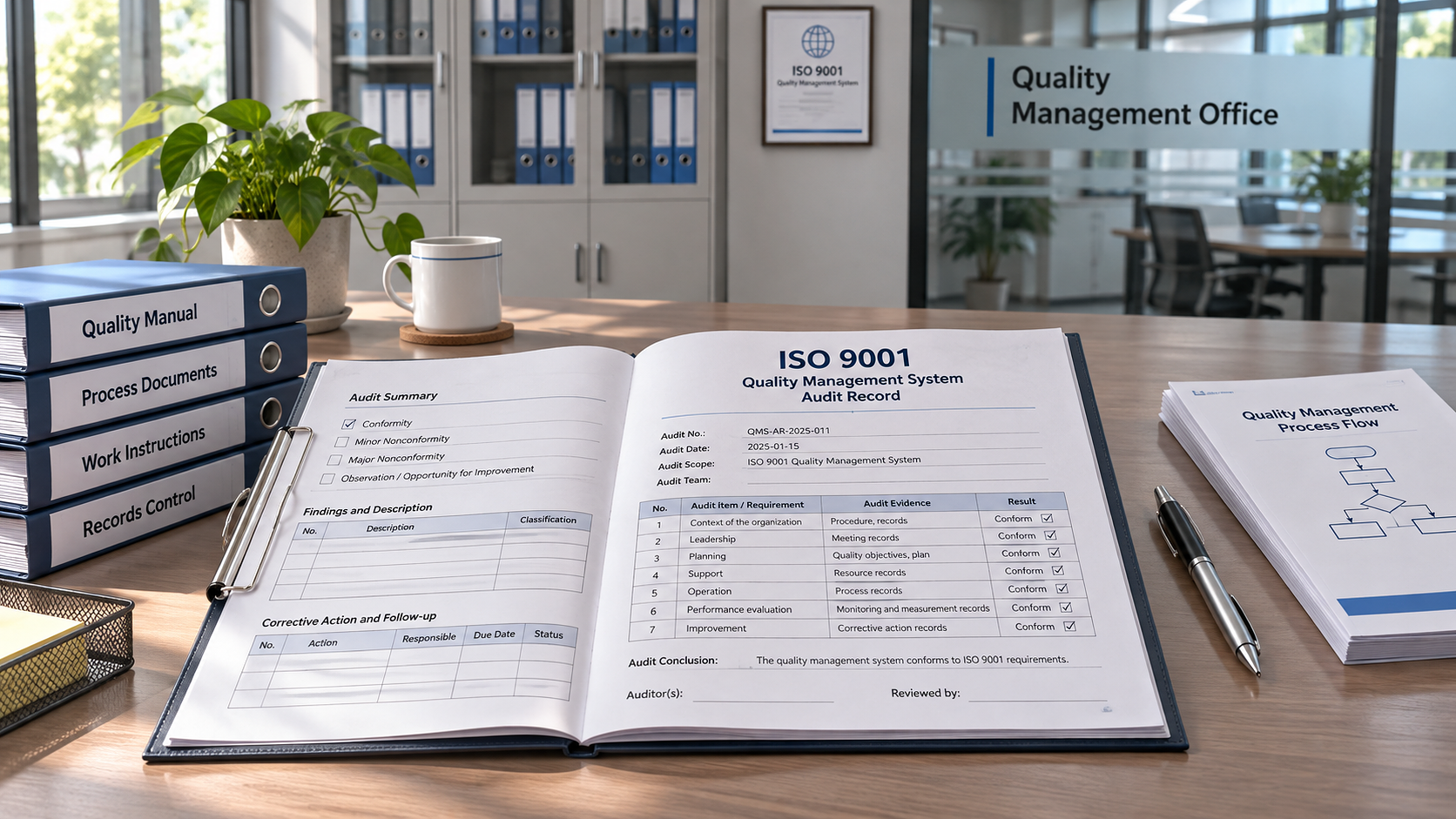
Many importers ask whether the supplier has ISO 9001. That is a reasonable screening question, but certification alone does not tell you how the factory manages actual defects. Certificates can support confidence; they do not replace process evidence.
What you want to verify is whether the supplier can prevent repeat problems and contain bad product before shipment. Useful checks include nonconformance records, corrective action logs, inspection plans, calibration control, incoming quality control, final inspection criteria, and retention of inspection data. If the factory cannot retrieve a recent corrective action example, it often means the system is weak or only maintained for audits.
For higher-risk categories such as industrial components, electrical products, food-contact materials, medical-related items, or products entering regulated markets, go further. Confirm which standards actually apply in your destination market and require supporting documentation from the supplier. Do not assume a generic “CE” statement, lab logo, or test summary is enough. Product compliance depends on scope, model coverage, revision status, and in some cases the importer’s own obligations. Where documentation is unclear, mark it as 【待核实】 and hold the order until it is checked.
Traceability is where hidden risk starts showing up
If something goes wrong in the field, can the supplier identify which batch used which material, which line produced it, and what inspection result was recorded? If not, one defect can force you into broad containment, wider recalls, or unnecessary write-offs because nobody can isolate the affected lot.
This check is especially important for products with variable raw materials, safety-related components, coatings, electronics, and multi-stage assembly. Even a basic lot code system is better than nothing, but it should connect to production records and shipment records in a way that can be retrieved quickly.
Do not overlook EHS and labor issues just because you are buying on cost
For many procurement teams, environmental, health, safety, and labor checks enter the conversation only when a large customer asks for them. That is late. If a supplier is operating with obvious safety failures, poor chemical handling, blocked exits, or questionable labor practices, the commercial risk is already there. Shutdowns, local enforcement, reputational issues, and sudden delivery interruptions all become more likely.
The exact legal requirements vary by country and product. Do not invent your own compliance standard. Instead, verify whether the supplier can show the permits, training records, and operating controls that should reasonably exist for its process type. If the factory uses plating, painting, solvents, or wastewater-generating operations, weak controls are not a minor detail. They can become your supply disruption later.
Watch for commercial signals that usually precede execution problems
Some risk signs appear outside the workshop. They show up in how the supplier handles documents, changes, and accountability.
- Quotation assumptions are incomplete or keep changing after technical discussion.
- Quality requirements are accepted verbally but not reflected in specifications or inspection criteria.
- The supplier resists defining packaging standards, carton markings, or pallet rules.
- Bank account details do not align cleanly with the audited company name.
- Engineering changes are discussed casually, with no revision control.
None of these points alone proves bad intent. Together, they often signal a supplier that is not operationally disciplined enough for repeatable cross-border business.
Packaging and shipping readiness deserve more attention than they get
A factory can make acceptable product and still cause landed-cost pain through poor export packaging. This is common with fragile goods, coated metal parts, moisture-sensitive items, and mixed-SKU shipments. Ask to see actual packing methods, not just a verbal assurance that they “export all the time.”
Check whether the supplier understands container loading constraints, carton strength, corrosion protection, humidity control where needed, labeling, and destination-specific documentation. If your product is sensitive to transit vibration, stacking pressure, or long ocean transit, packaging should be reviewed as part of the audit or pre-shipment preparation. Replacing damaged goods across borders is rarely cheap.
How to turn audit findings into a buying decision
Not every audit needs a pass-or-fail outcome. In practice, buyers usually have three paths.
- Approve for order placement because the key controls are present and the open items are minor.
- Approve conditionally with a corrective action plan, tighter first-order controls, and possibly third-party inspection.
- Do not place the order yet because the unresolved issues affect compliance, traceability, production control, or delivery confidence.
The useful habit is to separate findings into what can be fixed before the first shipment and what changes the risk of the entire relationship. A missing sign on the wall is not the same as missing lot traceability. An untidy aisle is not the same as undocumented subcontracting. Procurement teams save money when they rank findings by business impact instead of counting them mechanically.
For a new supplier, a sensible first order often includes extra safeguards: sealed golden samples, approved specifications, defined AQL or inspection criteria where appropriate, pre-shipment inspection, packaging approval, and a clear escalation contact list. Supplier audits for importers work best when the audit is tied directly to order controls, not filed away as a standalone report.
The main point is simple: before you place an order, verify the things that are expensive to discover later. A good supplier audit does not guarantee perfect execution, but it sharply reduces the chance that your team will be surprised by problems the factory was already showing you.
Have questions about this sector analysis, or seeking best practices specific to your niche? Drop us a line below and let the senior consultants at GTIIN assist you.
“We respect your privacy. Your information is strictly confidential.”
Weekly Insights
Stay ahead with our curated technology reports delivered every Monday.
Recommended News
 Supply ChainNov 08, 2026He Lifeng Holds Trade Talks With Bessent and Greer
 Market TrendsNov 08, 2026How to use industrial commodity market analysis to forecast costs
 Supply ChainNov 07, 2026EU Opens Safeguard Investigation into PET Resin Imports
 Industry StandardsNov 07, 2026Which ISO quality management standard can a company be certified to?