
Navigating Global Logistics: Sourcing Strategies for Heavy-Duty Commercial Wine Tanks
In the rapidly expanding global beverage sector, the scaling of commercial winery operations presents a unique set of logistical and financial challenges. When a viticulture enterprise decides to transition from a boutique regional producer to a globally competitive exporter, the immediate operational bottleneck is structural capacity. Scaling up requires the acquisition of massive, highly engineered stainless steel fermentation and storage vessels.
However, sourcing these heavy-duty assets on an international scale is not akin to purchasing standard palletized commodities. It is a highly complex logistical endeavor fraught with macroeconomic variables, volatile shipping rates, and severe supply chain risks. Procurement directors and Chief Supply Chain Officers (CSCOs) must navigate a labyrinth of international freight logistics, strict customs compliance, and rigorous vendor auditing. This comprehensive intelligence report dissects the macro supply chain fulfillment strategies necessary for safely, cost-effectively, and reliably procuring heavy-duty commercial fermentation tanks in 2026.
Overcoming the Out-of-Gauge (OOG) Freight Challenge
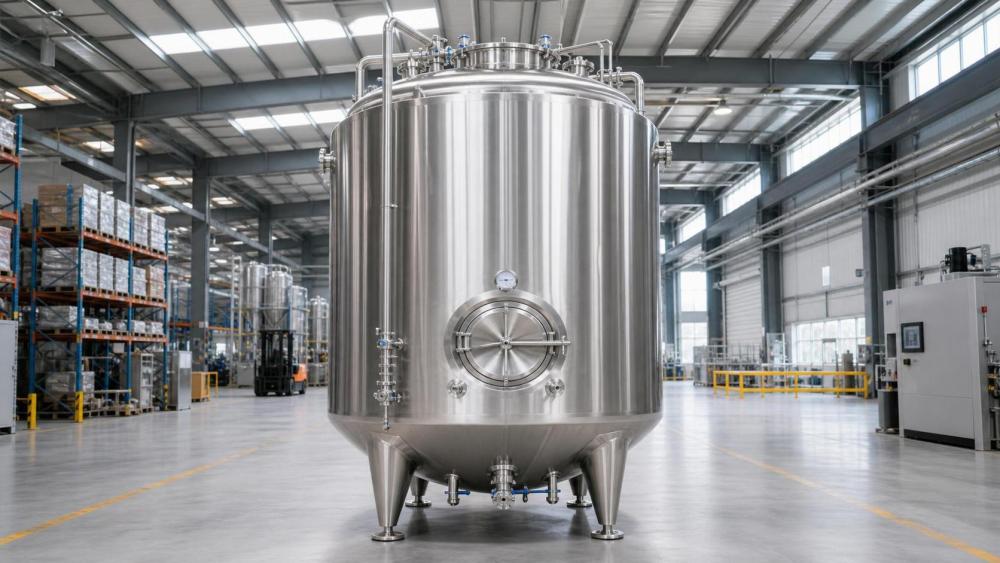
The most immediate and physically daunting challenge in procuring heavy-duty commercial winery equipment is international ocean freight. Standard consumer goods and raw materials are easily consolidated into standard 20-foot (TEU) or 40-foot (FEU) shipping containers. However, commercial fermentation vessels are inherently massive. A single 50,000-liter storage vessel can easily measure over 4 meters in diameter and 8 meters in height, rendering standard containerization physically impossible.
These heavy-duty assets are classified in the shipping industry as Out-of-Gauge (OOG) cargo. Shipping OOG cargo requires highly specialized logistics management. Procurement teams must negotiate with ocean freight forwarders for the use of Flat Rack containers or Open Top containers. For the absolute largest tanks, Breakbulk shipping or Roll-On/Roll-Off (RORO) vessels become mandatory.
The procurement challenge here is cost volatility. OOG shipping rates are not standardized like standard container freight; they fluctuate wildly based on global port congestion, the availability of specialized stevedoring equipment (like heavy-lift shore cranes), and the specific routing parameters. A miscalculation in the exact physical dimensions of the tank during the booking phase can result in "dead freight" charges or the cargo being entirely rejected at the port of origin, destroying the project's budget.
Incoterms Strategy: Evaluating FOB versus CIF Risks
When negotiating cross-border contracts for high-value heavy machinery, selecting the correct International Commercial Terms (Incoterms) is a critical risk-management decision. Many inexperienced buyers default to CIF (Cost, Insurance, and Freight), assuming that shifting the logistical burden to the overseas manufacturer is the safest route. This is a common and often costly procurement fallacy.
Under a CIF agreement, the seller controls the freight forwarding and insurance selection. While this seems convenient, the buyer loses all visibility and control over the actual shipping costs and transit routing. Overseas sellers often inflate the freight costs to pad their profit margins, or conversely, they may select the cheapest, least reliable ocean carrier to maximize their own revenue, significantly increasing the risk of transit delays or cargo damage.
For sophisticated global sourcing teams, negotiating under FOB (Free On Board) or EXW (Ex Works) terms is strongly preferred for heavy machinery. Under FOB, the buyer takes control of the cargo once it is loaded onto the vessel at the port of origin. This allows the buyer to leverage their own vetted, specialized freight forwarders who understand the nuances of OOG cargo. It provides absolute transparency in shipping costs, superior tracking capabilities, and the ability to select robust marine insurance policies specifically tailored to heavy-duty stainless steel assets.
Manufacturing Lead Time and Harvest Synchronicity
In the commercial winemaking industry, time is not merely a metric; it is an absolute biological deadline. The annual grape harvest (the "crush") waits for no one. If a winery plans a massive facility expansion to handle an anticipated 500-ton harvest, the new fermentation infrastructure must be fully installed, sanitized, and commissioned weeks before the first grapes are picked.
This rigid biological deadline makes manufacturing lead time the most critical variable in the procurement equation. Heavy-duty stainless steel tanks are rarely "off-the-shelf" items; they are custom-fabricated to the winery's specific volumetric and dimensional requirements.
Procurement directors must calculate reverse logistics with extreme precision. If the harvest begins in early September, and oceanic transit from Asia to Europe or North America takes 45 days, plus 15 days for port customs clearance and inland drayage, the tanks must physically leave the overseas factory by mid-July. Accounting for a standard 60-to-90-day manufacturing cycle, the absolute deadline to sign the irrevocable letter of credit and issue the purchase order is in early April. Failure to build adequate buffers for unexpected supply chain disruptions—such as steel shortages, rolling port strikes, or extreme weather events—can result in the tanks arriving after the harvest, forcing the winery to sell their premium grapes on the bulk spot market at a massive financial loss.
Vendor Auditing and Quality Assurance Protocols
Procuring equipment from international manufacturers introduces a significant degree of information asymmetry. A beautifully designed supplier website does not guarantee world-class manufacturing capabilities. Global sourcing teams must implement rigorous, multi-tiered Vendor Quality Assurance (VQA) protocols before ever issuing a down payment.
The audit process for a heavy machinery manufacturer must go far beyond simple credit checks. Sourcing agents or third-party engineering inspectors must physically or virtually audit the supplier's factory floor. Key inspection metrics include the verification of raw material sourcing (ensuring the supplier uses certified 304 or 316L austenitic stainless steel rather than inferior 200-series alloys), the presence of automated Tungsten Inert Gas (TIG) welding robotics, and strict pressure-testing protocols for dimple cooling jackets.
The financial stakes of bypassing these audits are enormous. A compromised Wine Tank failing or leaking during active fermentation due to sub-standard overseas manufacturing not only destroys the immediate liquid asset but also inflicts profound, long-term damage on the facility's overall Return on Investment (ROI). Effective global sourcing is fundamentally about risk mitigation; paying a slight premium for a heavily audited, fully certified manufacturer is infinitely more cost-effective than managing the fallout of catastrophic equipment failure.
Navigating Tariffs and Customs Compliance
The final hurdle in international procurement is the complex web of global customs regulations and geopolitical tariff barriers. Heavy industrial machinery, particularly products manufactured from refined steel and aluminum alloys, is heavily scrutinized by customs authorities worldwide.
Sourcing teams must work closely with licensed customs brokers to ensure the equipment is classified under the correct Harmonized System (HS) codes. Misclassification can lead to severe financial penalties, the cargo being impounded at the port of entry, or the application of punitive anti-dumping duties. For example, specific grades of stainless steel vessels might be subject to Section 232 tariffs in the United States or equivalent protective duties in the European Union.
Furthermore, compliance documentation must be flawless. This includes commercial invoices detailing the precise metallurgical breakdown of the tanks, packing lists that accurately reflect the OOG dimensions, and authenticated Certificates of Origin. Any discrepancy between the physical cargo and the submitted paperwork will trigger immediate holds by customs agents, racking up daily demurrage and detention fees at the port that can quickly erase any savings achieved during the initial factory negotiation.
Conclusion
Successfully sourcing heavy-duty commercial fermentation equipment on a global scale demands a sophisticated blend of supply chain agility, financial acumen, and rigorous risk management. It is a strategic process that extends far beyond the basic transactional negotiation of a purchase price.
By proactively managing the complex logistics of Out-of-Gauge freight, intelligently leveraging FOB Incoterms for maximum supply chain visibility, strictly synchronizing manufacturing lead times with absolute biological harvest deadlines, and executing uncompromising vendor audits, procurement directors transform international sourcing from a high-risk gamble into a distinct competitive advantage. In the capital-intensive world of commercial beverage production, mastering these macro supply chain fulfillment strategies is the definitive key to unlocking global scalability and securing long-term corporate profitability.
Have questions about this sector analysis, or seeking best practices specific to your niche? Drop us a line below and let the senior consultants at GTIIN assist you.
“We respect your privacy. Your information is strictly confidential.”
Tags
Weekly Insights
Stay ahead with our curated technology reports delivered every Monday.
Recommended News
 Supply ChainNov 10, 2026China Extends Pause on 24% Additional Tariff on US Goods by Two Months
 Industry StandardsNov 10, 2026Which imports are subject to EU carbon border compliance?
 Global SourcingNov 09, 2026USTR Extends 178 China Section 301 Tariff Exclusions to January 2027
 Supply ChainNov 09, 2026How can a tariff risk management dashboard track cost exposure?



