Market Expansion Sourcing: A Supplier Qualification Framework for New Regions
Market expansion sourcing is not a price-comparison exercise. Procurement teams need evidence that a new regional supplier can deliver compliant, consistent, and commercially viable supply under real operating conditions.
The central question is whether a supplier can support the required business outcome after onboarding, not merely whether it can provide an acceptable quotation today.
For buyers entering unfamiliar markets, qualification must connect supplier capability with regional regulations, logistics constraints, financial exposure, quality controls, and continuity planning from the beginning.
A disciplined framework reduces costly surprises during ramp-up. It also gives procurement, engineering, finance, legal, and operations teams a common basis for approving suppliers confidently.
Start Market Expansion Sourcing With a Clear Risk Profile
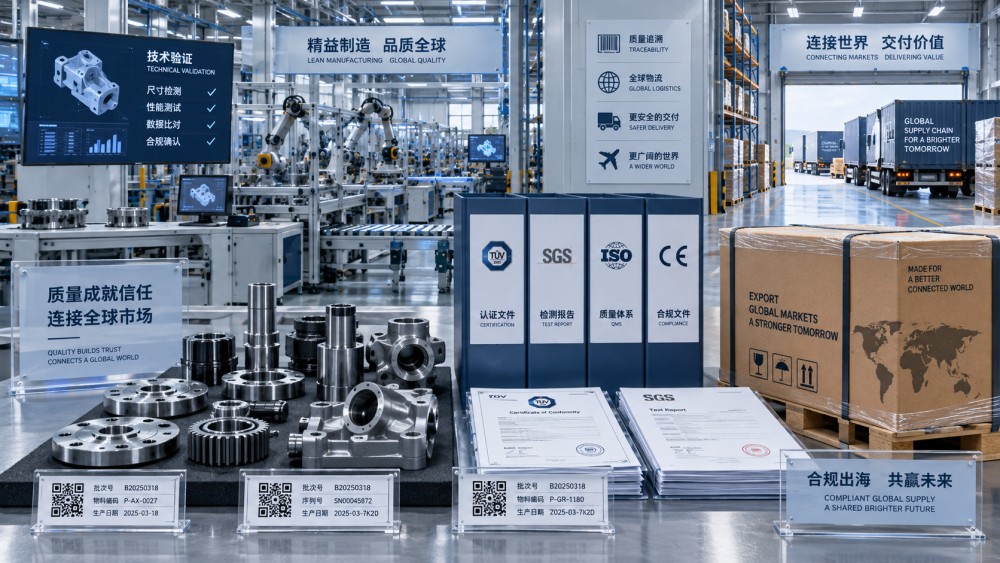
Before screening suppliers, define what failure would mean for the business. The qualification standard for noncritical packaging should differ significantly from standards for strategic industrial components.
Classify the purchase by operational criticality, annual spend, switching difficulty, regulatory sensitivity, technical complexity, and customer impact. This prevents teams from applying identical diligence to every supplier.
A useful starting point is a three-tier model: transactional suppliers, approved production suppliers, and strategic supply partners. Each tier should have distinct evidence requirements and approval authority.
Transactional suppliers may require basic registration, trade references, and sample validation. Strategic suppliers require deeper review of capacity, financial health, traceability, contingency planning, and management controls.
Regional risk must also be mapped before supplier engagement. Consider tariffs, sanctions exposure, foreign-exchange volatility, port capacity, customs procedures, political stability, labor conditions, and infrastructure reliability.
Procurement teams should avoid treating country risk as a fixed score. Risk changes by product category, transport lane, origin province, customer destination, and the supplier’s own operational footprint.
For example, a supplier located near a major export port may have lower logistics exposure than a cheaper competitor located inland with limited rail access.
Create a sourcing brief that states required specifications, demand forecasts, target delivery terms, acceptable lead times, certification needs, expected service levels, and unacceptable risk conditions.
This brief becomes the qualification baseline. Without it, supplier assessments often become subjective, allowing attractive pricing to outweigh hidden weaknesses in capability or regional resilience.
Verify Whether the Supplier Can Actually Meet Technical Requirements
Supplier capability begins with product fit. Confirm that the supplier understands drawings, standards, tolerances, materials, testing methods, packaging instructions, and documentation requirements before evaluating commercial terms.
Do not rely solely on certificates or polished presentations. Request recent production records, inspection reports, process flowcharts, equipment lists, calibration evidence, and examples of comparable customer applications.
For industrial products, examine whether machinery, tooling, process controls, and operator expertise match the required manufacturing complexity. A supplier may produce similar goods without meeting your exact standard.
Ask how the supplier manages engineering changes. Strong suppliers maintain revision control, communicate deviations promptly, and prevent obsolete specifications from reaching production or shipment stages.
Quality systems should be assessed beyond certificate validity. ISO certification can indicate structure, but it does not prove effective execution, reliable root-cause analysis, or strong corrective-action discipline.
Review key quality indicators where possible, including defect rates, customer returns, first-pass yield, on-time corrective actions, and the frequency of major nonconformities during audits.
Sample approval is essential, especially when entering a new region. However, a perfect sample does not guarantee production consistency across shifts, batches, seasons, or rising order volumes.
Use pilot orders to test the full process: purchase order release, confirmation, manufacturing, inspection, export documentation, packaging, handover, transit, and receiving inspection at destination.
The objective is to validate repeatability. Market expansion sourcing succeeds when a supplier can reproduce approved quality under normal commercial pressure, rather than only during a controlled evaluation.
Assess Capacity, Scalability, and Operational Discipline
Capacity claims should be verified against real constraints. A factory’s stated monthly output may ignore bottleneck equipment, subcontracting dependence, material shortages, maintenance shutdowns, or competing customer commitments.
Ask suppliers to separate installed capacity, available capacity, committed capacity, and surge capacity. These figures mean different things and reveal whether expansion volume can be absorbed responsibly.
Review production planning practices, including demand visibility, scheduling methods, safety stock policies, work-in-progress controls, and lead-time performance. Weak planning often creates avoidable delivery instability.
Site audits remain valuable for strategic suppliers. They allow teams to verify production flow, housekeeping, process segregation, traceability, warehouse controls, and whether reported equipment is actually operational.
When on-site audits are impractical, use a layered approach. Combine video walkthroughs, live document review, third-party inspection, independent references, and trial-order performance data.
Subcontracting deserves particular attention. Suppliers may outsource critical processes such as plating, machining, heat treatment, testing, or packaging, creating risks outside their direct operational control.
Require disclosure of approved subcontractors, outsourced process controls, inspection responsibilities, and contingency arrangements. Undisclosed subcontracting can undermine product consistency, traceability, and compliance obligations.
Evaluate workforce stability as well. High turnover, dependence on temporary labor, or shortages of trained technicians can affect quality and lead times even when facilities appear capable.
Finally, test scalability through scenarios. Ask how the supplier would respond to a 30 percent volume increase, accelerated demand, material disruption, or simultaneous quality containment action.
Confirm Compliance, Ethical Sourcing, and Traceability
Compliance qualification should reflect the product, destination market, and industry. A supplier acceptable for one country may not meet the legal, safety, environmental, or documentation requirements of another.
Begin with legal entity verification. Confirm ownership, registration status, operating licenses, export rights, beneficial ownership where relevant, and whether the supplier has authority to sign binding agreements.
Screen for sanctions, restricted-party exposure, export-control risks, anti-bribery concerns, and adverse legal records. This step protects both supply continuity and corporate reputation.
For regulated categories, verify applicable product approvals and testing. Depending on the market, this may include CE marking, REACH, RoHS, FDA requirements, UL standards, or local conformity schemes.
Environmental and social requirements increasingly influence supplier approval. Buyers should review waste controls, emissions practices, labor standards, workplace safety, forced-labor prevention, and grievance mechanisms.
Traceability is especially important for bulk commodities, metals, chemicals, food ingredients, electronics, and critical materials. Determine whether the supplier can identify origin, batch history, and processing stages.
Ask suppliers how they preserve records and manage certificates of analysis, material declarations, chain-of-custody documentation, and supplier declarations. Documentation gaps can block customs clearance or customer acceptance.
Compliance should not be treated as a one-time gate. Set renewal intervals for certificates, periodic screening, and escalation triggers when regulations, ownership, production sites, or trade routes change.
A supplier that cannot explain its compliance process clearly should not be approved for high-risk categories, regardless of pricing advantages or apparent manufacturing capability.
Measure Financial Strength and Commercial Reliability
A technically qualified supplier can still fail commercially. Financial stress may lead to delayed material purchases, reduced maintenance, quality shortcuts, staffing losses, or sudden requests for advance payment.
Request financial statements where available, but interpret them carefully. Review liquidity, debt levels, profit trends, working-capital needs, customer concentration, and any dependence on volatile commodity prices.
In regions where audited statements are limited, combine several signals. These can include credit reports, banking references, litigation checks, payment behavior, trade references, and local market intelligence.
Commercial reliability also depends on contract discipline. Assess whether quotations are complete, assumptions are transparent, delivery terms are clear, and proposed payment conditions match the supplier’s risk profile.
Unusually low prices need investigation. They may reflect efficient operations, but they can also indicate missing specifications, weak quality controls, underpriced inputs, or future pressure for price increases.
Build total landed cost models rather than comparing unit prices alone. Include tooling, freight, insurance, duty, brokerage, quality inspection, inventory carrying costs, payment terms, and expected disruption costs.
Currency risk should be explicit in cross-border agreements. Define the transaction currency, exchange-rate adjustment mechanisms, validity periods, and conditions that may trigger commercial renegotiation.
For new suppliers, structure payment terms to balance protection and practicality. Milestone payments, letters of credit, inspection-linked release, and limited initial exposure can reduce onboarding risk.
The goal is not to exclude every financially imperfect supplier. It is to understand exposure clearly and align contract controls with the supplier’s actual commercial resilience.
Test Logistics Readiness Before Awarding Significant Volume
Logistics performance is a core element of supplier qualification, particularly when market expansion sourcing involves long international routes, multimodal transport, or time-sensitive manufacturing schedules.
Confirm the supplier’s experience with the required Incoterms, export documentation, customs classification, packing lists, commercial invoices, certificates of origin, and destination-specific shipping requirements.
Packaging should be reviewed as an engineering issue, not an administrative detail. Inadequate moisture protection, bracing, labeling, or stacking design can create significant losses during cross-border transit.
Assess the supplier’s distance from ports, airports, rail terminals, and consolidation hubs. Inland transport reliability may materially affect total lead time and emergency shipment feasibility.
Ask how the supplier manages booking delays, container shortages, port congestion, customs holds, and carrier schedule changes. Mature suppliers maintain clear handover procedures and escalation contacts.
For high-value or sensitive goods, evaluate security controls, cargo insurance, temperature requirements, dangerous-goods handling, and chain-of-custody procedures across logistics partners.
Lead-time estimates should include more than production days. Add order confirmation, raw material procurement, quality release, export preparation, pickup, port processing, transit, clearance, and final delivery.
Procurement teams should model both normal lead time and stressed lead time. This supports more realistic inventory policy, supplier diversification, and customer commitment planning.
A first shipment provides valuable evidence, but several shipment cycles are more informative. Monitor document accuracy, handover punctuality, transit variance, damage rates, and customs clearance performance.
Use a Weighted Scorecard, Then Govern the Decision
A supplier qualification framework becomes more consistent when it uses a weighted scorecard. The scorecard should translate evidence into an approval decision, not replace professional judgment.
Typical scoring categories include technical capability, quality systems, capacity, compliance, financial health, logistics readiness, commercial competitiveness, sustainability performance, and communication effectiveness.
Weights should reflect category risk. For a safety-critical component, technical quality and traceability may outweigh price. For a standardized commodity, supply continuity and financial capacity may matter more.
Define minimum thresholds for nonnegotiable criteria. A high overall score should not compensate for a failed sanctions screen, absent mandatory certification, or unacceptable product safety risk.
Use approval outcomes that support practical sourcing decisions. Common categories include approved, conditionally approved, development required, trial-only, and rejected pending material remediation.
Conditional approval should include written actions, owners, evidence requirements, and deadlines. Do not leave corrective actions as informal promises discussed during negotiation calls.
Cross-functional review strengthens decision quality. Procurement should lead commercial assessment, while engineering, quality, logistics, compliance, finance, and legal validate risks within their expertise.
Maintain a supplier file containing audit records, approvals, certificates, scorecards, contracts, performance data, and corrective actions. This supports traceability and faster reassessment later.
Qualification does not end at approval. Establish supplier performance reviews with measures for quality, delivery, responsiveness, cost stability, compliance updates, and improvement progress.
Build Regional Supply Networks, Not One-Off Supplier Lists
The strongest market expansion sourcing programs do not rely on isolated supplier discoveries. They build regional intelligence that improves each subsequent sourcing decision and protects against concentration risk.
Map alternative suppliers, critical sub-tier sources, logistics gateways, local testing providers, trade-finance options, and regulatory advisors before a disruption forces urgent action.
For strategic categories, consider dual sourcing or regional backup arrangements. The right model depends on qualification cost, demand volatility, technical complexity, and the operational impact of supply interruption.
Supplier development can be more valuable than immediate replacement. A capable regional supplier may need support in documentation, quality planning, forecasting, or export execution before becoming fully reliable.
Share realistic forecasts and performance expectations with qualified suppliers. Better visibility helps them plan materials, labor, capacity, and logistics, reducing the likelihood of reactive shortages.
At the same time, protect competition. Avoid excessive dependence on a single supplier before performance, scalability, and governance have been demonstrated across multiple demand and delivery cycles.
Track market indicators that can alter supplier risk, including energy costs, labor availability, raw-material indexes, policy changes, freight capacity, currency movements, and regional conflict exposure.
Independent trade intelligence can help procurement teams validate supplier claims against market conditions. This is particularly useful where local information is fragmented or commercial transparency is uneven.
A regional supplier strategy should therefore be reviewed periodically. The best source today may become less competitive or less resilient as regulations, costs, and trade routes evolve.
Conclusion: Qualify for Resilience, Not Just Initial Savings
Effective market expansion sourcing combines technical validation, financial review, compliance diligence, logistics testing, and structured governance into one repeatable supplier qualification process.
For procurement teams, the practical test is simple: can this supplier deliver the required product, documentation, service, and continuity when normal conditions become difficult?
Price remains important, but it should be evaluated within total landed cost and risk exposure. The cheapest quotation can become the most expensive option after disruption or noncompliance.
By using evidence-based qualification and ongoing performance management, buyers can enter new regions faster while building supply networks that are credible, competitive, and resilient.
Have questions about this sector analysis, or seeking best practices specific to your niche? Drop us a line below and let the senior consultants at GTIIN assist you.
“We respect your privacy. Your information is strictly confidential.”
Weekly Insights
Stay ahead with our curated technology reports delivered every Monday.
Recommended News
 Supply ChainNov 10, 2026China Extends Pause on 24% Additional Tariff on US Goods by Two Months
 Industry StandardsNov 10, 2026Which imports are subject to EU carbon border compliance?
 Global SourcingNov 09, 2026USTR Extends 178 China Section 301 Tariff Exclusions to January 2027
 Supply ChainNov 09, 2026How can a tariff risk management dashboard track cost exposure?