
How to Evaluate a Global Sourcing Platform for Cost, Risk, and Supplier Fit
How to Evaluate a Global Sourcing Platform for Cost, Risk, and Supplier Fit
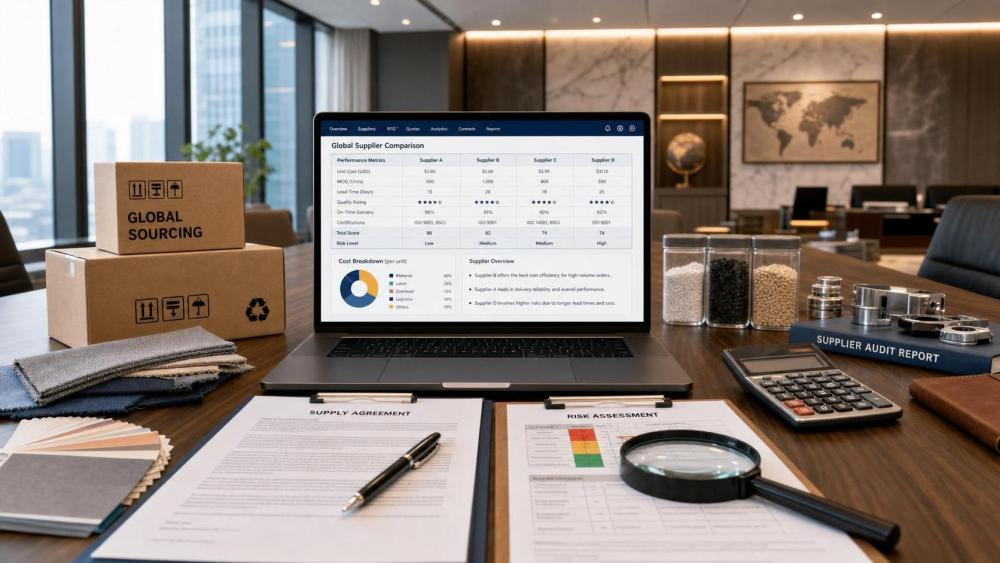
Choosing a global sourcing platform used to mean comparing supplier counts and quoted prices. That is no longer enough in cross-border procurement.
Today, every sourcing decision sits inside a wider system. Freight volatility, compliance pressure, supplier concentration, and data quality now shape the real outcome.
That is why the best global sourcing platform is not simply the cheapest one. It is the one that helps teams make better decisions with fewer blind spots.
In practical terms, evaluation should cover three things together: total cost, operational risk, and supplier fit. If one is missing, the shortlist will be weak.
A platform may surface low quotes, yet hide poor fulfillment data. Another may offer strong suppliers, but weak visibility into export controls or ESG exposure.
A structured framework brings these tradeoffs into view early. It also prevents rushed platform selection based on interface polish or aggressive sales claims.
Start With the Real Cost Picture
The first question is straightforward: what does the global sourcing platform actually help you save, and where can it quietly add cost?
Quoted unit price is only one layer. Procurement performance depends on total landed cost, transaction speed, quality consistency, and the effort required to manage exceptions.
A useful platform should support cost analysis beyond the RFQ stage. It should help compare suppliers across duties, packaging, lead time, freight mode, and payment terms.
More importantly, it should make hidden costs visible. These usually include rework, delayed customs clearance, factory audits, compliance remediation, and internal sourcing labor.
During evaluation, ask whether the platform can support a total cost model. If not, it may still generate leads, but it will not guide strategic sourcing well.
- Can it compare landed cost by origin country?
- Does it show historical price movement or only current quotes?
- Can teams track tooling, MOQs, and sample approval cost?
- Does it connect cost to delivery and quality outcomes?
From a recent market perspective, stronger platforms are moving from supplier listings to decision intelligence. That shift matters because cost control now depends on context.
Evaluate Risk at the Platform Level, Not Just the Supplier Level
Many teams check supplier certifications and stop there. That is necessary, but it does not fully evaluate a global sourcing platform.
The platform itself influences risk exposure. Its data sources, verification methods, update cycle, and dispute support all affect sourcing reliability.
A weak platform can amplify uncertainty by showing outdated factory profiles, unverifiable compliance claims, or shallow production information. Those gaps often appear after orders are placed.
A stronger global sourcing platform should help teams assess operational, regulatory, financial, and geopolitical risk before supplier onboarding is complete.
This also means checking how the platform handles supplier identity, ownership structure, factory location, export history, and production capacity claims.
- Review supplier verification depth. Legal registration alone is not enough.
- Check compliance visibility for ESG, labor, sanctions, and trade controls.
- Look for logistics and customs risk indicators by route or region.
- Confirm whether alerts are real-time or periodic summaries.
- Test the platform’s handling of disputes, claims, and supplier escalation.
The clearer signal today is that risk is becoming multi-layered. Platform selection should reflect that, especially for categories tied to regulated materials or complex shipping lanes.
Measure Supplier Fit Beyond Basic Matching
Supplier fit is where many sourcing projects succeed or fail. A supplier can be legitimate and affordable, yet still be a poor fit.
The right global sourcing platform should support fit analysis at the category level. That means matching supplier capability with your technical, commercial, and operational requirements.
For example, a precision component buyer may need tolerance control, traceability, and clean packaging discipline. A packaging buyer may care more about print consistency and replenishment speed.
The platform should make those distinctions easier, not flatten them into generic badges. Otherwise, teams waste time screening suppliers that were never suitable.
Fit should be checked across four areas:
- Technical fit: material grade, tolerances, certifications, testing, process control.
- Commercial fit: MOQ, payment terms, target pricing, contract flexibility.
- Operational fit: lead time, planning discipline, multilingual communication, ERP readiness.
- Strategic fit: region coverage, growth capacity, resilience, category roadmap.
In real procurement work, supplier fit usually determines whether a platform creates savings at scale or just creates more screening activity.
Look Closely at Data Quality and Market Intelligence
A global sourcing platform is only as useful as the information behind it. This point is easy to overlook when demos focus on search filters and dashboards.
Good sourcing decisions require current, validated, and decision-ready data. That includes supplier records, export signals, pricing trends, freight benchmarks, and compliance updates.
This is where intelligence-led platforms stand apart. They do more than aggregate listings. They interpret market movement and connect it to sourcing actions.
A platform such as GTIIN is relevant in this context because category decisions increasingly depend on both micro and macro signals.
Material performance, customs latency, logistics disruption, carbon policy, and regional industrial shifts can all change supplier attractiveness within one sourcing cycle.
When assessing data quality, focus on these questions:
If the platform cannot explain where its data comes from, confidence in the output should stay low, regardless of interface quality.
Test Workflow Fit Across the Procurement Process
Even a capable global sourcing platform can underperform if it does not fit day-to-day procurement workflows. This issue often appears after rollout.
Selection should therefore include process fit, not just feature fit. The goal is to see whether the platform helps teams move faster with better control.
Map the platform against your actual sourcing stages: demand intake, supplier discovery, RFQ, comparison, audit, contracting, onboarding, and performance review.
Then check integration points. If supplier records, cost models, and risk notes remain trapped inside the platform, value will be limited.
The best global sourcing platform should reduce handoffs, strengthen documentation, and make decisions easier to defend internally.
- Can users build shortlists with shared evaluation notes?
- Does the platform support cross-functional review?
- Can sourcing data move into ERP, SRM, or contract systems?
- Are audit trails clear for finance, quality, and legal review?
This also matters for adoption. Teams keep using platforms that save time during live sourcing events, not platforms that only look good in quarterly demos.
Use a Practical Scoring Model Before You Commit
A disciplined scoring model helps turn platform selection into a decision process instead of a debate. It also makes tradeoffs visible to leadership.
One workable approach is to score each global sourcing platform across weighted categories. Weighting should reflect business risk, not vendor marketing priorities.
A typical framework may look like this:
- Cost intelligence and landed cost visibility: 25%.
- Risk and compliance coverage: 25%.
- Supplier fit and category depth: 20%.
- Workflow and system integration: 15%.
- Data quality and market intelligence: 15%.
Run the scoring model on a live category, not a generic demo scenario. Use a recent sourcing case with known constraints and real stakeholders.
That test will reveal whether the platform supports actual decision pressure. It also shows where claims about transparency or supplier depth hold up.
Make the Final Decision With Resilience in Mind
The final choice should support more than short-term sourcing activity. It should improve how the organization responds to market shifts over time.
That means choosing a global sourcing platform that can inform supplier decisions during stable conditions and during disruption.
The strongest platforms help teams understand supplier capability, origin risk, regulatory change, and cost movement as one connected decision set.
In the current environment, that level of visibility is no longer optional. It is part of responsible procurement governance.
A careful evaluation process usually leads to a simple conclusion: the right platform is the one that improves judgment, not just supplier access.
Start with a real category, apply a weighted framework, and test every platform against cost, risk, and supplier fit together. That is where better sourcing decisions begin.
Have questions about this sector analysis, or seeking best practices specific to your niche? Drop us a line below and let the senior consultants at GTIIN assist you.
“We respect your privacy. Your information is strictly confidential.”
Weekly Insights
Stay ahead with our curated technology reports delivered every Monday.
Recommended News
 Supply ChainNov 10, 2026China Extends Pause on 24% Additional Tariff on US Goods by Two Months
 Industry StandardsNov 10, 2026Which imports are subject to EU carbon border compliance?
 Global SourcingNov 09, 2026USTR Extends 178 China Section 301 Tariff Exclusions to January 2027
 Supply ChainNov 09, 2026How can a tariff risk management dashboard track cost exposure?



