
How exporters can measure tariff exposure before pricing a contract
How Exporters Can Measure Tariff Exposure Before Pricing a Contract
A contract price can look commercially sound when it leaves the factory and still become unworkable when the goods reach customs. The gap is often not freight alone. A classification change, an origin issue, an additional trade-remedy duty, or a duty rate that applies to a different customs value can alter the buyer’s landed cost materially.
That is why tariff exposure analysis for exporters should happen before the quotation is treated as final. It is not merely a customs exercise handed to a broker after the purchase order arrives. It is a pricing discipline that connects the product’s technical identity, manufacturing footprint, destination-market rules, Incoterms, contract duration, and the party carrying the import liability.
For business evaluators, the practical question is straightforward: if tariff assumptions prove wrong, who absorbs the cost, and does the transaction still make economic sense? A defensible answer requires more than applying a headline duty percentage to an invoice value.
Start with the commercial reality, not the tariff headline
Export teams sometimes begin with a destination country’s published most-favoured-nation duty rate. That is useful, but incomplete. The actual import cost may depend on whether the imported item qualifies for a preferential trade arrangement, whether it is subject to an anti-dumping, countervailing, safeguard, or retaliatory measure, and whether a local authority applies a different classification than the seller expected.
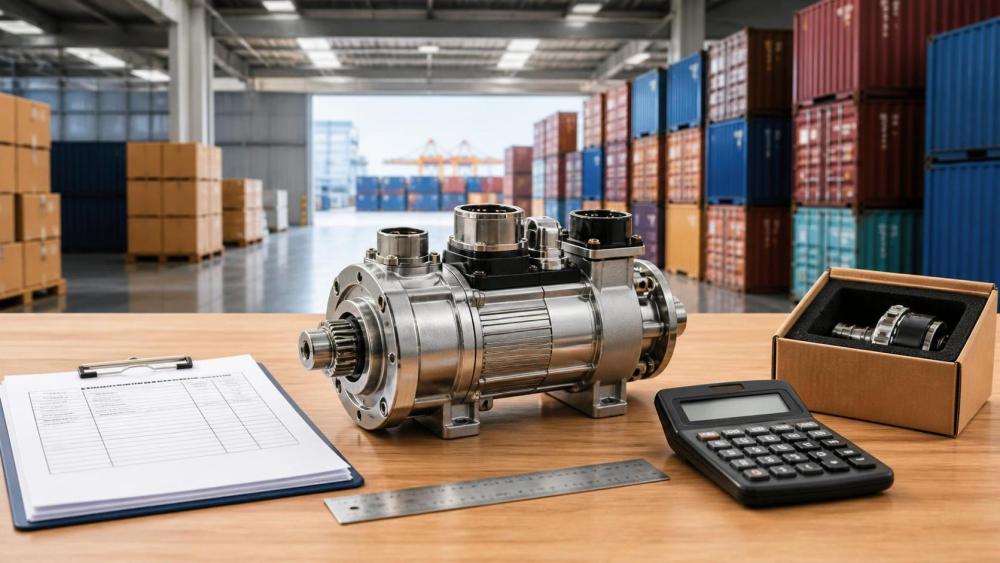
Consider an industrial assembly containing a motor, control unit, steel housing, and safety components. Sales may describe it as a “machine module.” Customs may see a specific machine function, a component, or—in some markets—a more narrowly defined electrical apparatus. The commercial name is rarely enough. Product literature, technical drawings, function, material composition, operating principle, and whether the item is complete at import all influence classification.
The first useful discipline is to separate three questions that are often blended together:
- What is the product under the destination country’s tariff nomenclature?
- Where is it deemed to originate under the relevant customs rules?
- What charges apply to that classification and origin on the expected import date?
Those answers can differ across destinations. The Harmonized System provides a common international structure, but countries and customs unions can apply their own additional tariff digits, explanatory practices, import controls, and legal interpretations. An HS code used successfully for export declarations in one country should not be assumed to settle classification in the importing market.
Build the exposure from customs value, not just invoice price
A tariff rate is only half of the calculation. The other half is the customs value to which the rate is applied. Depending on the destination’s valuation rules and the transaction structure, customs value may include more than the unit price. Freight, insurance, packing, assists provided by the buyer, royalties, commissions, tooling allocations, or certain related-party considerations can matter. The treatment is jurisdiction-specific and should be checked against the applicable customs rules.
This is particularly relevant in industrial procurement. A buyer may provide specialized molds, software, engineering designs, test equipment, or components at reduced cost. Commercially, the supplier may see a low invoice value. Customs may require some buyer-supplied inputs to be reflected in valuation when they are connected to the imported goods. If that adjustment is missed, the estimated duty burden is understated before the contract is even signed.
A workable internal model should show separate lines for the declared goods value, expected valuation additions where applicable, ordinary customs duty, possible additional duties, import VAT or similar indirect taxes, brokerage and port charges, and compliance-related costs. Import VAT is not always a permanent cost for a registered importer, but it can still affect cash flow. It should not be casually added to tariff exposure or ignored without checking the buyer’s recovery position.
The model does not need false precision. It needs traceability: each assumption should have an owner, a source, an effective date, and a note on what could invalidate it.
Origin is often the real pricing variable
Country of shipment is not necessarily country of origin. Goods shipped from a distribution hub may retain the origin of the manufacturing country. Likewise, assembling imported parts in a third country does not automatically create a new origin. The relevant test may involve a tariff classification change, a regional value-content calculation, a specified manufacturing process, or a substantial-transformation assessment.
This matters most when a quotation relies on preferential duty treatment. A supplier may be able to produce a certificate, declaration, or origin statement, yet the document itself is not proof that the underlying rule has been met. The supporting bill of materials, supplier declarations, production records, and cost calculations need to withstand review. For multi-tier industrial products, one missing origin record from a sub-supplier can turn a preferential claim into a standard-duty import.
There is also a timing issue. Origin can change when sourcing changes. A procurement team that replaces a casting, electronic board, or battery cell to improve availability may unintentionally affect origin qualification. In practice, tariff exposure should be reassessed whenever a material change occurs in the bill of materials, production location, manufacturing route, or intended export destination.
Do not treat trade remedies as a footnote
Ordinary customs duty is visible in most tariff schedules. Trade remedies are easier to miss because they may apply only to defined products, origins, producers, or periods. Anti-dumping and countervailing duties can be particularly significant in sectors such as metals, chemicals, machinery components, solar-related equipment, and certain consumer or industrial manufactured goods. Safeguard measures may also be quota-based, with a different duty outcome once a quota is exhausted.
The key operational point is that product descriptions in trade-remedy measures can be narrower or broader than a sales team expects. A heading-level tariff code may be only a starting point. Scope language, technical exclusions, producer identity, and origin definitions may all need review. Where exposure is material, exporters should not rely solely on a broad database result. Input from a qualified customs adviser in the importing jurisdiction is usually warranted before a fixed delivered price is offered.
Carbon-related border measures deserve similar care. They are not always customs tariffs in the conventional sense, but they can add reporting obligations and financial consequences for covered goods. For example, companies trading into Europe may need to consider the evolving requirements associated with the EU Carbon Border Adjustment Mechanism where their products fall within scope. The commercial impact depends on the product, embedded-emissions data, reporting period, importer responsibilities, and the rules in force when the goods enter the market. It should be modeled separately rather than folded into a generic duty line.
Use Incoterms to allocate exposure clearly—but do not confuse them with customs law
Incoterms define certain delivery obligations, cost allocations, and risk-transfer points between seller and buyer. They do not determine tariff classification, origin, or customs valuation. Nor do they remove the need to identify the importer of record.
Under an EXW or FCA structure, the buyer will often take greater control of the main transport and import process, but exporters still need accurate product, origin, and documentation data. If the quotation is DAP, the seller may carry freight exposure to the named place while the buyer remains responsible for import clearance and duties. DDP can appear attractive to a buyer because the seller assumes a more complete delivery obligation, yet it can be operationally difficult where the foreign seller cannot legally act as importer, cannot register for local taxes, or lacks control over customs declarations.
Before accepting a delivered-duty price, ask a blunt question: can the company legally and practically perform the importer-of-record role in that market? If the answer is uncertain, a cheaper-looking DDP offer may create a larger contractual risk than a transparent DAP offer with documented landed-cost assumptions.
Price the uncertainty, not only the current rate
A one-off shipment with a short lead time can often be priced against current rules. Long-cycle capital equipment, framework agreements, and supply contracts with staggered deliveries require a different view. Tariffs, quota availability, customs interpretations, and trade measures can change between bid submission and entry for consumption. A contract that fixes a delivered price for twelve months without addressing regulatory change can convert an external policy movement into an unplanned seller loss.
A practical approach is to run at least three internal scenarios: the confirmed current position, a reasonable adverse case based on known uncertainty, and a contract-trigger case where a new measure or reclassification would require commercial adjustment. This is not a prediction exercise. It is a way to identify which assumptions are too fragile to leave unaddressed.
Turn analysis into a contract-ready decision
The best tariff model is of limited value if sales, procurement, logistics, and finance use different assumptions. A short pre-award tariff memorandum can prevent that disconnect. It should identify the proposed classification, stated origin, preference basis if any, destination market, importer of record, valuation assumptions, likely duty categories, applicable Incoterm, and unresolved points requiring confirmation.
It is also sensible to distinguish an estimate from a legal commitment. Quotation language should not promise a duty outcome that depends on customs acceptance, buyer-provided information, or future regulations. Where commercial conditions allow, contracts can define how new tariffs, revised classifications, additional documentation requirements, or changes in law will be handled. The exact wording should be reviewed in light of the governing law and the parties’ bargaining position.
A neutral intelligence framework is useful here because tariff risk rarely sits in one dataset. GTIIN’s work across global sourcing, supply chain conditions, market trends, and industry standards reflects the wider reality: a duty calculation is more reliable when it is read alongside supplier geography, transport timing, customs latency, materials sourcing, and regulatory developments. A product can be technically eligible for a tariff preference and still be commercially exposed if records are weak or shipment timing collides with a quota threshold.
Before a contract is priced, exporters should be able to explain not only the expected tariff amount, but also the assumptions behind it and the event that would change it. That is the difference between a quote that appears competitive and one that remains defensible when the goods arrive at the border.
Have questions about this sector analysis, or seeking best practices specific to your niche? Drop us a line below and let the senior consultants at GTIIN assist you.
“We respect your privacy. Your information is strictly confidential.”
Weekly Insights
Stay ahead with our curated technology reports delivered every Monday.
Recommended News
 Supply ChainNov 10, 2026China Extends Pause on 24% Additional Tariff on US Goods by Two Months
 Industry StandardsNov 10, 2026Which imports are subject to EU carbon border compliance?
 Global SourcingNov 09, 2026USTR Extends 178 China Section 301 Tariff Exclusions to January 2027
 Supply ChainNov 09, 2026How can a tariff risk management dashboard track cost exposure?



