
FCC Adds Advanced Mobile Robots to Covered List, Sets U.S. Content Thresholds
The U.S. Federal Communications Commission (FCC) formally added advanced mobile robots to its Covered List in July 2026, introducing domestic-content requirements for robots assembled in the United States. Under the stated timetable, the value share of U.S.-made components must reach 65% in 2028 and 75% in 2029.
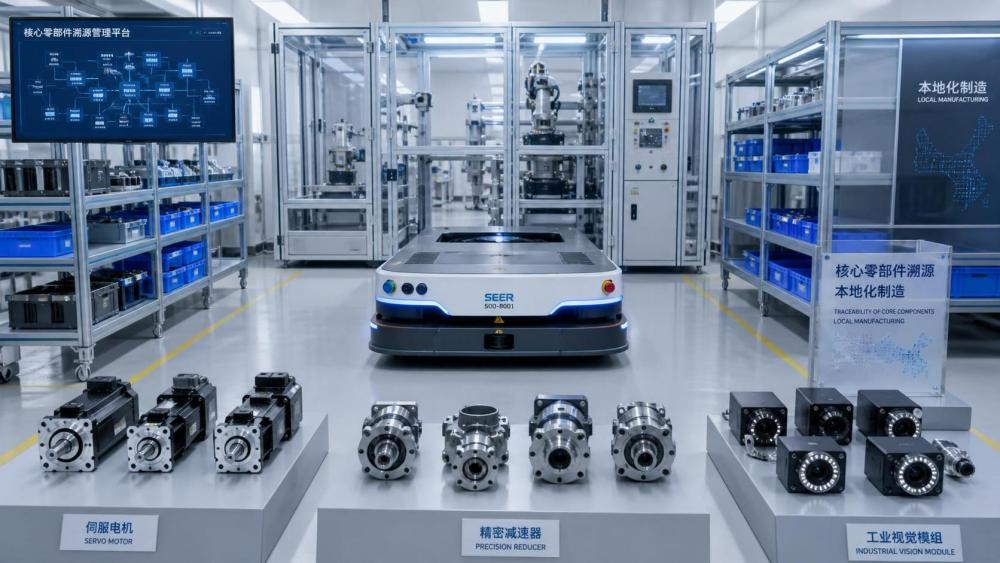
The measure is intended to reduce U.S. technology dependence on China, but it also highlights a practical constraint for robot manufacturers: supply chains for advanced mobile robots remain closely tied to Chinese component suppliers. Servo motors, reducers, and vision modules are among the key component categories identified in the available information.
Compliance Moves Beyond Final Assembly
For global robot OEMs, assembling products in the United States may no longer be sufficient on its own. The new thresholds place greater emphasis on the value composition of the underlying bill of materials, making component sourcing, supplier qualification, and value calculation central parts of a U.S. localization strategy.
The policy could lead manufacturers to reassess which components can be sourced domestically, which parts require redesign or alternative suppliers, and how production structures should be documented for compliance purposes. The impact may be especially pronounced where high-value motion-control and perception components account for a meaningful share of a robot's overall value.
Pressure on Established Supply Relationships
For Chinese suppliers, the rule may alter the structure of exports serving the U.S. advanced mobile robotics market. Companies supplying core components could face changing demand patterns as OEMs seek to increase domestic content. The extent of that shift will depend on how the requirement is implemented, how component value is assessed, and whether suitable U.S.-based alternatives can meet technical and commercial needs.
At the same time, the policy may expose the difficulty of quickly replacing established suppliers in specialized robotics components. A domestic-content target creates a regulatory incentive, but it does not by itself resolve qualification cycles, performance requirements, production capacity, or cost considerations.
What the Industry Will Watch Next
The immediate issue is not only the 2028 and 2029 thresholds, but also the compliance details that may follow. OEMs and suppliers will need to monitor FCC materials and other relevant public regulatory information for clarification on covered products, component valuation, documentation expectations, and the treatment of complex supply chains.
This analysis is based on the provided July 2026 industry update. Further effects on global robotics production and sourcing will depend on subsequent regulatory disclosures and company responses.
Have questions about this sector analysis, or seeking best practices specific to your niche? Drop us a line below and let the senior consultants at GTIIN assist you.
“We respect your privacy. Your information is strictly confidential.”
Weekly Insights
Stay ahead with our curated technology reports delivered every Monday.
Recommended News
 Supply ChainNov 08, 2026He Lifeng Holds Trade Talks With Bessent and Greer
 Market TrendsNov 08, 2026How to use industrial commodity market analysis to forecast costs
 Supply ChainNov 07, 2026EU Opens Safeguard Investigation into PET Resin Imports
 Industry StandardsNov 07, 2026Which ISO quality management standard can a company be certified to?



