
Cost Analysis and Sourcing Guide: 5 Key Tips for Procuring A-Type Battery Cages
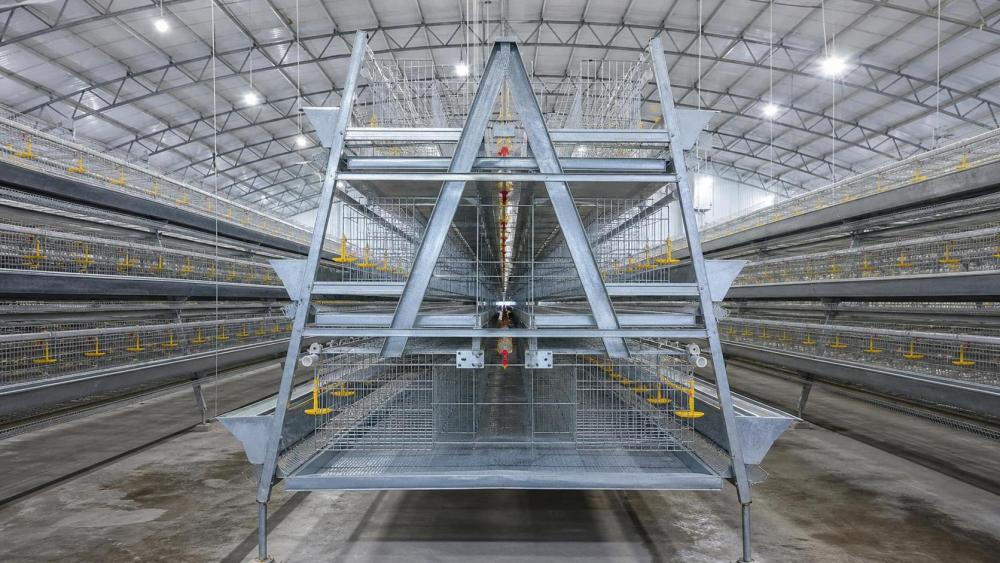
In the highly lucrative but intensely competitive global agricultural sector, transitioning a regional poultry farming operation into a globally scalable, high-yield commercial enterprise requires massive structural upgrades. For investors and farm directors operating in emerging markets or mid-sized commercial tiers, the A-Type structural configuration remains the undisputed champion of operational efficiency and economic pragmatism. It provides excellent ventilation, straightforward automated integration, and a highly accessible price point compared to complex H-Type multi-tier complexes.
However, procuring thousands of sets of heavy-duty galvanized steel infrastructure from overseas manufacturers is a perilous financial maneuver. A miscalculated procurement strategy can saddle a farm with rapidly deteriorating equipment, astronomical hidden logistics fees, and devastating operational downtime. For Chief Financial Officers (CFOs) and agricultural supply chain directors, mastering the nuances of international trade and cost analysis is mandatory. This strategic intelligence report outlines five critical sourcing tips designed to help investors navigate global supply chains, mitigate vendor risks, and secure a multi-decade Return on Investment (ROI) when purchasing commercial A-Type rearing infrastructure.
Tip 1: Deciphering the FOB vs. CIF Cost Illusion
The most common and arguably the most destructive error made during the procurement phase of farm expansion is evaluating vendor bids based strictly on CIF (Cost, Insurance, and Freight) pricing. Many inexperienced agricultural buyers assume that allowing the overseas manufacturer to handle all oceanic shipping and insurance logistics is the safest, most convenient route. This is a profound procurement fallacy.
Under a CIF agreement, the overseas seller retains absolute control over the freight forwarder selection. While the initial invoice may look attractive, sellers frequently utilize "kickback" arrangements with cut-rate shipping lines, inflating the freight cost to secretly pad their profit margins. More dangerously, these cheap carriers often result in severe transshipment delays, leaving your critical infrastructure stranded at transit ports for weeks.
To conduct a genuine landed cost analysis, professional sourcing teams must insist on FOB (Free On Board) or EXW (Ex Works) Incoterms. Under FOB, the buyer assumes control of the cargo the moment it is loaded onto the vessel at the port of origin. This allows the farm's procurement director to leverage their own vetted, highly reliable freight forwarders. It provides absolute transparency regarding the true cost of the steel equipment versus the actual cost of maritime logistics, granting the buyer total control over transit schedules and specialized marine insurance policies.
Tip 2: Auditing Metallurgical Specs for Long-Term TCO
When constructing a comprehensive business plan for a new commercial layer facility, the initial Capital Expenditure (CAPEX) on equipment is merely a fraction of the Total Cost of Ownership (TCO). A poultry barn is an incredibly hostile, hyper-corrosive microclimate. The atmosphere is continuously saturated with moisture and highly reactive ammonia gas generated by the flock’s biological waste.
If a procurement team attempts to save capital by purchasing cheap containment systems manufactured from inferior electro-galvanized (cold-plated) wire, the financial repercussions will be catastrophic. Within 24 months, the ammonia will strip the thin zinc plating, causing the core steel matrix to rust, warp, and ultimately snap under the weight of the birds.
Therefore, the second critical sourcing tip is to demand verifiable metallurgical specifications. The global industry standard for longevity dictates the exclusive use of Q235 high-tensile carbon steel subjected to a rigorous hot-dip galvanization process. You must demand that the manufacturer certifies a minimum zinc coating mass (typically mandated to be at least
Tip 3: Automating the Subsystems for Yield Optimization
A modern A-Type rearing system is not merely a static wire cage; it is a highly integrated mechanical ecosystem. When evaluating international quotations, sourcing directors must look far beyond the sheer tonnage of the steel framework. The true operational value of the infrastructure is derived from its automated sub-components: the feeding chains, the low-pressure nipple drinking lines, the egg collection conveyors, and the mechanized manure scrapers.
When calculating the exact battery cage quotation for your specific barn dimensions, it is imperative to audit the origins of these critical electromechanical components. A cheap system will utilize low-torque motors and brittle PVC piping that will inevitably crack or stall during peak operational hours.
Professional buyers must require a detailed Bill of Materials (BOM). Ensure that the automated feeding hoppers are driven by certified Variable Frequency Drive (VFD) motors, and that the water pressure regulators are manufactured from robust, medical-grade plastics to prevent devastating leaks. Investing heavily in the reliability of these automated subsystems radically reduces the facility's reliance on manual labor, permanently lowering daily Operational Expenditure (OPEX) and ensuring a flawless, uninterrupted Feed Conversion Ratio (FCR).
Tip 4: Conquering Information Asymmetry via Third-Party Audits
The global B2B marketplace is flooded with highly polished websites and aggressive marketing brochures. However, a sleek digital presence does not guarantee world-class heavy industrial fabrication capabilities. The fourth sourcing tip addresses the severe information asymmetry that exists between a domestic farm director and an overseas steel manufacturer.
Many international buyers unknowingly wire millions of dollars to "trading companies"—middlemen who possess zero actual manufacturing infrastructure. These entities simply outsource the order to the lowest-bidding rural workshop, pocketing the margin and completely abandoning any pretense of quality control or post-sales warranty support.
To neutralize this risk, procurement teams must mandate rigorous Vendor Quality Assurance (VQA) protocols. Before issuing any down payment, hire a certified, independent third-party inspection agency (such as SGS, Bureau Veritas, or TÜV Rheinland) to conduct an unannounced, on-site factory audit. The auditor must physically verify the existence of automated resistance spot-welding robotics, the scale of the hot-dip galvanization pools, and the company's ISO 9001 compliance certificates. Spending $1,000 on a comprehensive factory audit is the ultimate insurance policy against a $100,000 procurement disaster.
Tip 5: Calculating Freight Density and Containerization
The final phase of the procurement cost analysis involves mastering the spatial mathematics of international ocean freight. Agricultural infrastructure is exceptionally heavy and geometrically awkward. The logistics teams must optimize the container loading architecture to maximize spatial efficiency and minimize "dead freight" (paying to ship empty air).
A-Type systems are typically shipped completely "knocked down" (flat-packed) to maximize container density. However, because galvanized steel wire mesh is incredibly heavy, a standard 40-foot High Cube (HC) container will frequently reach its absolute maximum legal weight limit (approximately 26 to 28 metric tons) long before its physical volumetric capacity is filled.
Procurement directors must explicitly request 3D CAD loading simulations from the manufacturer before finalizing the order quantity. If a farm needs 100 sets of equipment, but a single 40-foot HC container safely holds 48 sets due to weight restrictions, the buyer is forced to pay for an entire second container just to ship the remaining 4 sets. By slightly adjusting the total order volume to mathematically perfectly align with container weight thresholds (e.g., ordering exactly 96 sets across two perfectly optimized containers), sourcing directors can slash their landed cost-per-unit and dramatically improve the overall CAPEX efficiency of the farm expansion.
Conclusion
Procuring heavy-duty commercial agricultural infrastructure is not a standard purchasing transaction; it is a highly strategic, multi-disciplinary financial maneuver. The equipment you select today will dictate the biological health of your flock, the efficiency of your daily labor, and the ultimate financial yield of your enterprise for the next two decades.
By aggressively dismantling information asymmetry through third-party factory audits, negotiating transparent FOB Incoterms, demanding verifiable hot-dip galvanized metallurgy, and mathematically optimizing oceanic containerization, farm directors can neutralize the extreme risks of cross-border sourcing. In the high-stakes arena of global commercial agriculture, mastering these five procurement pillars is the definitive key to securing premium infrastructure and ensuring a highly lucrative, multi-generational return on investment.
Have questions about this sector analysis, or seeking best practices specific to your niche? Drop us a line below and let the senior consultants at GTIIN assist you.
“We respect your privacy. Your information is strictly confidential.”
Weekly Insights
Stay ahead with our curated technology reports delivered every Monday.
Recommended News
 Supply ChainNov 10, 2026China Extends Pause on 24% Additional Tariff on US Goods by Two Months
 Industry StandardsNov 10, 2026Which imports are subject to EU carbon border compliance?
 Global SourcingNov 09, 2026USTR Extends 178 China Section 301 Tariff Exclusions to January 2027
 Supply ChainNov 09, 2026How can a tariff risk management dashboard track cost exposure?



